This essay is also available on the Watching Blake’s 7 blog, for those who prefer a different text/background colour scheme.
Introduction
I’ve been dreading this essay. I just can’t work out what to write that hasn’t been written a million times before.
You see, to talk about Douglas Camfield is to succumb to the almost inevitable certainty that he will be referred to in glowing terms. That’s certainly both the received wisdom and the critical assessment: the action director, the energy of his work, the formidable filming rate on location, the best ‘classic’ Doctor Who director ever. Put an Arriflex in his hand, and he’ll make magic pictures for you.
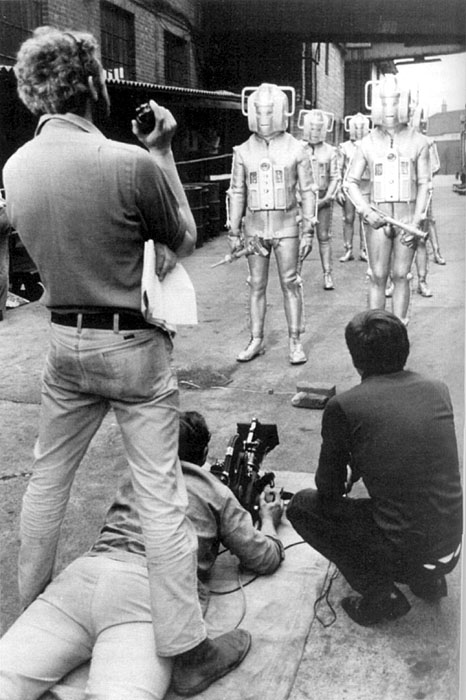
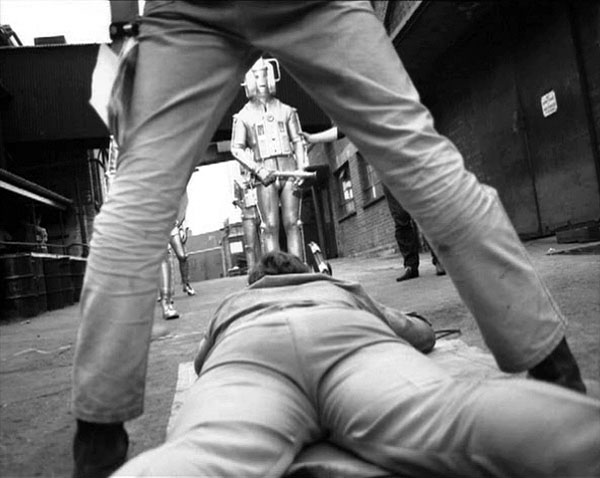
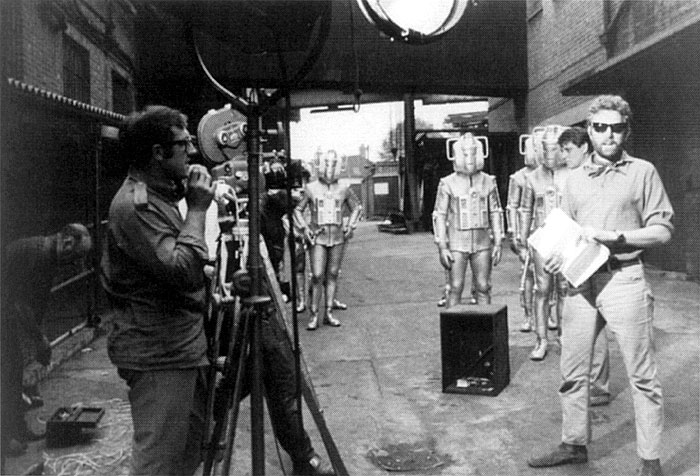
Because his work is so magnetic to different fandoms, there’s been a constant appetite to discuss his contributions. I think back to Phil Newman’s ‘Douglas Camfield – a Tribute’, a 1990 publication via The Frame, which served as an exceptional appreciation of the director. More recently, there’s the attention and care that Michael Seely brings to the ‘Directed by Douglas Camfield’ biography, which deftly takes us through his life and his output.
Of course, there’s everything in between: the DVD extras, the anecdotes and accolades, the tributes from actors, writers, and directors.
And, there is the personal appreciation of his work. ‘Inferno’ remains my favourite Doctor Who story. I find the script interesting and the concept novel. However, it is the direction that elevates it: the use of industrial facilities, the sound design, the editing, the general tone of the piece, and that’s even before the pivot at the end of episode four. And, there are the Primords. While I understand there is a mixed reaction to them, they are effectively directed, certainly in terms of movement, attitude and strategic intent. Camfield envisioned them as werewolves, rather than primates. It’s the right call, suggesting a loss of humanity and a shift towards the animal. It works within the brand of fantasy that Doctor Who exists within. This is a reason why ‘Inferno’ remains the only Doctor Who episode that scares this manchild.
Yet, I sit here now, typing about Camfield, feeling pessimistic. I feel that there is little left to talk about. It’s a challenge to find new angles or be redemptive, as his work is so sickeningly good, leaving a reputation that has remained resolute across generations of fandom. When Toby Hadoke sat on the BBC Breakfast sofa (only last week, as I type this), he was able to namecheck Camfield to an audience who, largely, would never have heard of him. Of course, this was gratifying to those of us ‘in the know’ – a reference to his work on an internationally broadcast breakfast show. This was further emphasised when new footage emerged of William Hartnell confronting the audience in the most spectacular 405-line way.
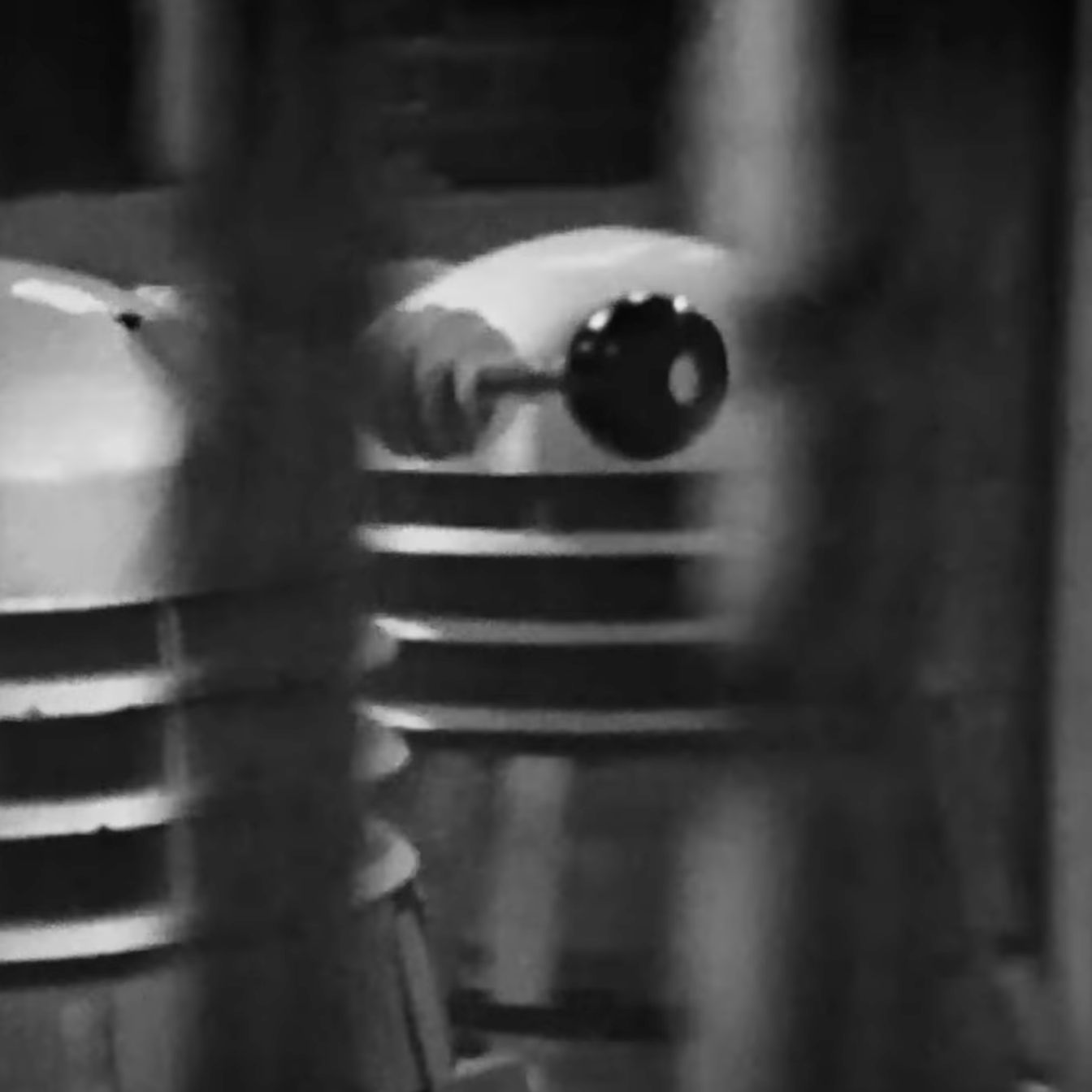
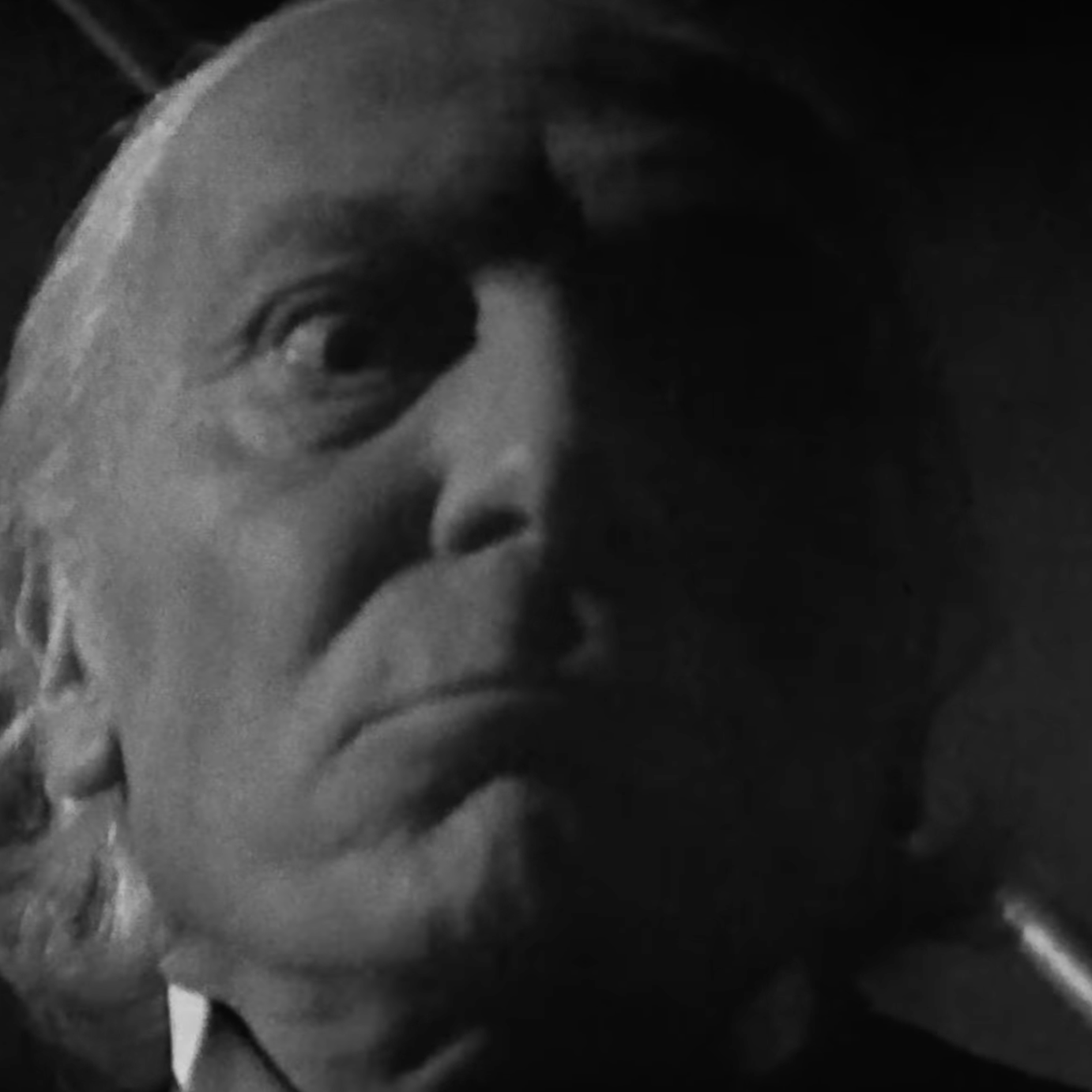
This essay isn’t going to sit around and wallow in how marvellous Camfield’s direction is. The evidence already speaks for itself: his constant pushing of the boundaries of the medium, his handling of the limitations of time and budget. The endless testimony that demonstrates how he commanded respect with cast and crew buying into his vision. This is all documented at great length.
However, the essay will recognise Camfield’s contributions to television, and how his eye (and aspiration) as a director with cinematic sensibilities affected his approach to the multi-camera/film hybrid of television drama. It won’t take much to realise that I see Camfield as an auteur, with his own distinct ‘voice’, rather than a technician, a term that Sarris (1962) would describe as a merely competent filmmaker.1 No surprise, there.
What is a surprise, now I give it some thought, is how difficult it is to define Camfield’s magic than might be first apparent. Words like “director of action” are commonly bandied about. But surely that’s only one aspect of his work?
There’s the respect that is conveyed in various testimonials: the tales of film-unit togetherness around his guitar, the care and attention given to up-and-coming actors such as John Levene, the respect for rehearsals, and the military precision. But does this automatically assure us of excellent output?
Then there is the visual dynamism – the appreciation for well-composed shots, careful sequencing, and sophisticated editing. But, don’t all directors lay claim to be dynamic, just in different styles?
So, what is it that elevates Camfield above others, and is there anything that can be learned by analysing his work on Blake’s 7?
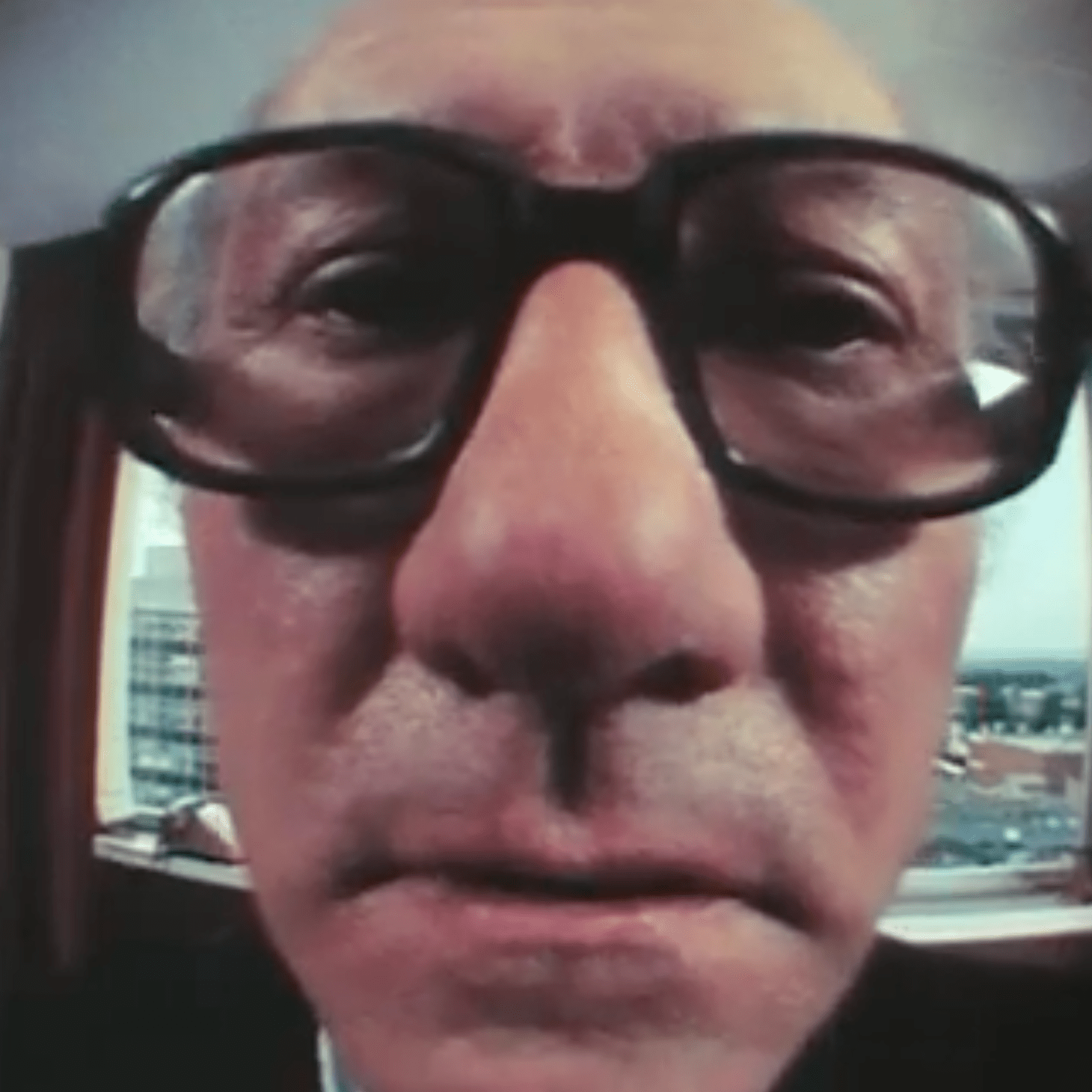
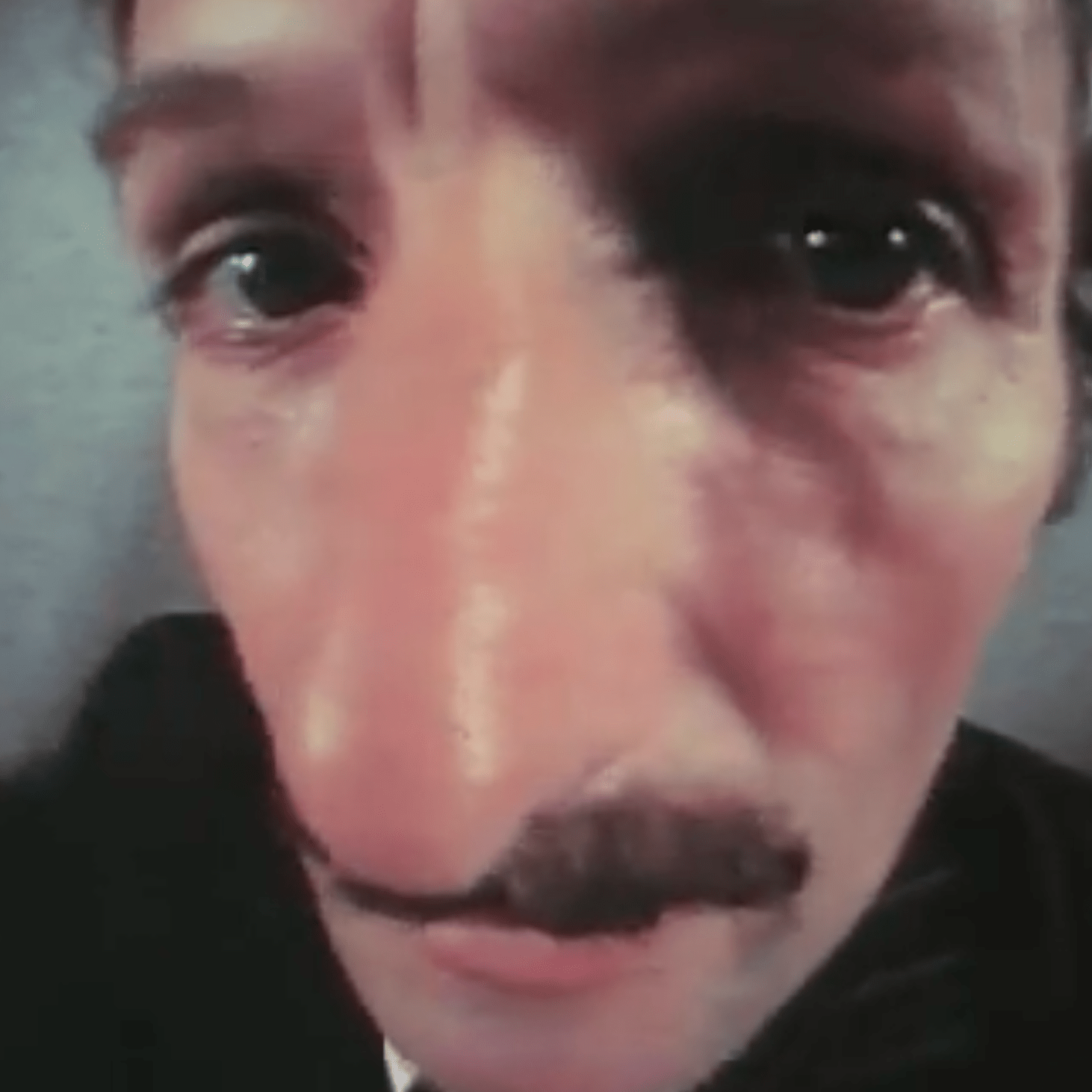
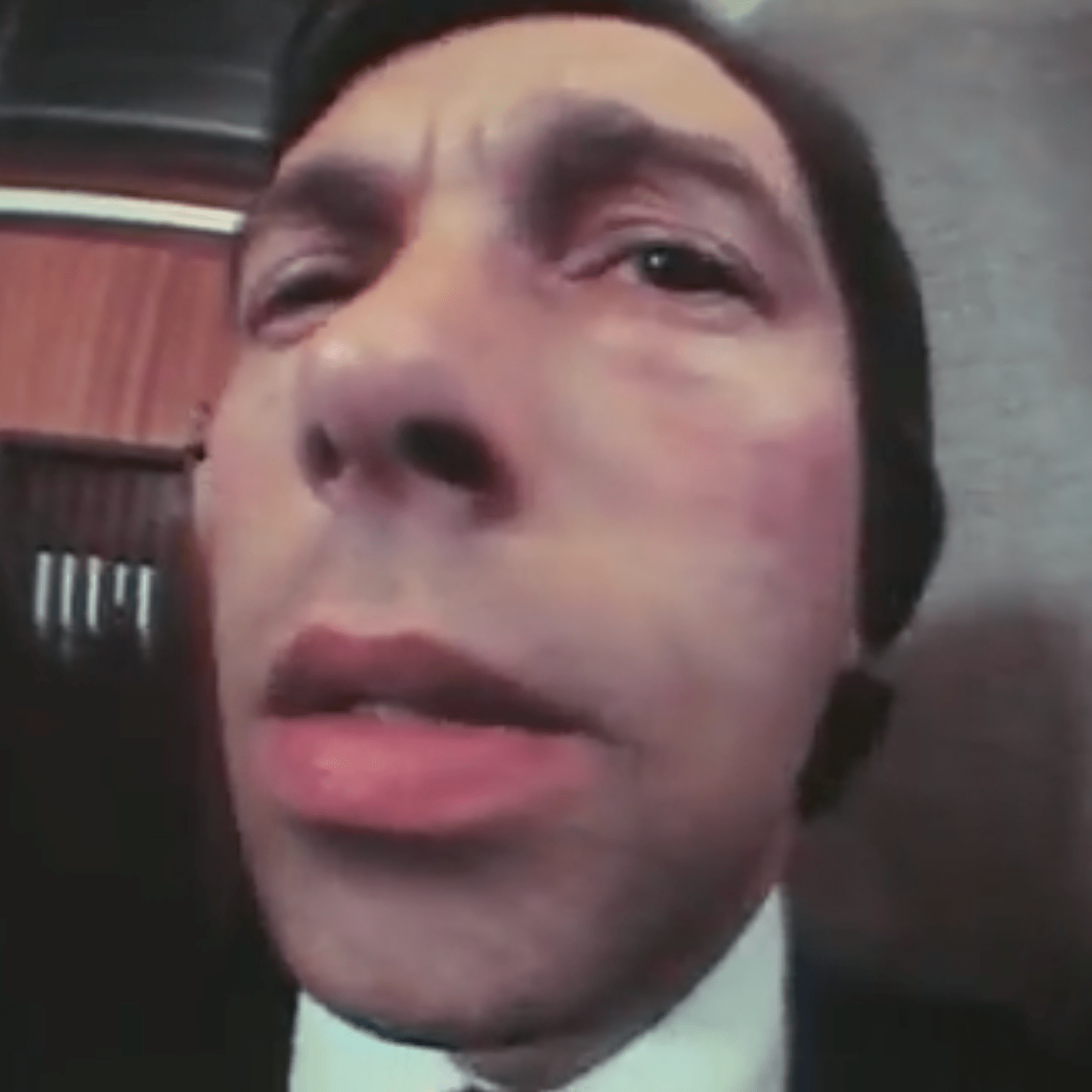
Inner eye.
Let’s start with the clues that chart Camfield’s emerging characteristics as a director. He is notable as someone who, unlike many of his peers, didn’t rise through the ranks of the theatre. He went from York School of Art to television, via a sajourn in the military. At the BBC, he started as a trainee Assistant Film Editor, then a Production Assistant, and quickly became a director.2
This progression translates to many of the attributes we know Camfield for: military experiences that emphasise precision, an education that cements a knowledge of literature, and an editing role that honed a rapid understanding of visual language. Not a proscenium arch in sight.
And, this is significant. In an interview with Camfield, published in Screen in 1970, an emphasis on the visual – in a televisual sense – is apparent when he talks about the infancy of television, and how directors often came from radio, with a resulting form of “blindness” to the potentialities of the visual medium.
Of course, some good TV men did graduate from radio but they were comparative rarities. Even today, perfectly good theatre directors come into TV, but, in many cases, they cannot ‘think visually’. They are haunted by the proscenium arch, and the best they can produce is a photographed stage production. They are simply a different kind of animal. Douglas Camfield. 3
This leads us to Camfield’s notion of the ‘Inner Eye’ – a concept that caught the attention of Dr. Billy Smart in his Forgotten Television Drama article about Michael Seely’s biography of Camfield.
Despite working as a staff director in the unpromising field of serial drama, Camfield’s exceptional facility for television was already attracting wider recognition in the ‘60s, receiving the unlikely accolade of a profile in Screen in which he defines his visually-led approach to television drama, stating that the good director needed to posses an “inner eye”. Dr. Billy Smart. 4
The ‘inner eye’ relates to the idea that when you read a script, pictures might come alive in one’s imagination – people, faces, compositions, and anything else that suggests how to stage the unfolding narrative. This ‘instinct’ for effective images is something often recognised by both critics and those who worked with Camfield.
…he could see very quickly whether or not something was artistically very interesting to book at, the right angles to use, and so on. Ian Fairbairn. 5
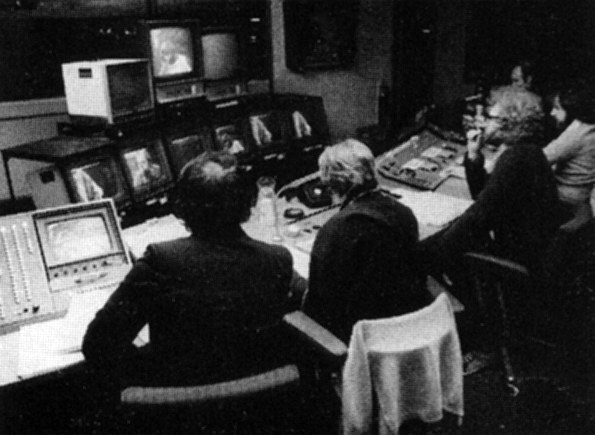
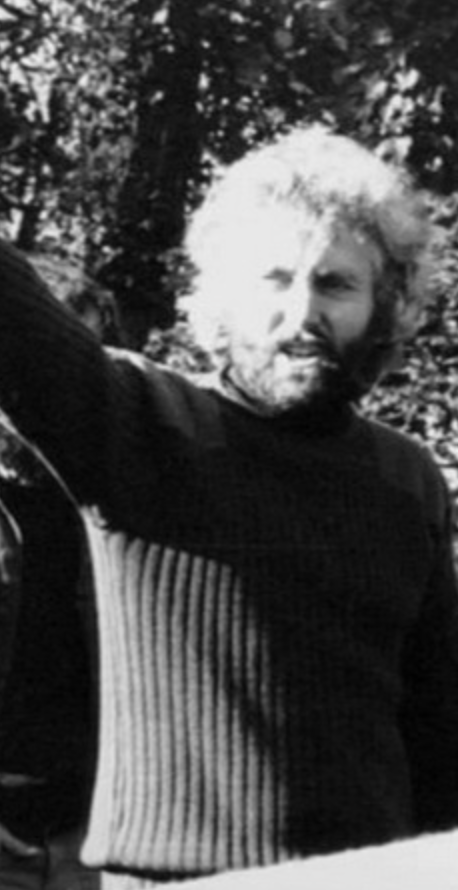
When I consider this approach to directing, I re-read quotes from him in a new light. An example is his famous assessment of the direction of ‘Inferno’ following his enforced departure from the production.
“We’re talking about the end of the world here! Armageddon! It has to be shown to be totally sinister and grim. I wanted darkness and shadows. My original plan was to direct ‘Doctor Who’s first nightmare – the sort of thing the Doctor would dream about during a bad night. We had volcanic eruptions beneath the UK and werewolves parading about the place. That sort of thing has to be frightening and it can only be made frightening if we create the right atmosphere. If it’s lit too bightly then the mood is watered down and the story loses a lot of its impact. And I felt that much of ‘Inferno’ was too bright.”6
This quote contains little of the misty-eyed anecdotes that often accompany reflections of productions past: the casting of an actor, the tension of the studio, or the ghoulish weather on location. In his assessment of ‘Inferno’, Camfield is talking about the images, the eye for atmosphere, and how this makes the production. This approach to directing is emphasised in the words he uses to express his disappointment.
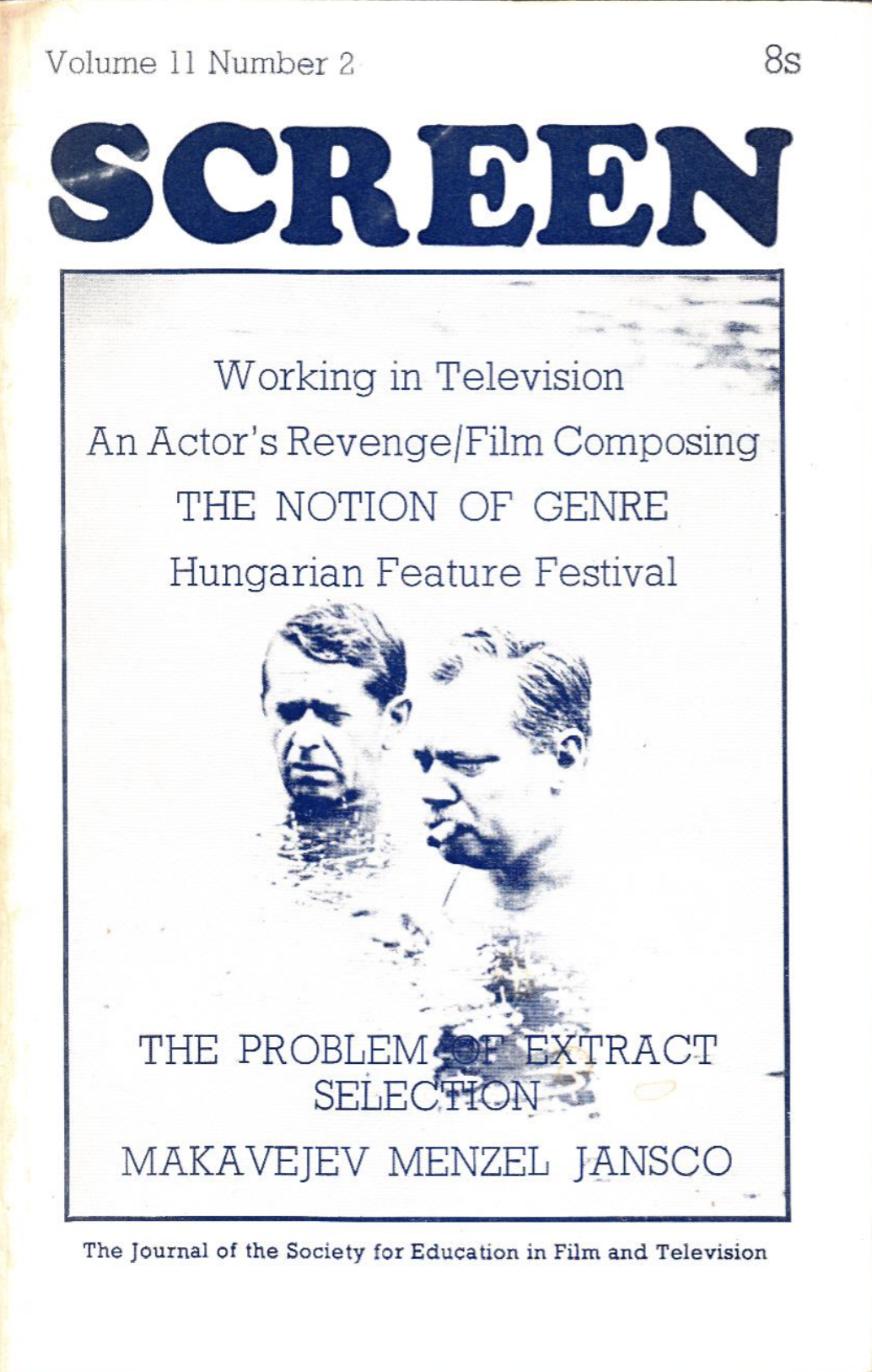
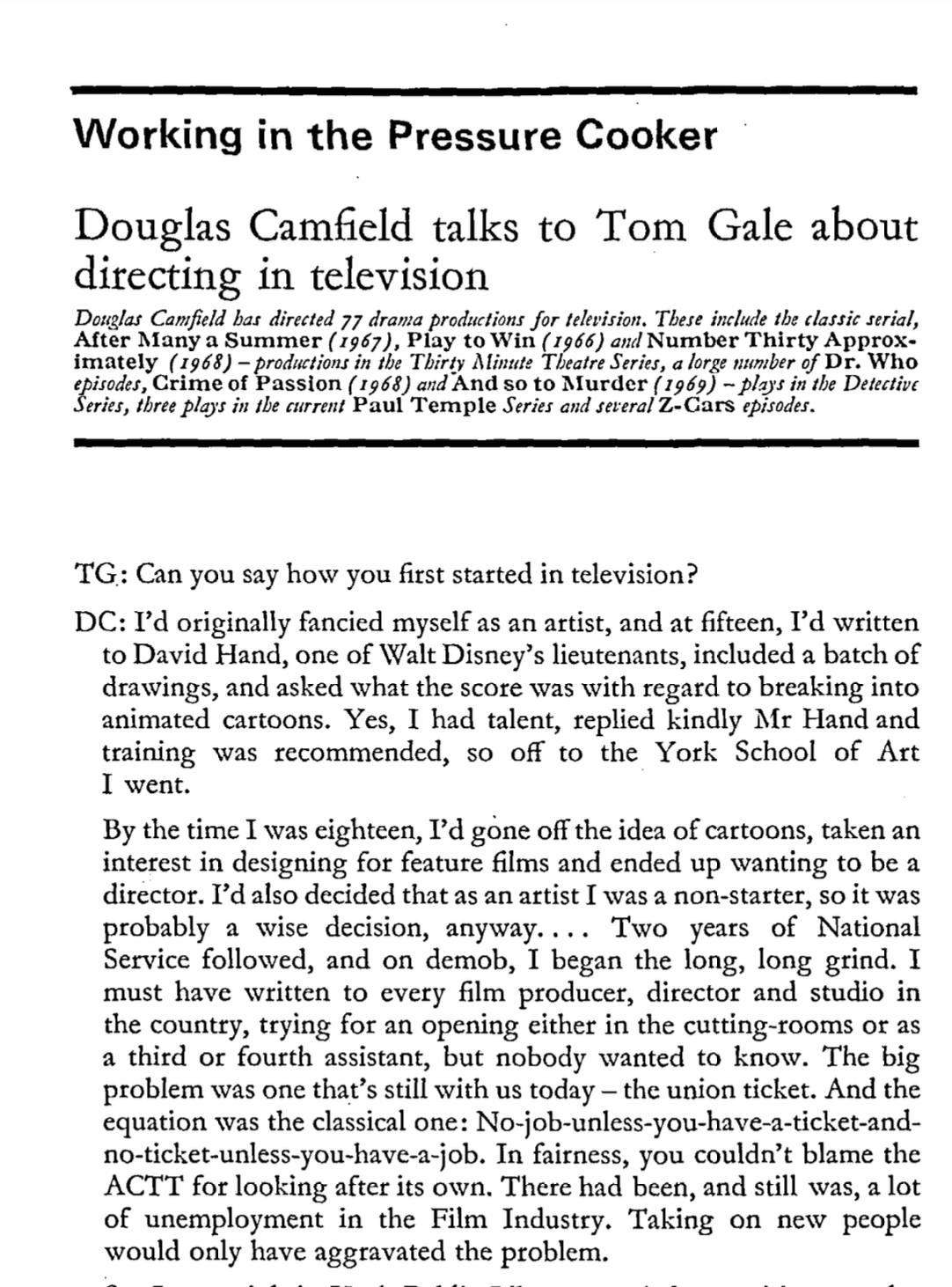
In the Screen article, Camfield describes a “private projection screen that you keep inside your head” (1970). This is nicely articulated by Tat Wood in the ‘Douglas Camfield: A Tribute’ publication (1990). In this analysis of Camfield’s directorial style, Wood notes Camfield’s distinctive editing, music, an aversion to the orthodox medium close-up (MCU), and an ability to move the TV ‘windowframe’ to refocus our attention.
If I was asked for a simple description of what makes such-and-such a sequence look as if it belongs in a story directed by Douglas Camfield, I would say something like: ‘the way the use of the camera and editing act almost like a narrative “voice”.’ – Tat Wood 7
So, the key ingredients that exemplify Camfield’s style are covered: the focus on the ‘inner eye’ as a creative practitioner, the complexity of his studio set-ups, editing, and the use of the camera. Yet, I’ve never quite worked out how much this distinguishes Camfield from other directors who also have a strong visual style. It feels like there is still something missing. Perhaps, it’s about identifying the fundamental ingredient in his image-making? What is the instinctual element that drives the ‘inner eye’ and gives his pictures life?
I’ve come to the conclusion that it is a line of sight. Some might simply call this the perspective of the camera, or the viewpoint. Indeed, to talk about Camfield is often to talk about his use of the camera. But it is more than that, as this particular line of sight is affected by all the other things that Camfield has an instinct for: music, editing, tone. It’s not simply the eye line of the characters, camera or audience (although that is an important aspect, and one that is distinct in Camfield’s work), it’s also how a range of screen tools – editing, framing, sound, etc – can be used to instruct us how to read into this.
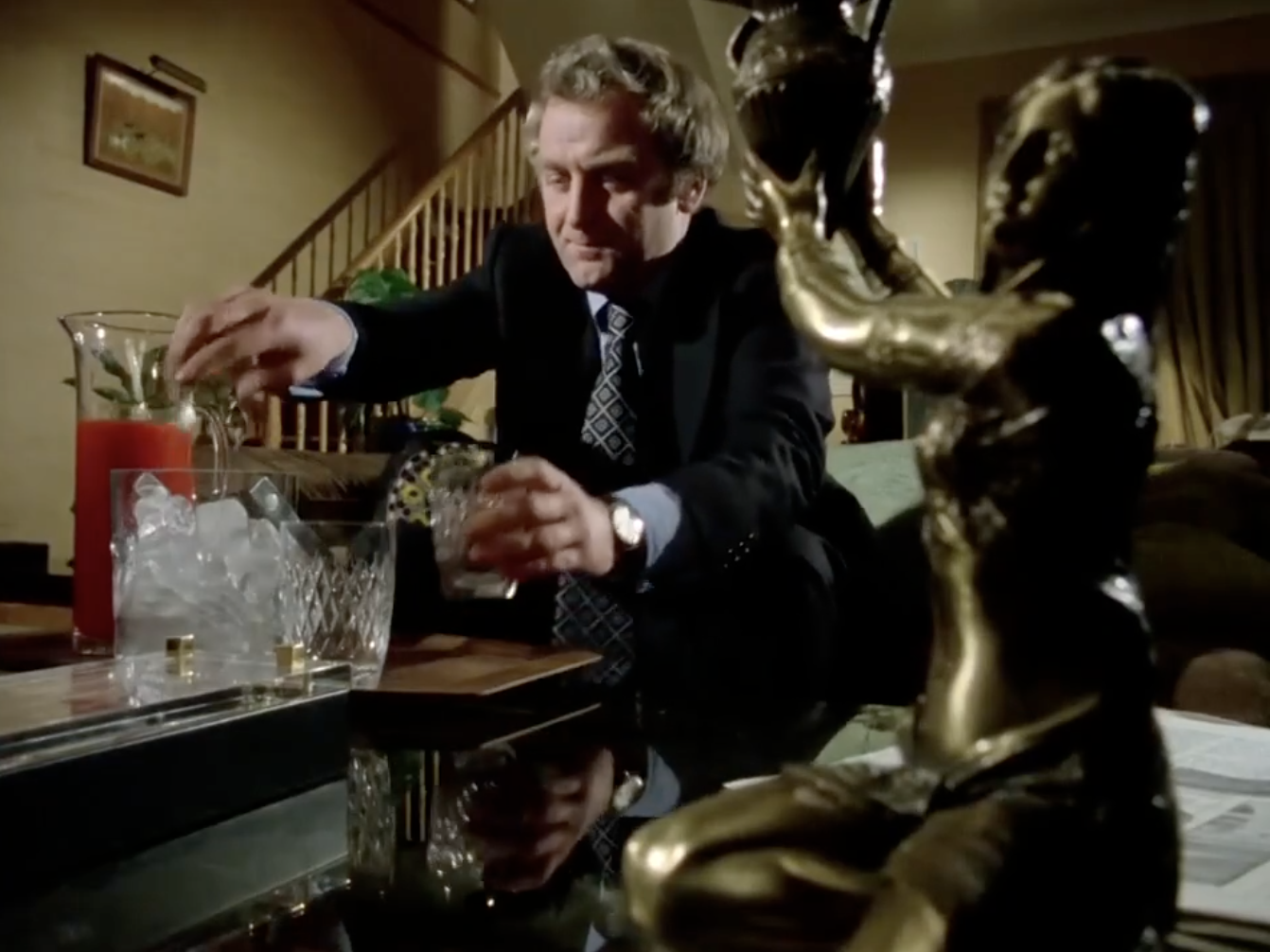
To give you an example, let’s take the following section from ‘Cover Story’, an episode of The Sweeney from 1975.
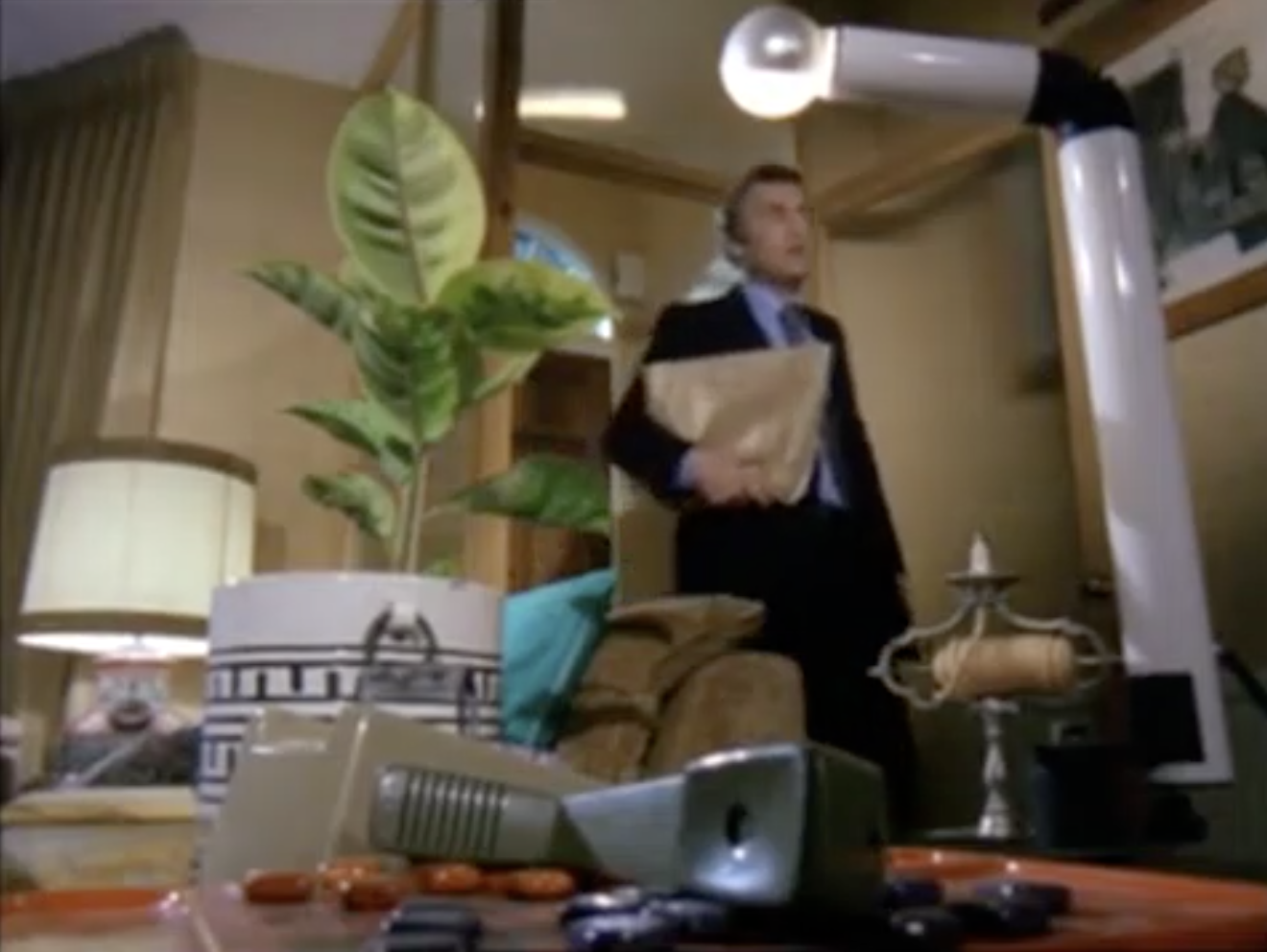
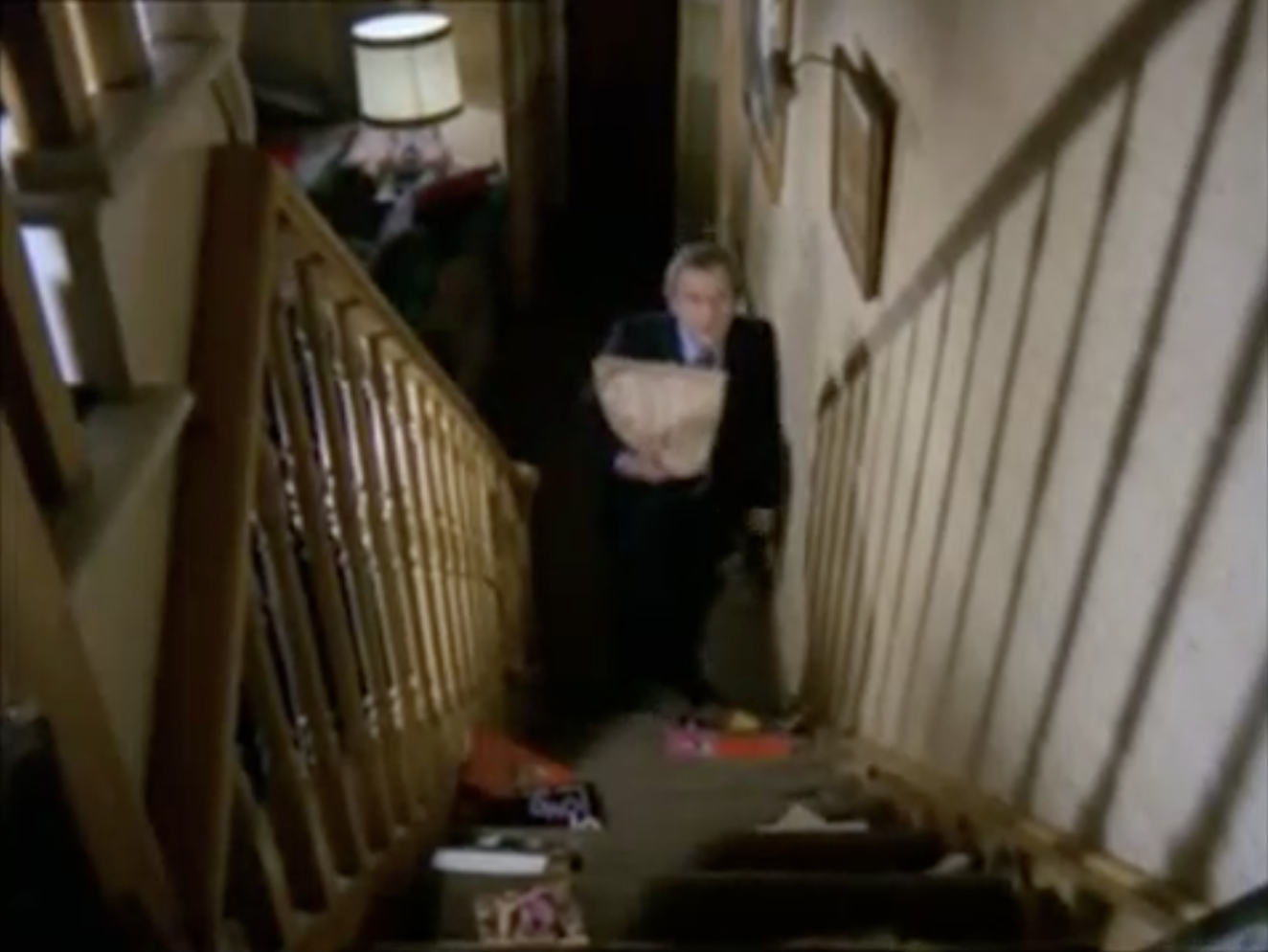
While waiting for Sandy Williams (journalist and burgeoning romantic interest), Regan makes a Bloody Mary. Camfield uses a series of close-ups to heighten the anticipation of their meeting. In fact, it predates every cookery show since the 2000s by showing the ingredients and preparation in appetising detail. Each shot is delicious, just like the composition of Regan when framed by table lamps and figurines.


Noting that time is passing, Regan searches for Sandy.
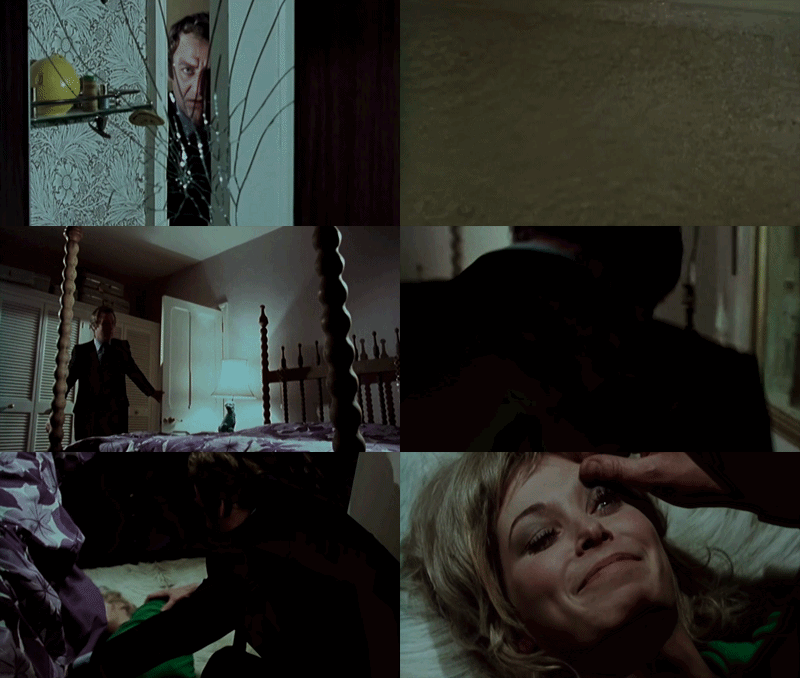
Firstly, we see the increasing urgency of the situation. The line of sight is conveyed through a reflection in the cracked mirror. This isn’t just Regan’s, it’s the audience’s too. Regan directly connects with us through the shattered mirror, meaning we’re right inside the scene, rather than looking from afar. Immediately after, Regan moves into a profile shot – shifting the scene, or should I say sight, from the confrontational to the tense.
Next, a series of camera moves shows his perspective – the shower, the water, the radio. This line of sight conveys urgency. The camera moves rapidly and with intensity.
We then switch to the bedroom, where the camera is crucially positioned at a low angle at the foot of the bed. The perspective is different. We look up at Regan, who is briefly small and helpless. However, the camera angle provides a clue as to where the body might be. Then, the camera follows Regan as he moves around the bed, and we are suddenly looking down from his eye level. Again, these lines bring us right into the scene and guide us on how we should be reading the architecture of the space and the intent of the narrative.
The scene concludes with two interesting shot set-ups – one looking up at Regan, at a distinct angle. It’s a moment of intimacy, and an intense one at that, as he checks for signs of life. Then, there is the switch shot, as we look down at Sandy’s face as she cuts him the cheeky look of a not-quite-dead person.
Just to cap it off, the following scene in the bathroom continues its use of expressive shots, instructing the audience, and drawing us right into the situation. Here’s Camfield elects to shoot from roughly the eyeline of the characters. We see Regan’s perspective, including the toe in the tap, and barring an establishing shot, the rest is from Williams’ point of view, with Regan addressing her just off camera.

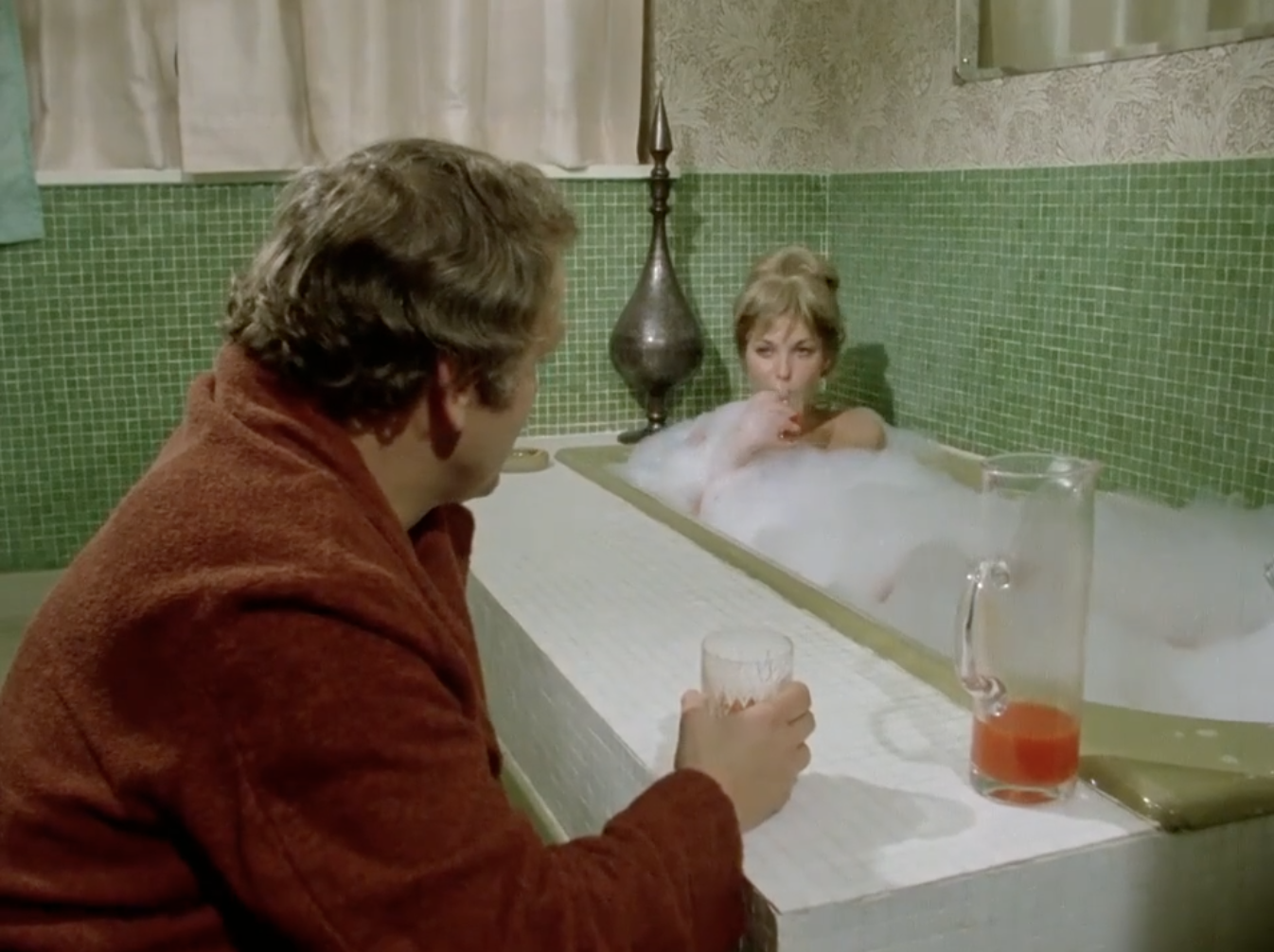
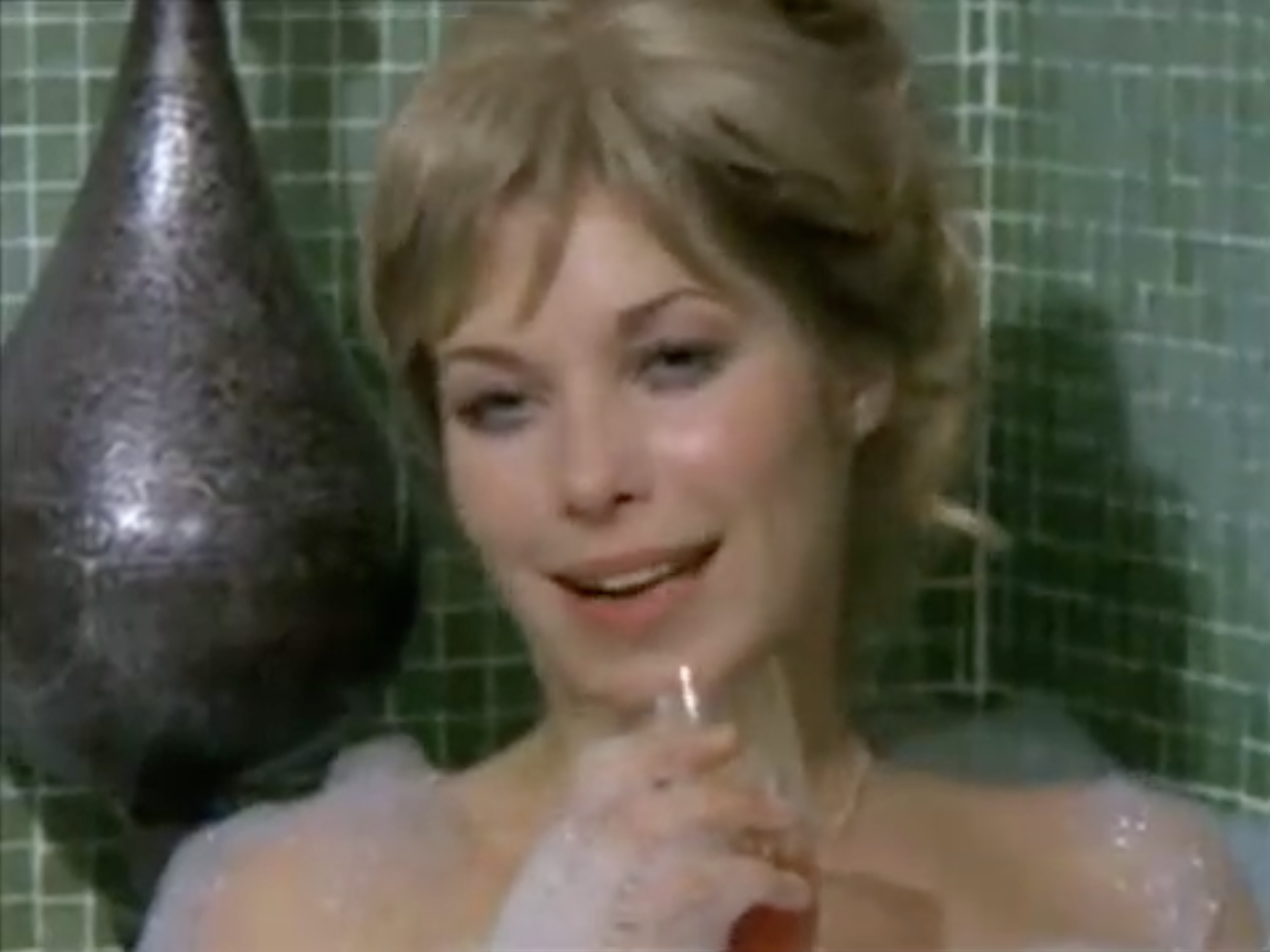
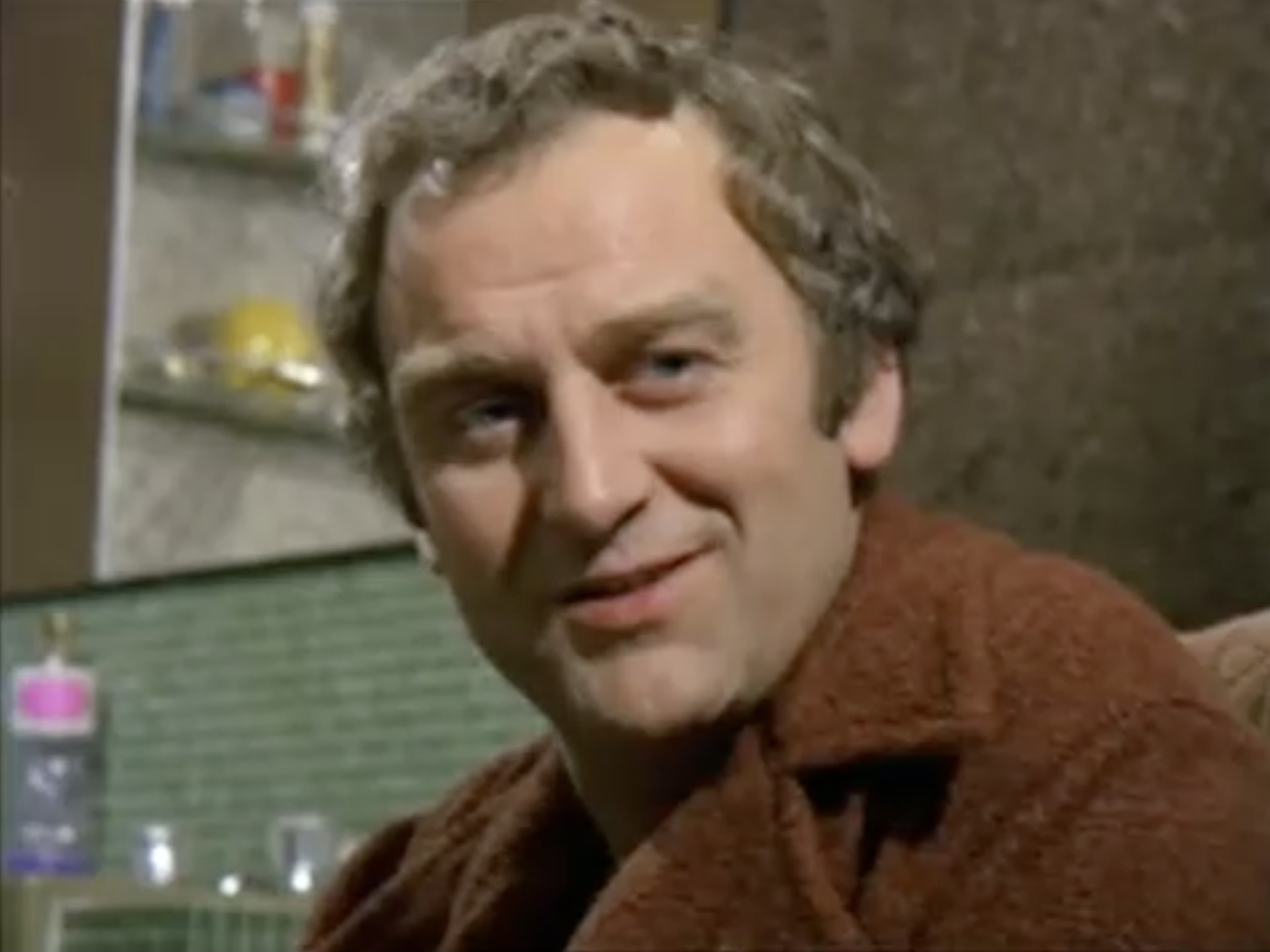
As mentioned, it’s not just the camera that creates the line of sight. The soundtrack is an almost ambient ‘musak’ – soft, luxurious, yet slightly sinister. The editing is sharp – the crystal glass full is revealed through a series of rapidly cut close-ups, each closer than before.
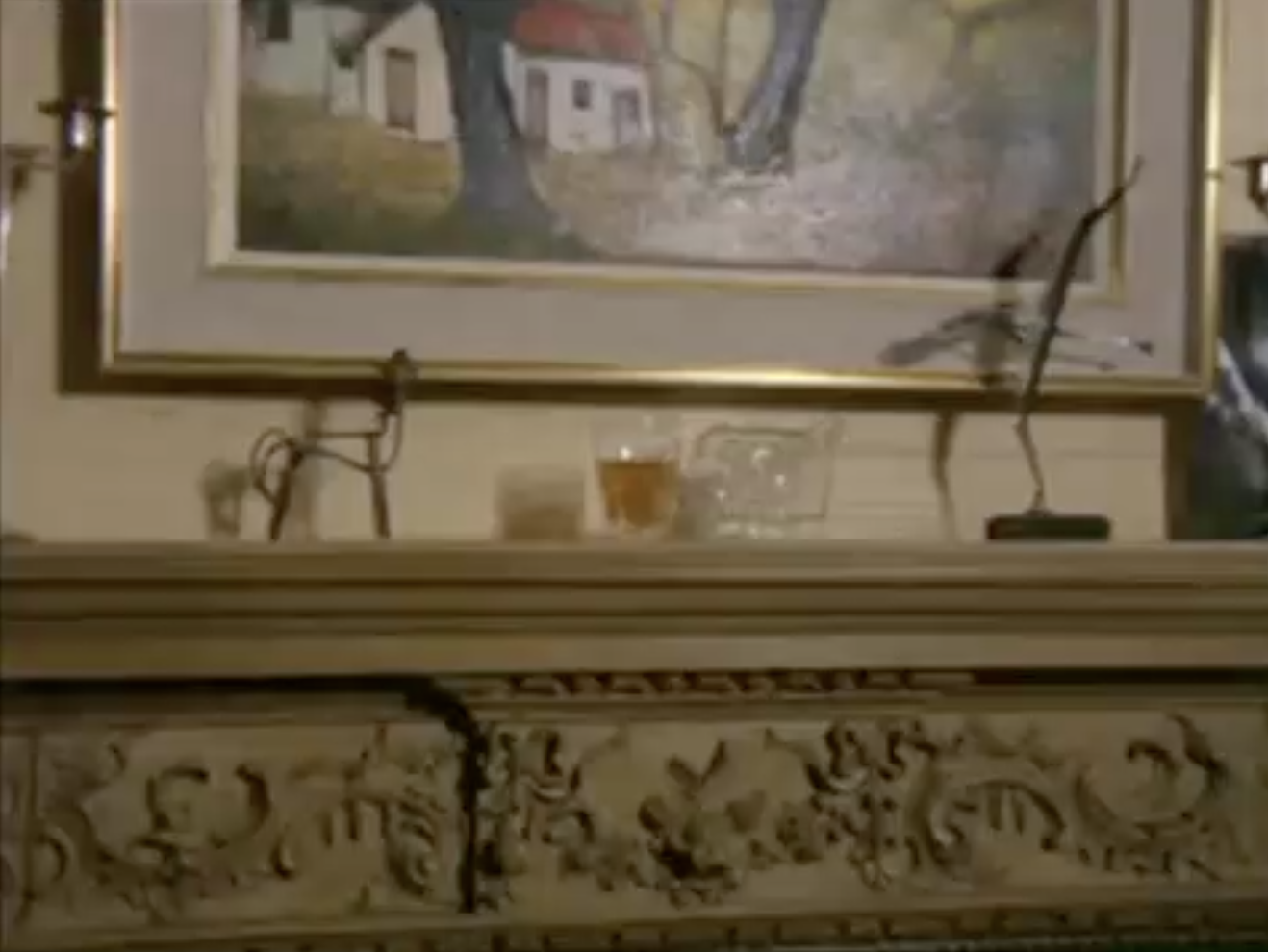
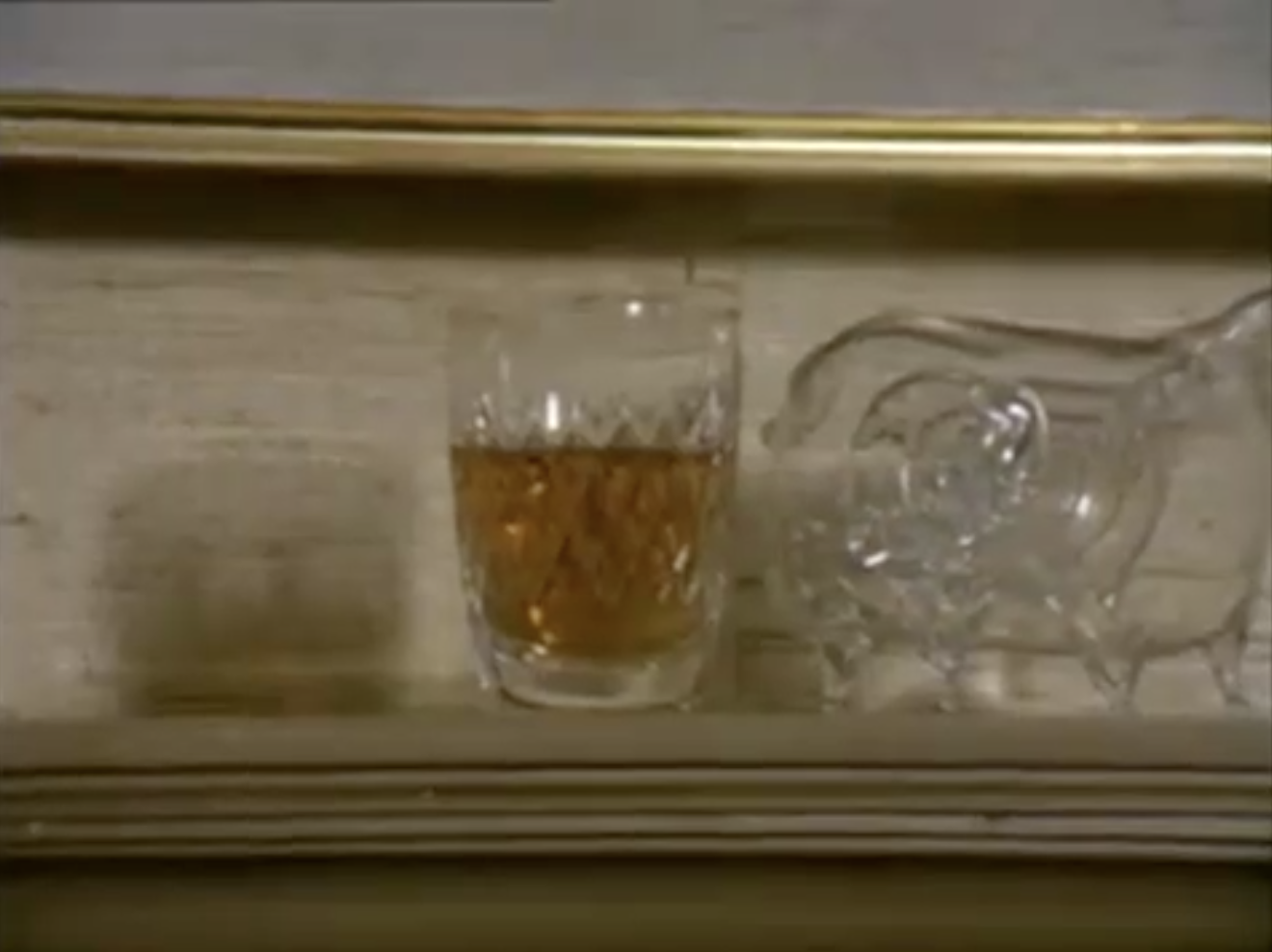

It’s a remarkable concentration of visual language in one sequence, and it is all at the service of intensifying the drama through the interactions of the characters involved. We perceive the scene through the drawing of a line of sight. It invites us to view the unfolding action not from the comfort of our armchair or sofa, but from within the scene itself. Go and watch it.
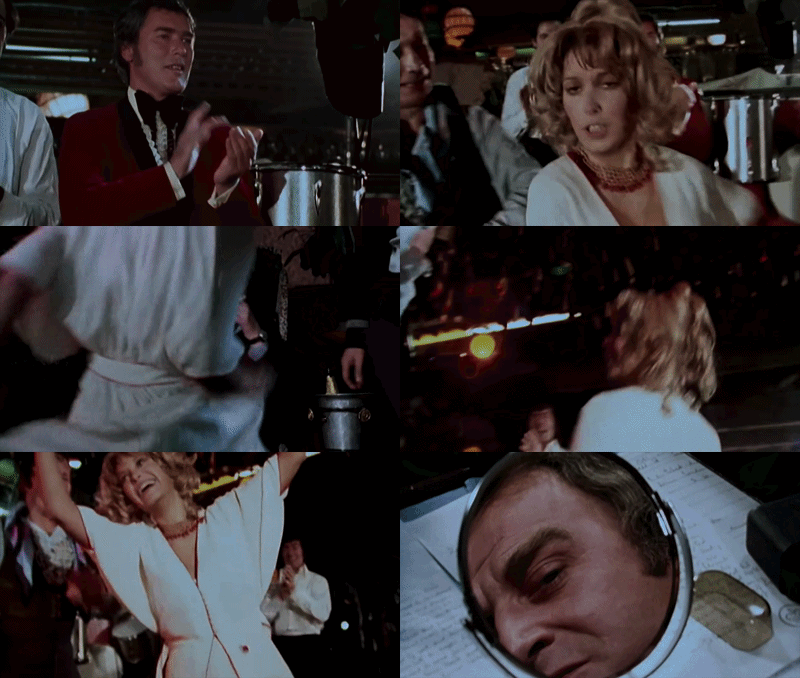
Another scene, not long after, switches from vérité-type shots, where the camera is doing the moving. Combined with realistic cutaways, it creates another confrontational style, (at one point Sandy moves towards the camera) juxtaposed with the shot from the following scene where Regan is reflected in the shaving mirror. Again, it is all about the line of sight and how it communicates the characters and their plight within the intensity of the club.
Finally, I return to an old video, a comparison of two scenes from Doctor Who. The confrontation between The Doctor and proto-Primord Bromley in ‘Inferno’ and a similar one between Sarah Jane and Zygon Harry in ‘Terror of the Zygons’. Both scenes use perspective in different ways to emphasise the aggression of the stalker and the fear of the stalked. The line of sight is paramount – sometimes the camera is the character’s eyes, and other times, it’s just enough to be an observer – but it’s a very fine line. This approach brings us into the middle of the action – in that moment, the rest of the world disappears. Again, the music and editing only add to the intensity.
For the analysis of Blake’s 7 – ‘Duel’, I’ve decided to compare script to screen (or other production documents) and focus on how the different ingredients of television production combine. It’s interesting to see what happens when the various processes that make up a television production collide with a director such as Camfield to produce dynamic material for a series with considerable budgetary limitations. In the Screen interview, Camfield himself describes the potential of these contributions.
Of course, when you work on an actual show, various factors contribute to this process. Your designer, for example, will provide your imagination with a giant boost as you discuss and eventually decide on the shape of sets. Deciding on a location will give definition to your ideas about the film sequences, and even choosing mood music can give tangible shape to still-woolly notions of how a scene in a script will go. When you actually come to plan your show in detail, you should be away like a rocket, image after image flooding your mind as you plot the moves of your characters and ‘hear’ them speak their dialogue.
‘Duel’ gives us the chance to consider these contributions, alongside Camfield’s observation that…
For side-by-side with what you want to see, you work out how it will be seen in terms of camera positions, lens swings, angles, booming positions, cutting and all the rest.
Let’s dive deeper.

Douglas Camfield and Blake’s 7
The first thing I’m thinking is how Camfield handles a space fantasy/adventure. I’m so used to his military sensibilities that feel distinctly Earth-bound. They also affect what we see on screen and how he approaches directing as a precise operation.
His earlier work on Doctor Who (‘The Crusades’ and ‘The Time Meddler’) fall far outside the realm of space fantasy, leaving ‘The Daleks’ Master Plan’ as the sole representative of this. And there’s still an awful lot of that missing, even if, as I type these words, another two episodes of fabulous film have been located and are due to be shared with us hungry fans. Perhaps, there will be revisions and new perspectives after all!
Nonetheless, if we place moments of ‘The Daleks’ Master Plan’ and ‘Duel’ side by side, we can glean familiar scenarios and moments of dynamism that are perhaps suited to a space adventure, rather than a historical or contemporary thriller.
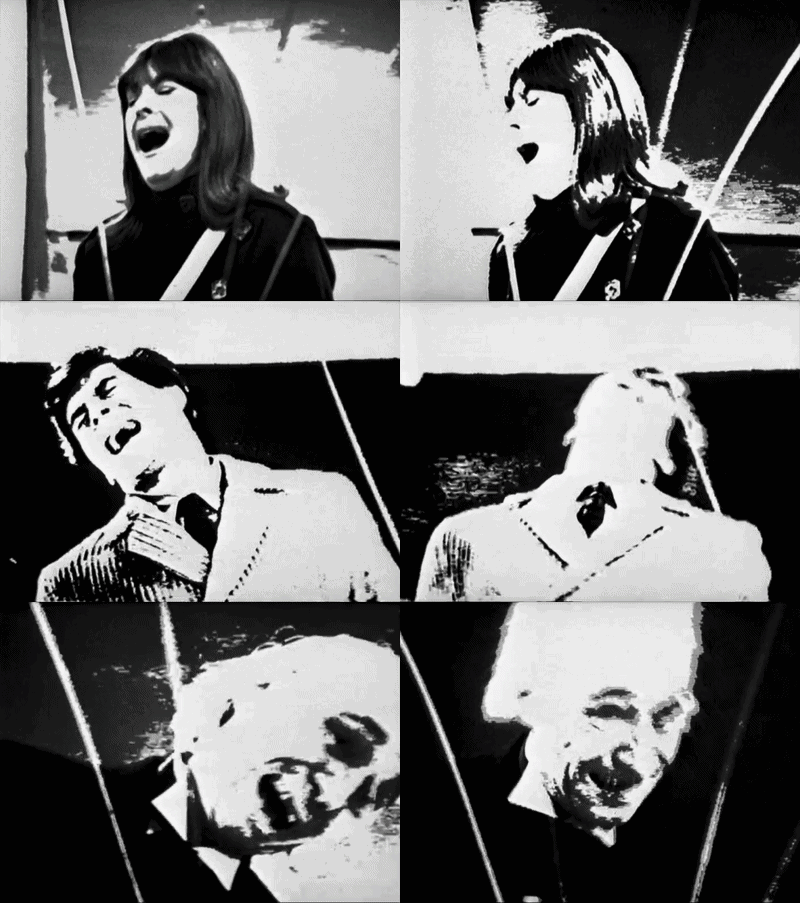
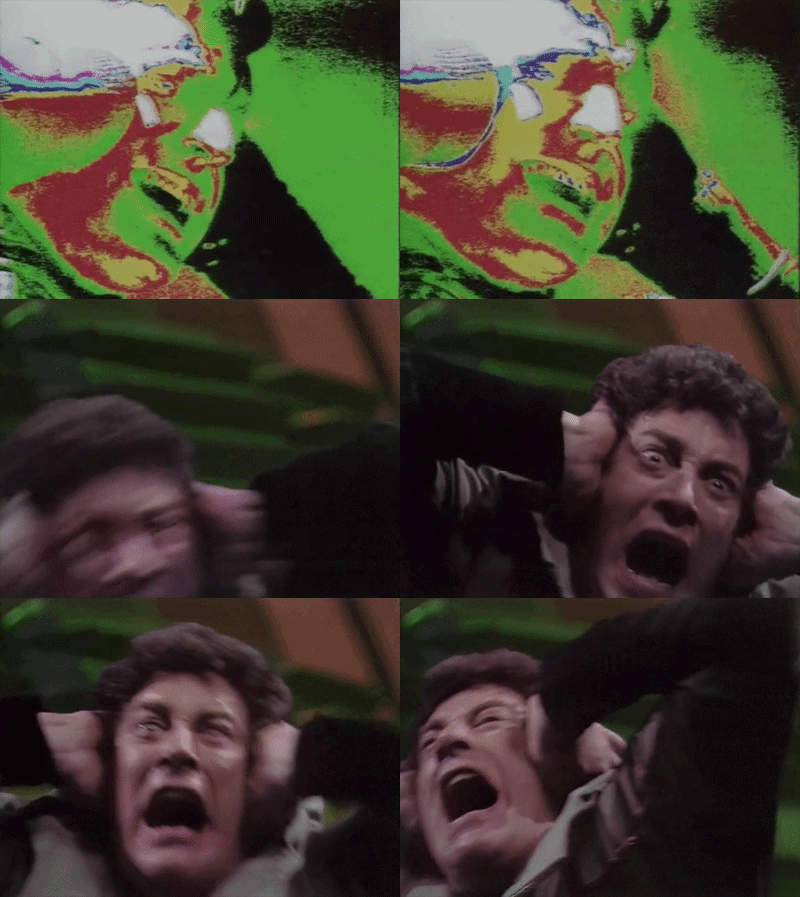
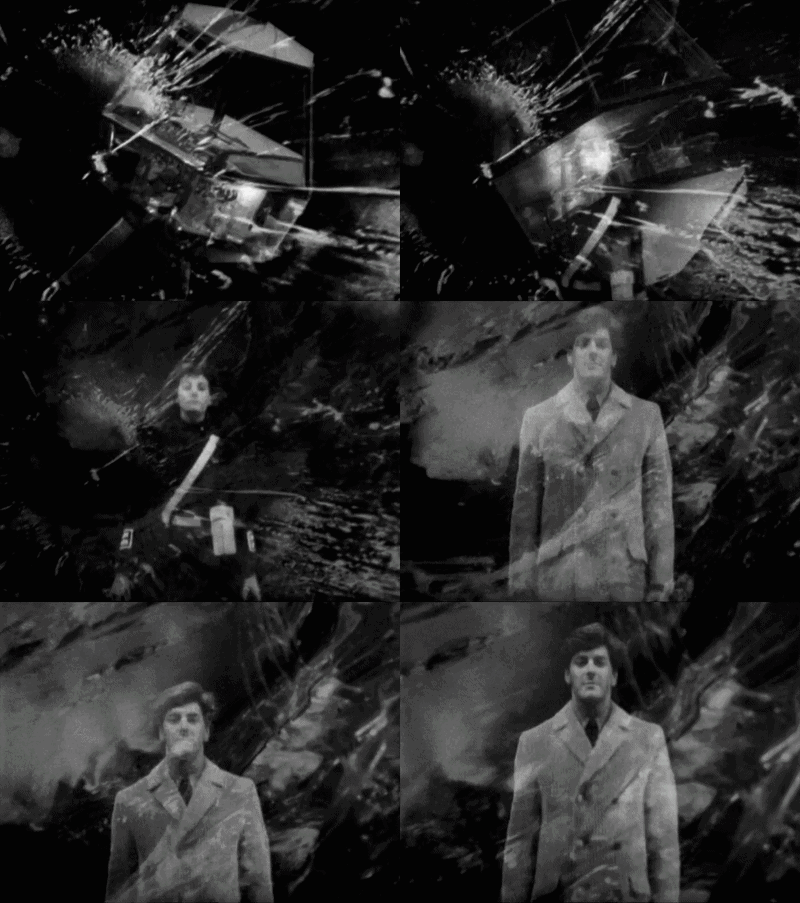
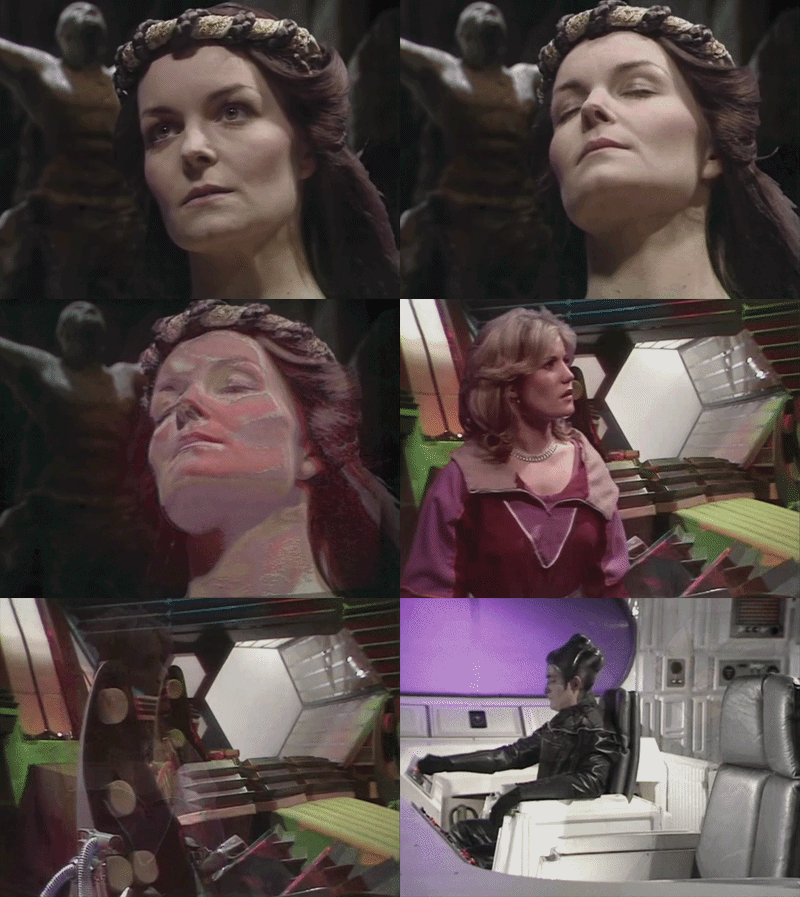
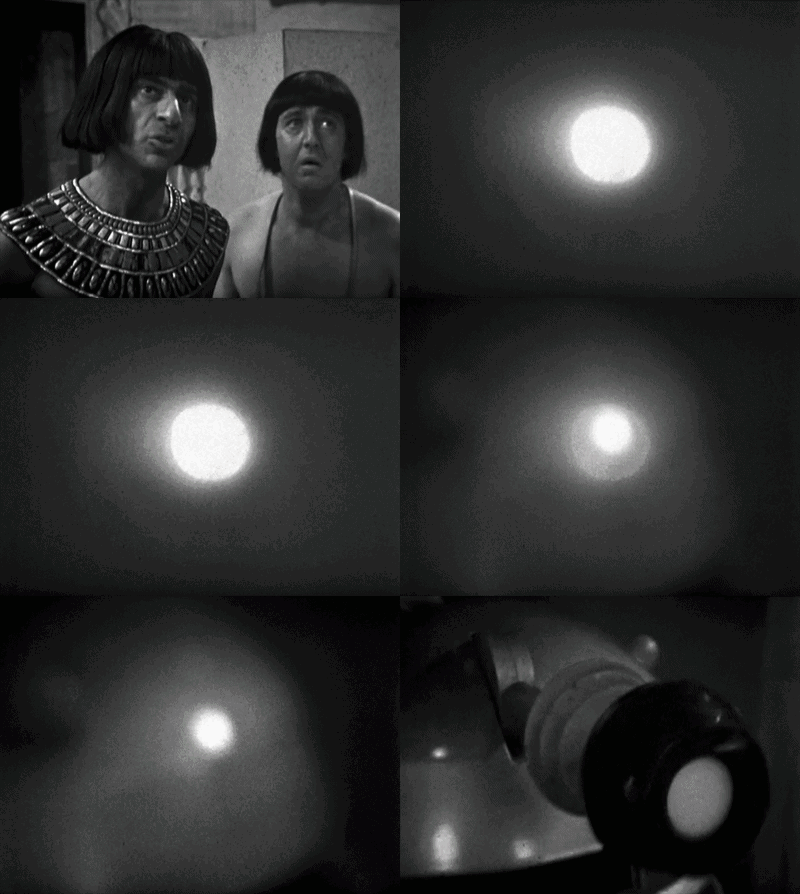
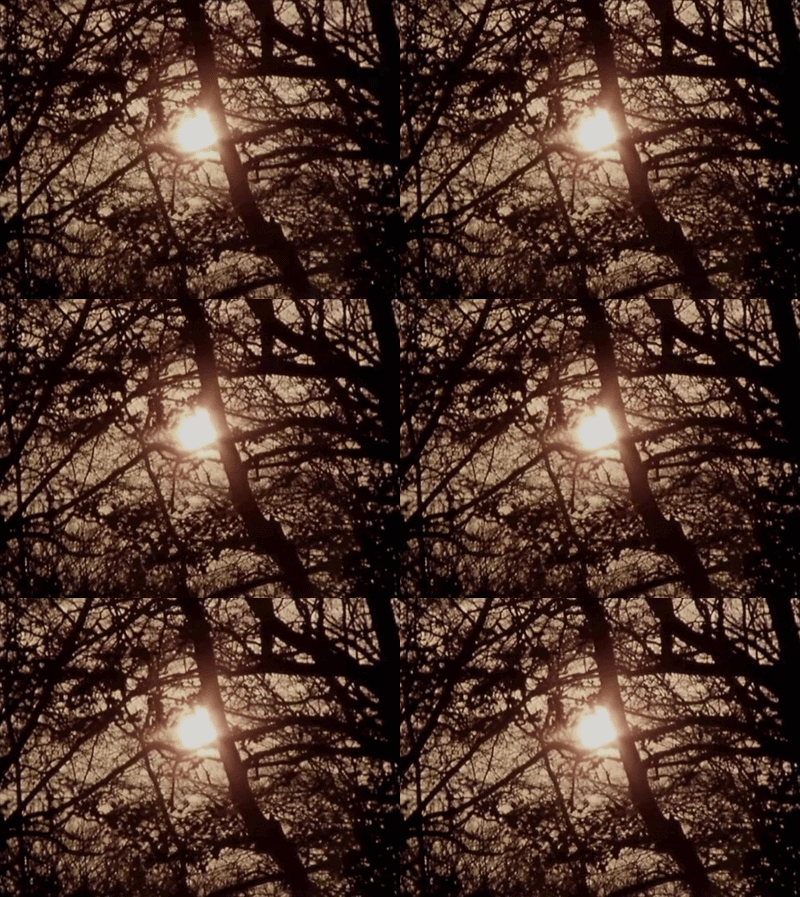
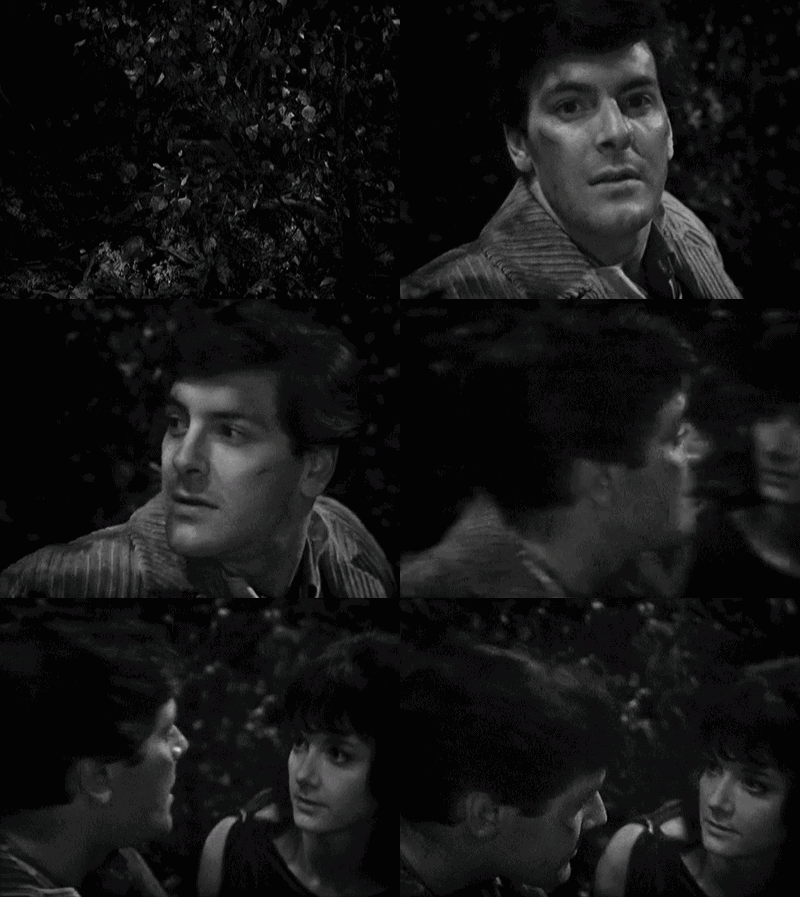
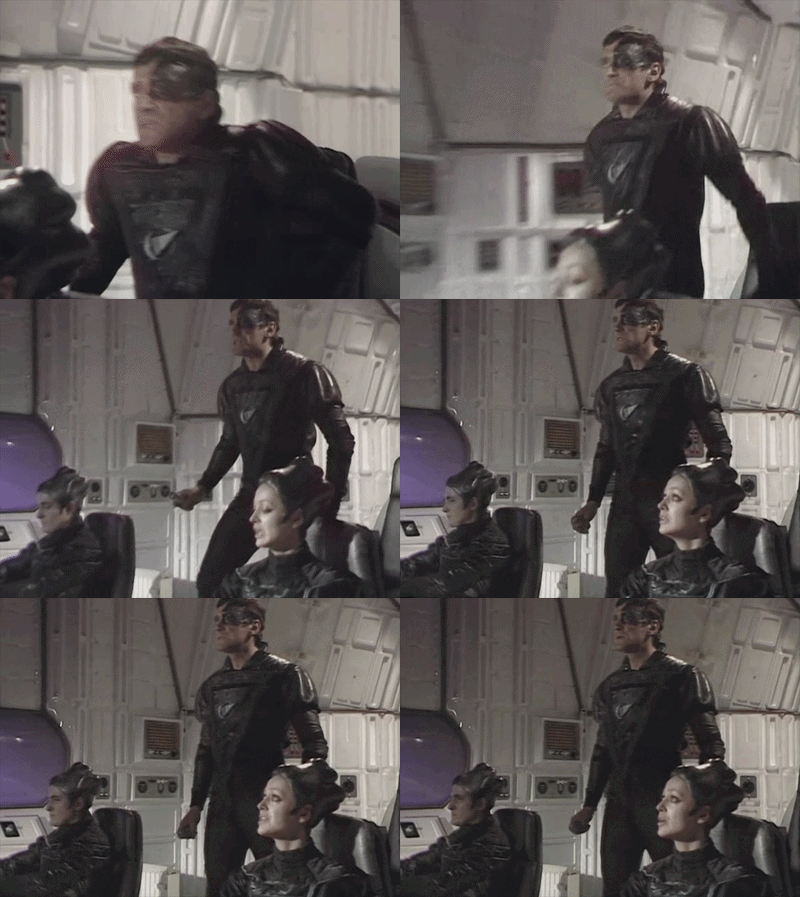
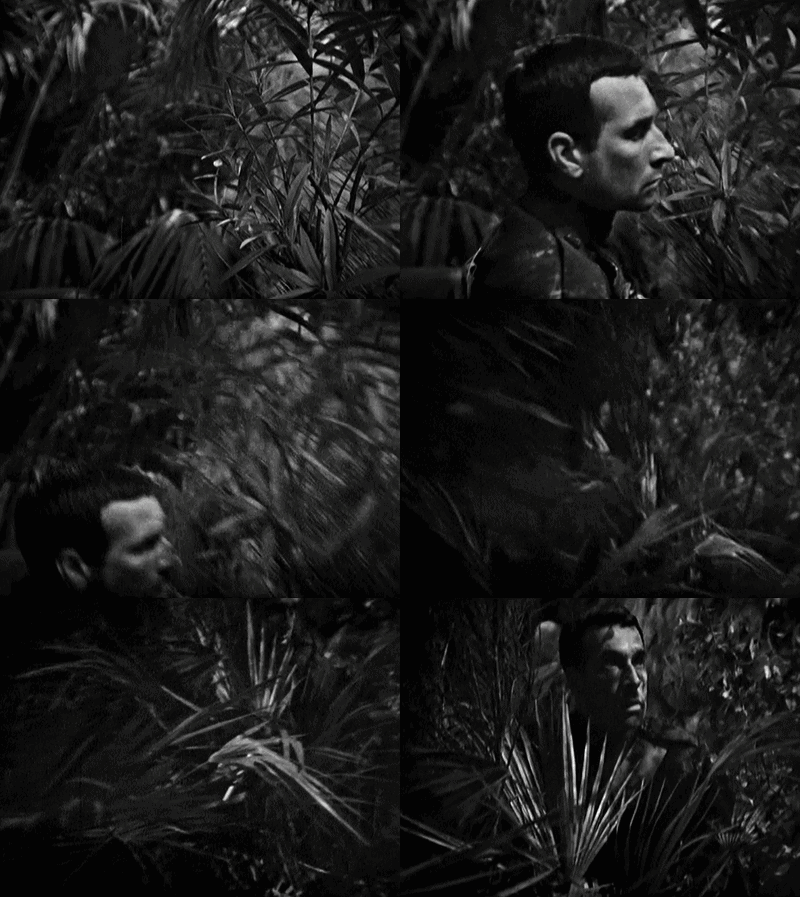
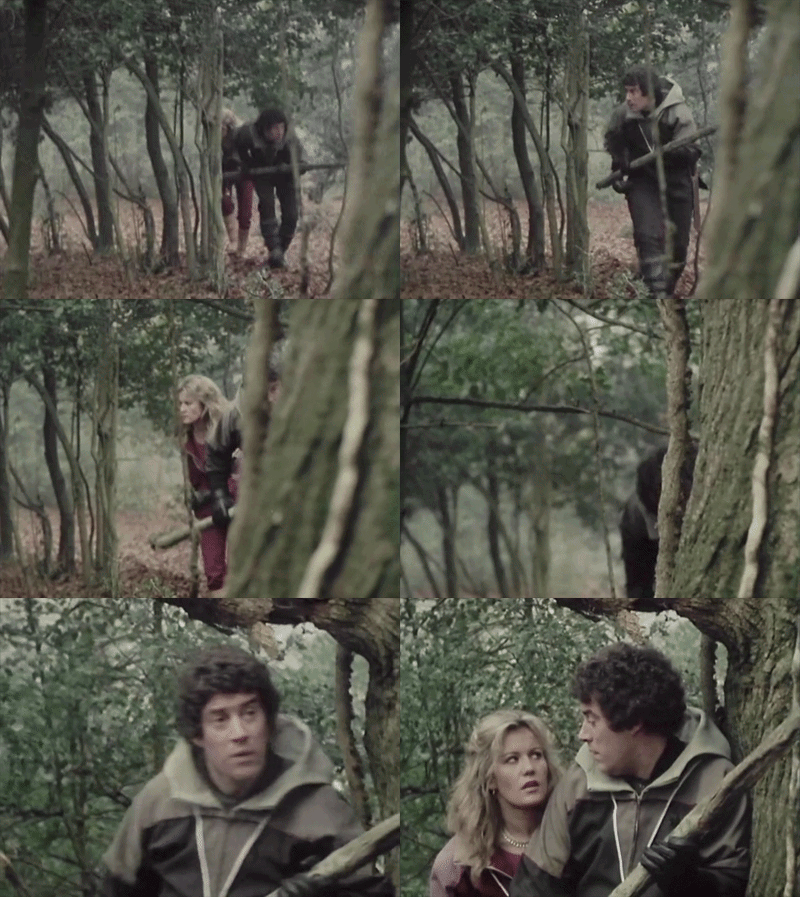
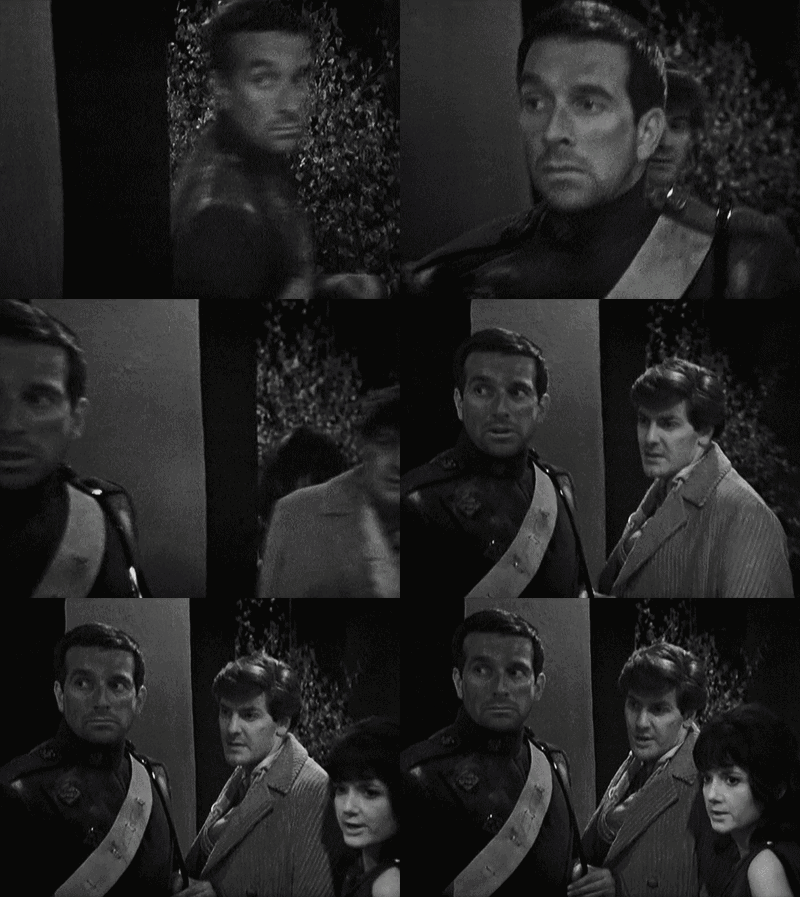
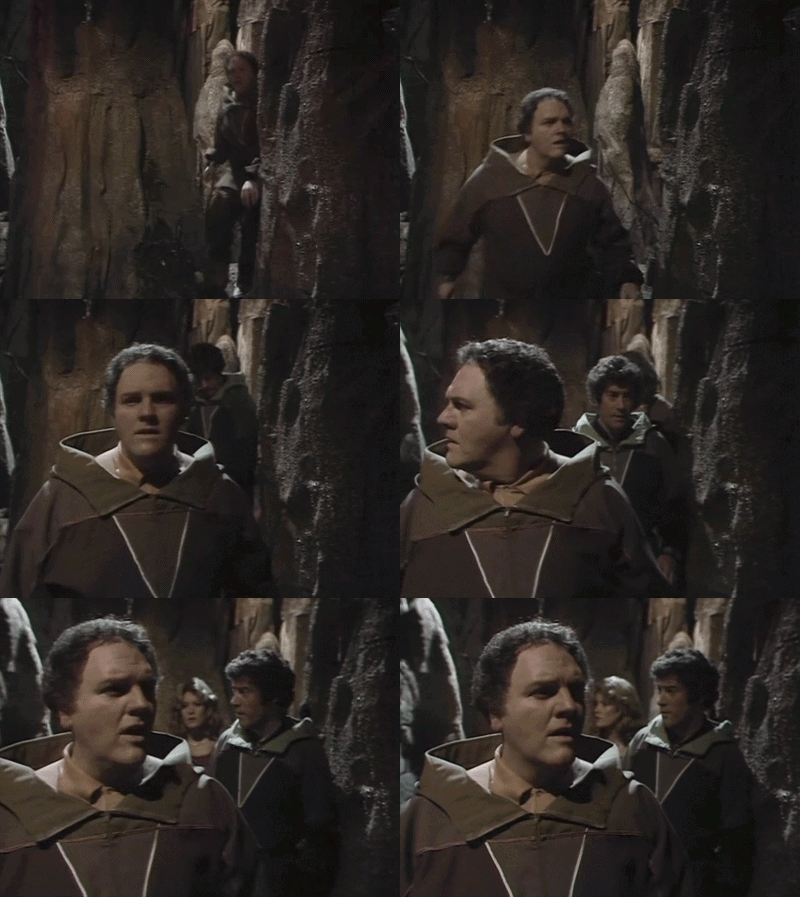
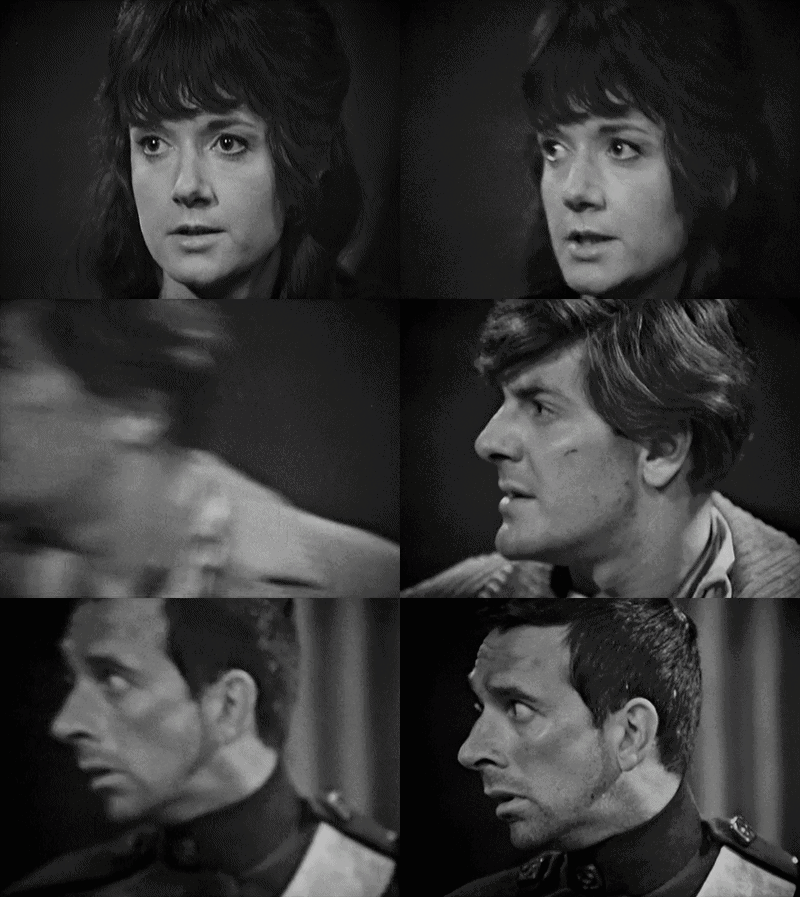
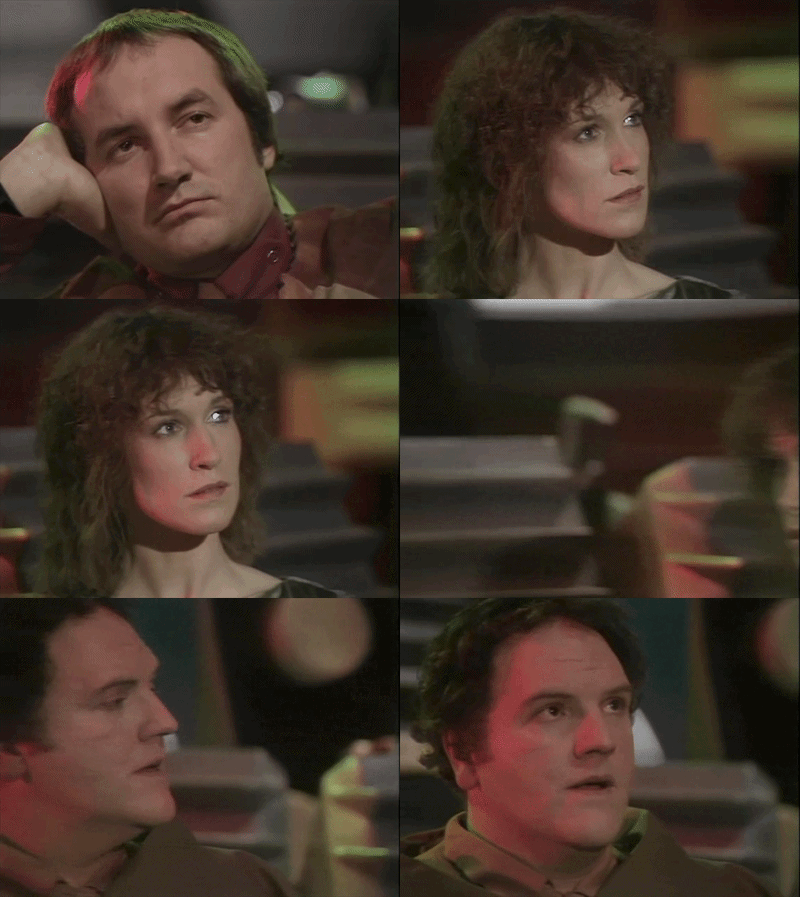
It feels oddly unlike Camfield at times, as so much of his output is centred on contemporary Earth. Yet, while some of these moments are unique to a futuristic setting, these examples once again highlight the line of sight – how the camera movement, positioning, pacing, depth, and sound design are all at the service of the character’s predicament and motivation. The camera is amidst the action and rarely just observing it. This invites the audience to be more closely involved or invested.
Case study #1 – the opening frames. Darkness gives way to light.
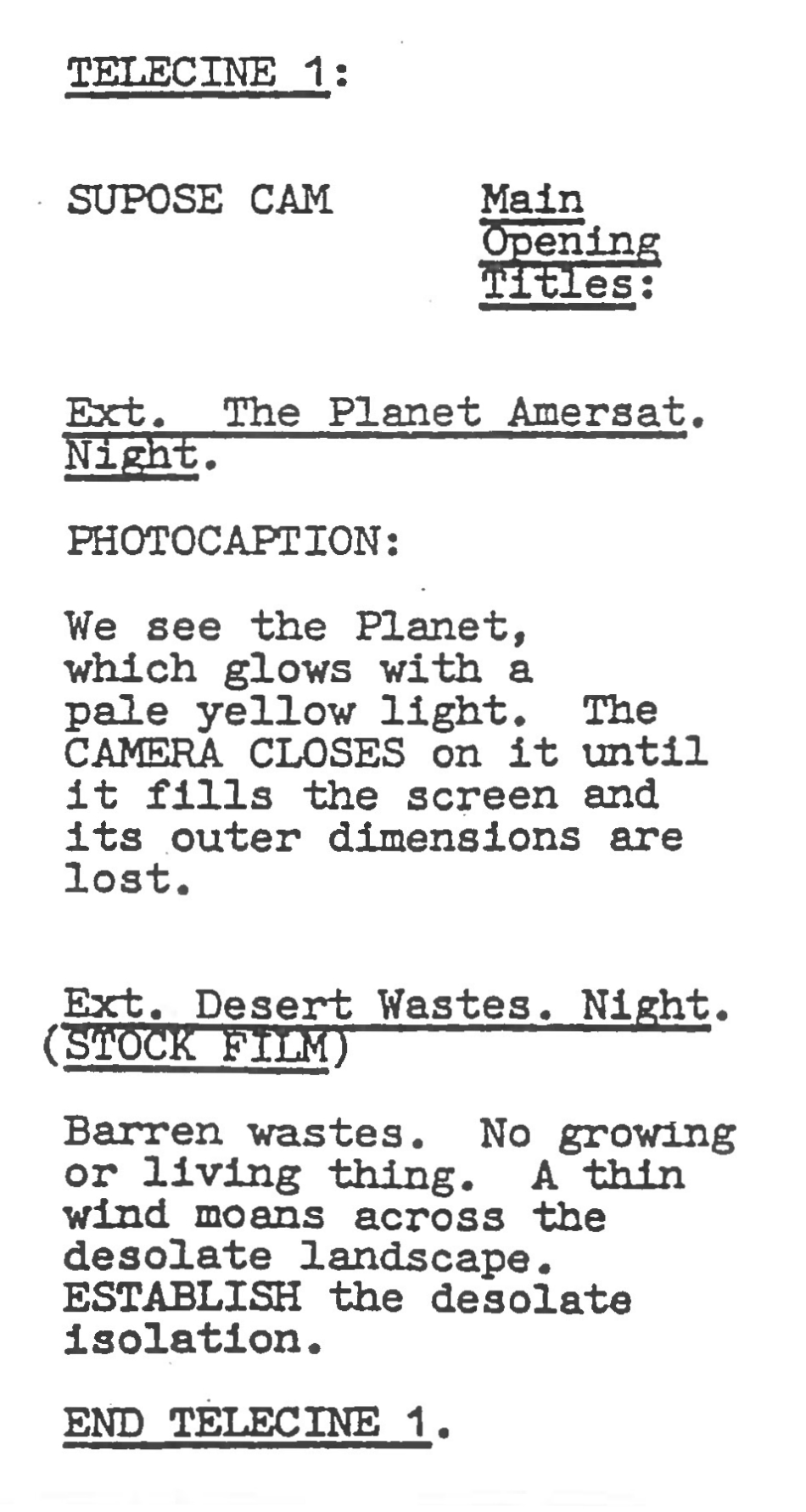
Let’s start with the rehearsal script.
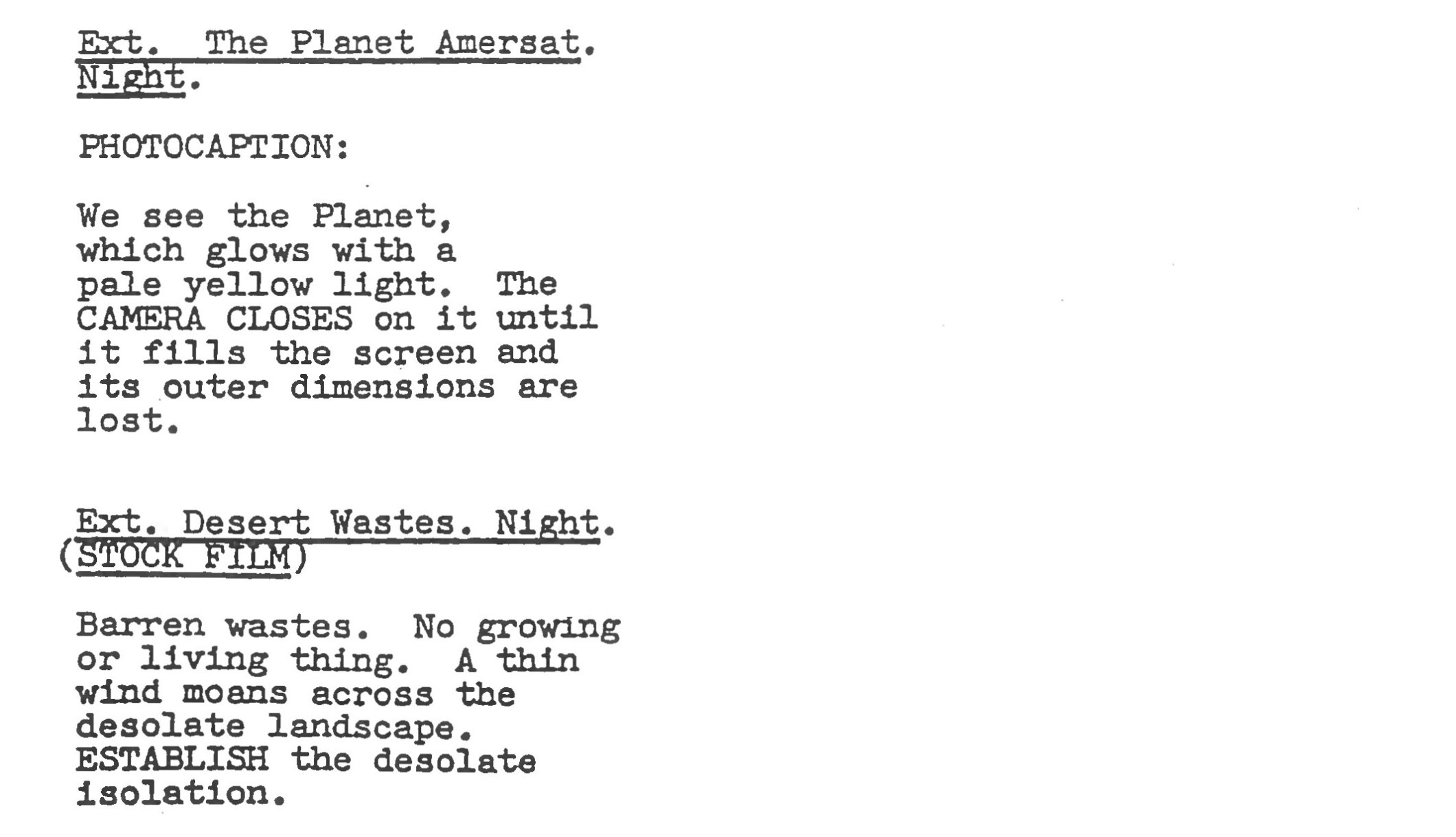
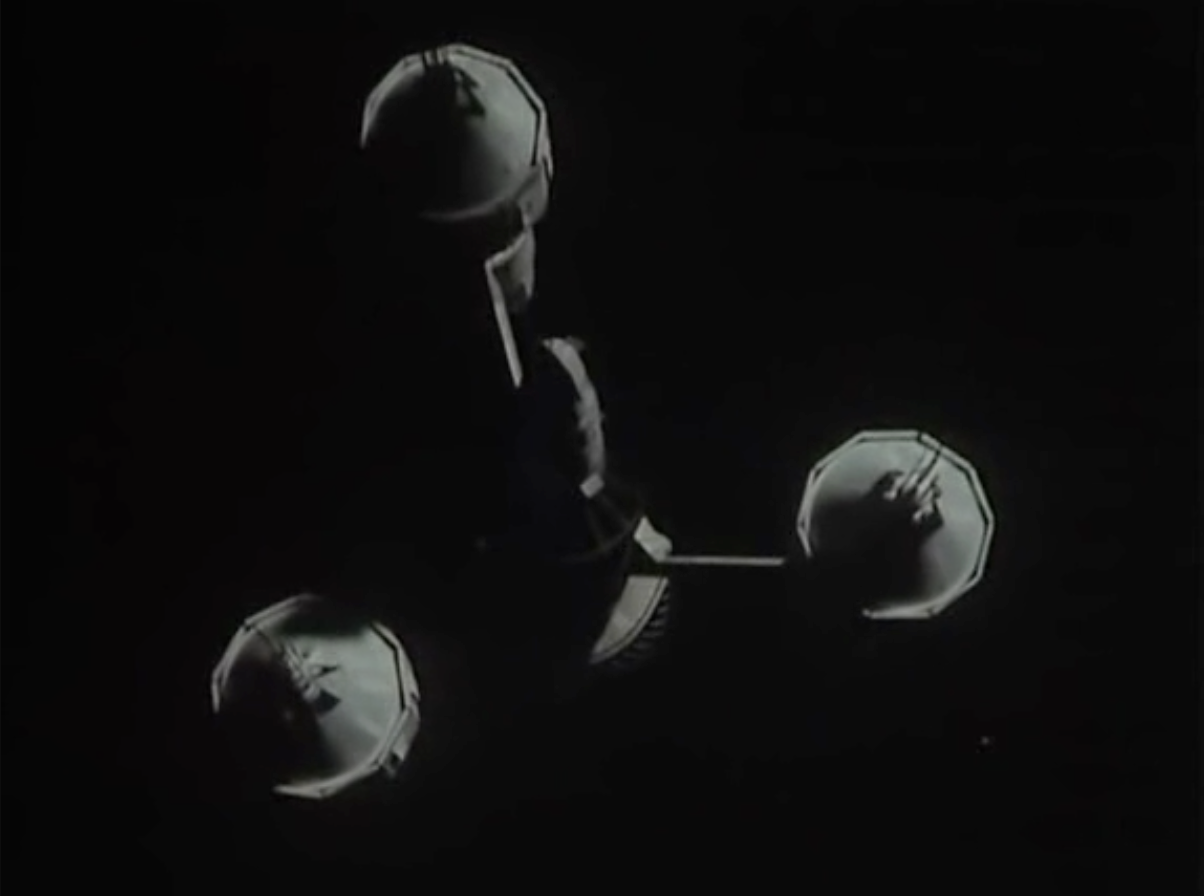
On paper, it’s all straightforward. Zoom into an image of a planet, and mix to some stock footage. However, Camfield issues a statement of intent right from the opening frames. A cinematic touch that positions ‘Duel’ as something markedly different from what had been established in the seven episodes beforehand. I’m talking of the moment just before the opening frame of the action.
The standard convention for Blake’s 7 is for the title caption to cut to the first moment of the episode. This might be an establishing model shot or a direct cut to a live action scene. Some episodes might push the boat out and have a fade from the title to the first frames of footage.
But not ‘Duel’.
Walk into a cinema. Take a seat. There is a pivotal moment where the trailers, adverts, audience chatter, and everything else must give way to the main feature. The moment of silence and blackness is often the signal to the audience to prepare themselves for the next hour or three.
Its a moment where a crowd transforms itself into an audience, and its the true beginning of all films” – Tom Sutcliffe 8
Another moment of blackness is often where the conveyor belt of film company logos grinds to a halt, and the opening scene can finally play out.
“The most valuable thing is the silence and the darkness, and what emerges from the silence and the darkness…thats the most precious moment of the whole film, basically, before it starts” – Ken Loach 9
To offer an example from a similar era to ‘Duel’, we can look towards Steven Spielberg’s Jaws, from 1975.
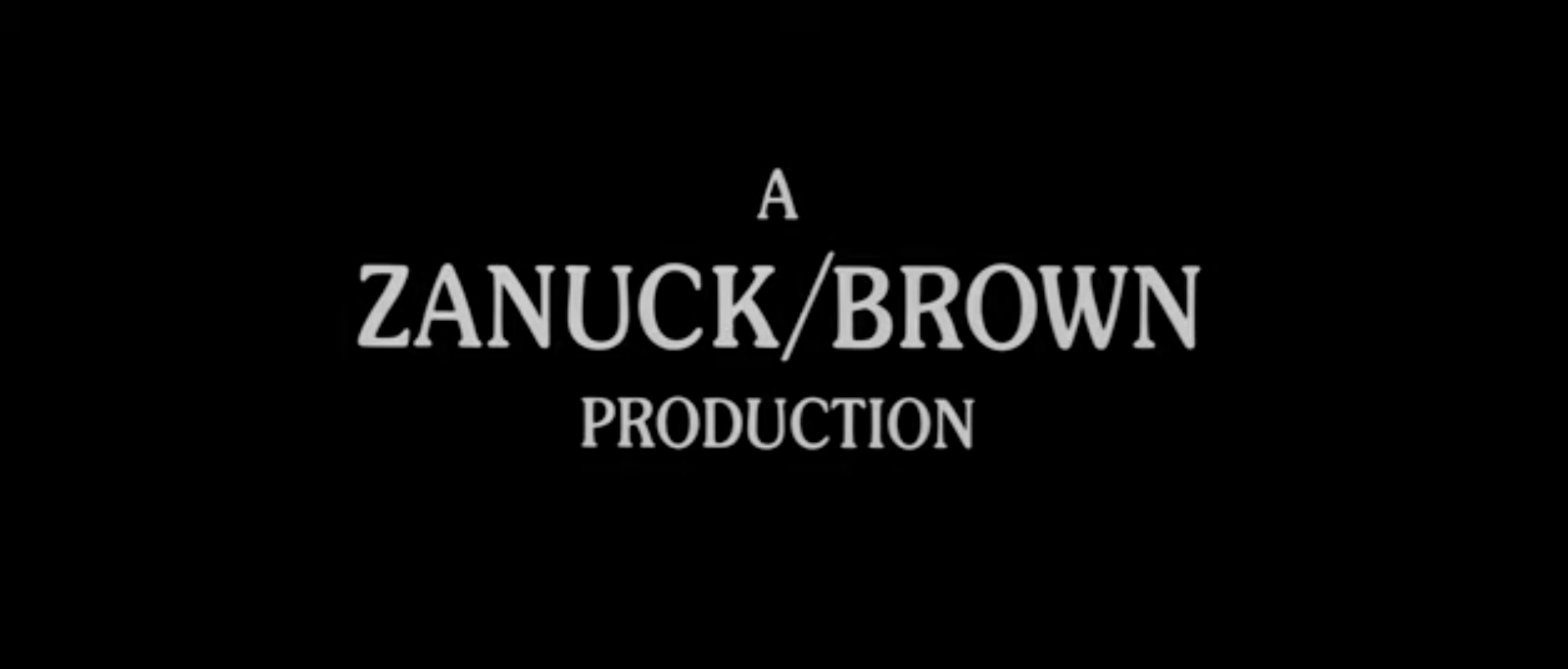
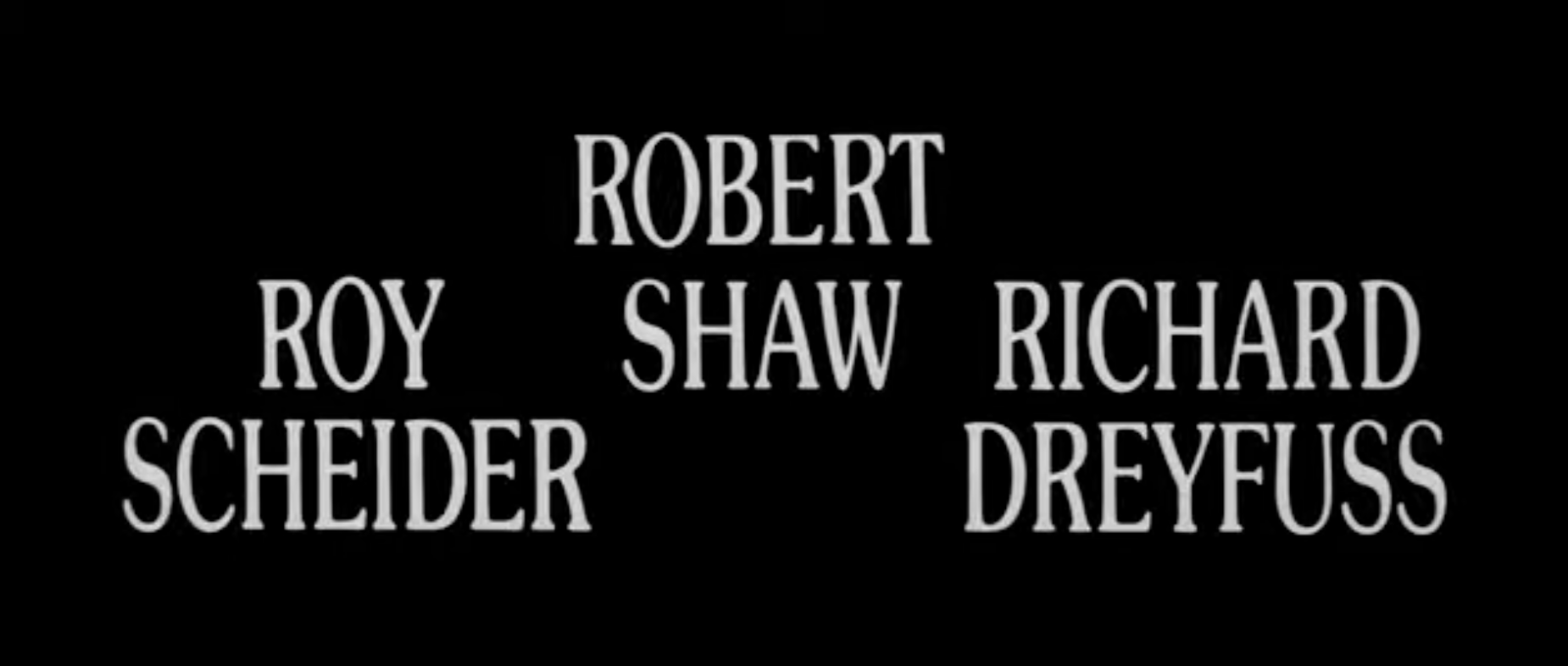
The movie opens with the familiar Universal Pictures logo that emerges from the depths of space – you know, the one where the Earth is surrounded by two gaseous rings. In this instance, it is the slower version used for the CinemaScope aspect ratio. (Logo-fans take note, the other one, used for more vertical ratios, is a faster, more dynamic journey through space. Both versions debuted in 1963, and the artwork was created by Disney legend Eyvind Earle.)
I digress.


Accompanying the logo are the reverberated sounds of what appear to be, on first hearing, aquatic creatures. Or, perhaps it’s the distant sound of seagulls distorted through the water.
Whatever it might be, it works with the eerie Universal logo and suggests something in the depths. Apparently, it was a tribute to Alfred Hitchcock, using the sound of seagulls that literally heralded ‘The Birds’ (Universal, 1963). We’ll return to this movie a bit later. 10
However, what is really interesting is the length of time between the fade out of the Universal logo and the fade in of the opening caption. The blackness runs just short of 15 seconds. It’s what seems like a lifetime before we see any kind of text, or hear the familiar two-note menace of John Williams’ theme.




For ‘Duel’, Douglas Camfield uses a similar cinematic convention, with the title sequence fading to black, and after a significant amount of time, the planet eventually emerging from the darkness.
Not only does it prepare the audience, but it’s also the beginning of a journey, as we are transported to the planet’s surface.
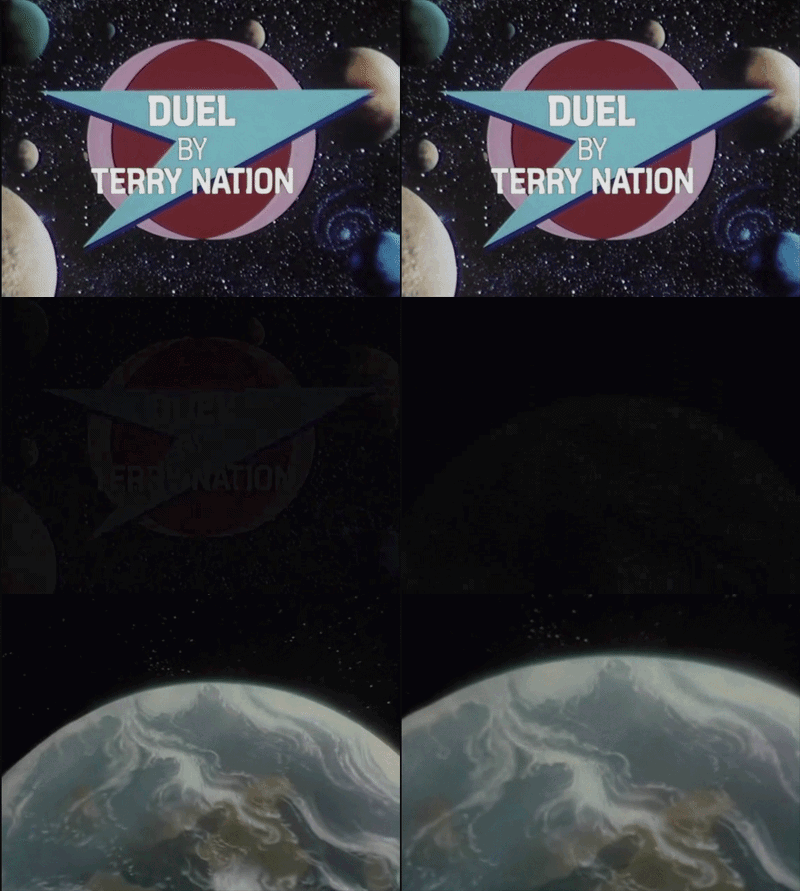
It might seem like a small detail, but it’s unlike any other episode of Blake’s 7, and I think it says a lot about the sensibilities of Douglas Camfield – a television director who was capable of reaching out to cinematic conventions to emphasise his ‘inner eye’.

Case study #2 – the first three scenes in ‘Duel’.
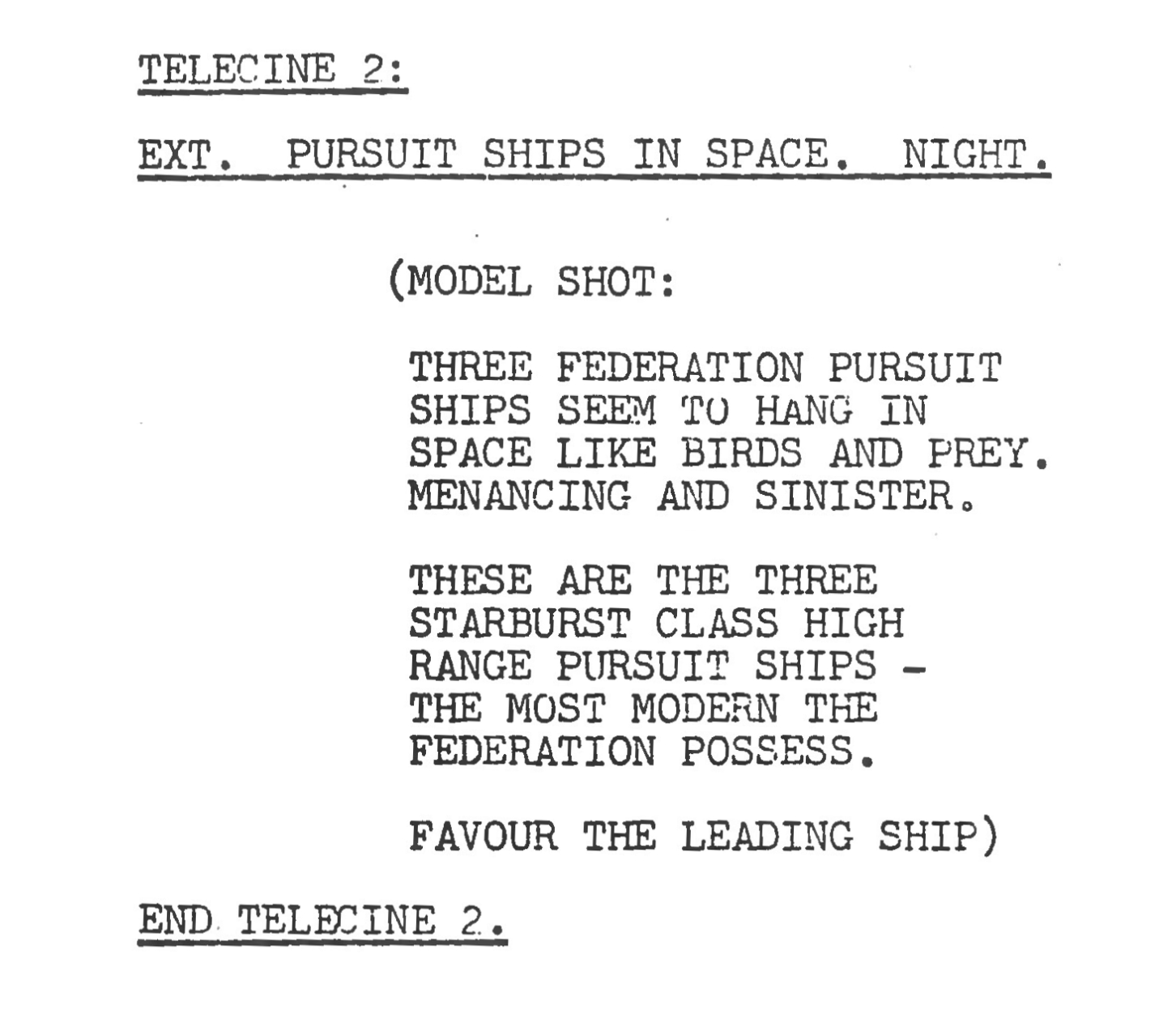
The first three scenes of ‘Duel’ are establishers, and have something in common -they are all about what is not quite within view.
Starting with the barren planet, we are introduced to Giroc and Sinofar. Camfield establishes the desolate landscape through a series of camera movements and elongated shots that do not suggest we, the audience, should be simply passive observers. In fact, we are invited to look, and then look a little closer. By walking through the environment and focusing on what is in the distance, we get a sense of the history of the planet and the first clues about the mysterious characters.
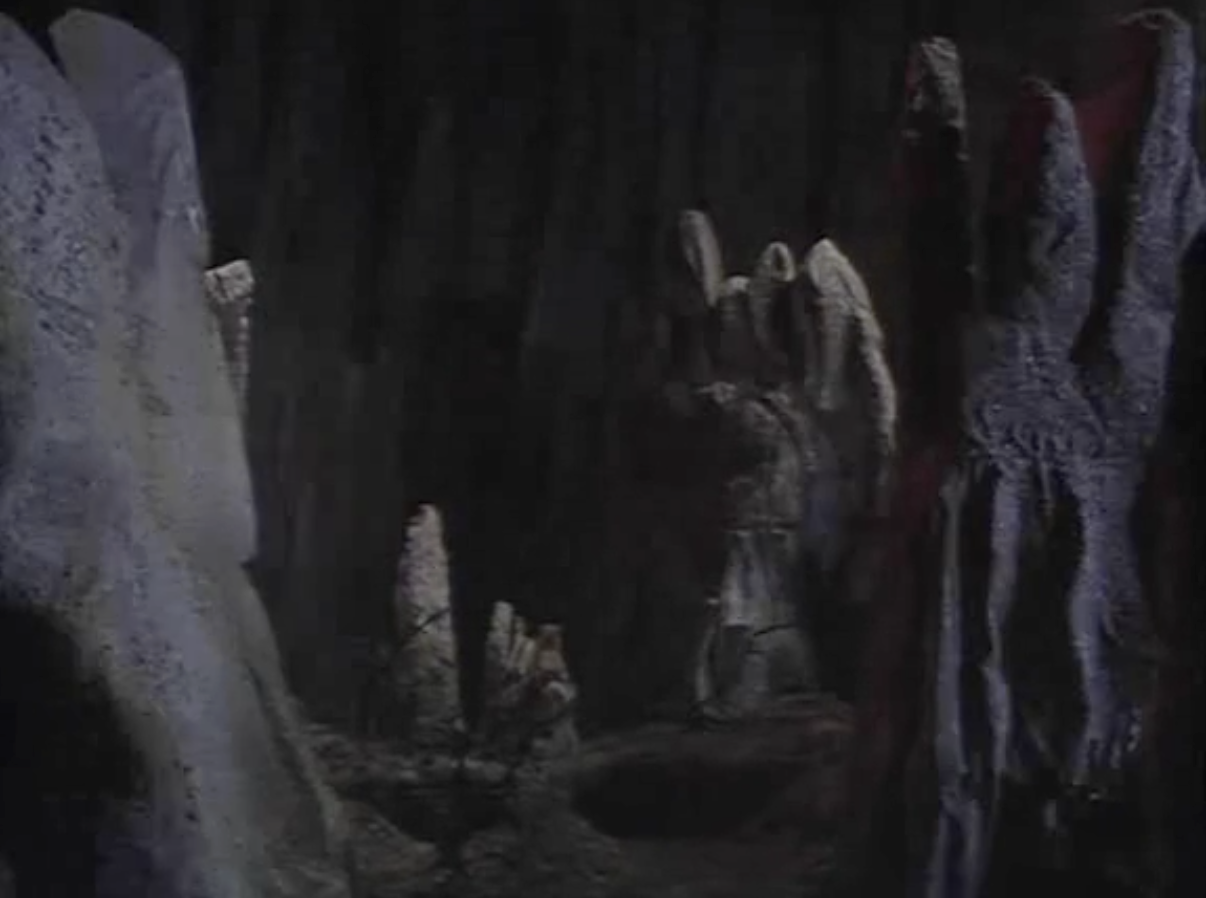
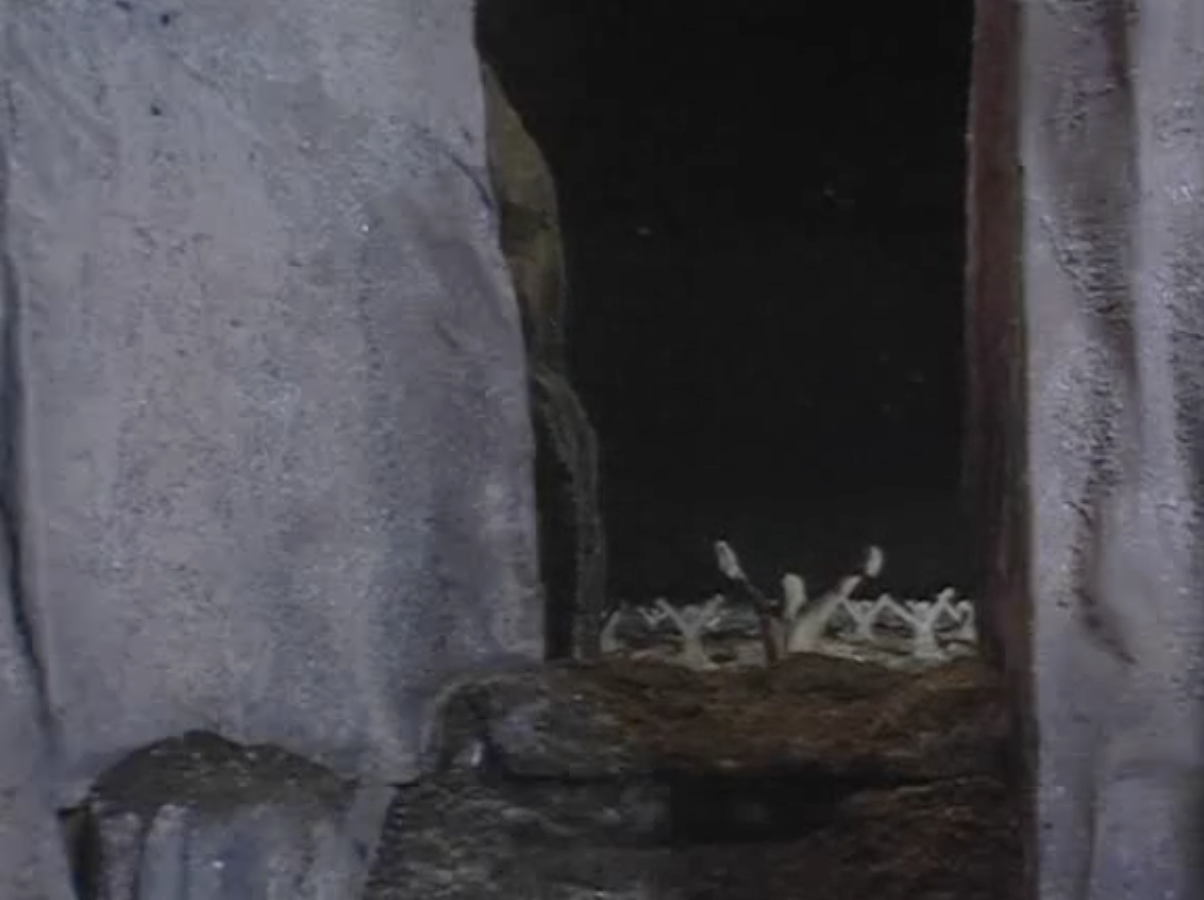
It’s worth acknowledging the lighting at this point – it’s not just arcing the carbon to create the impression of lightning, but it’s about emphasising the depth of the rockfaces – always a challenge in the television studio.
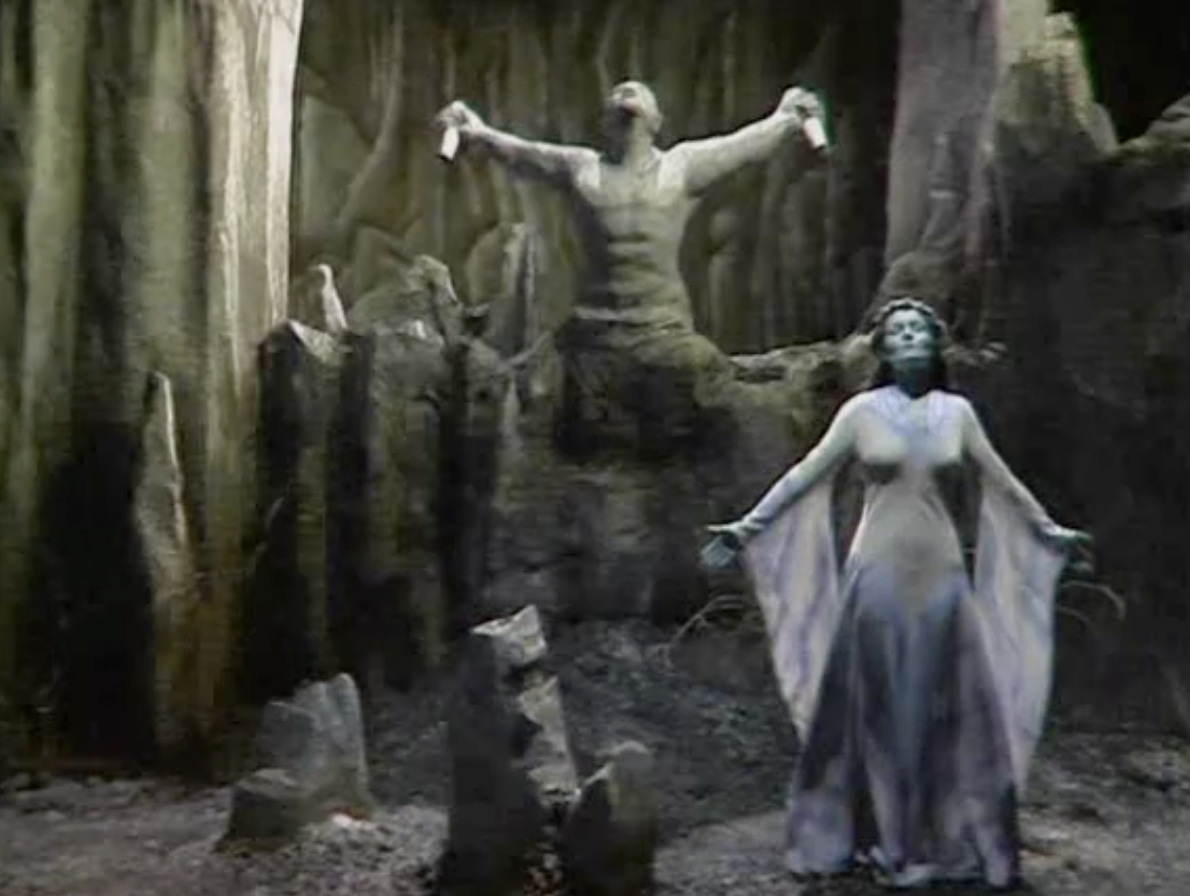
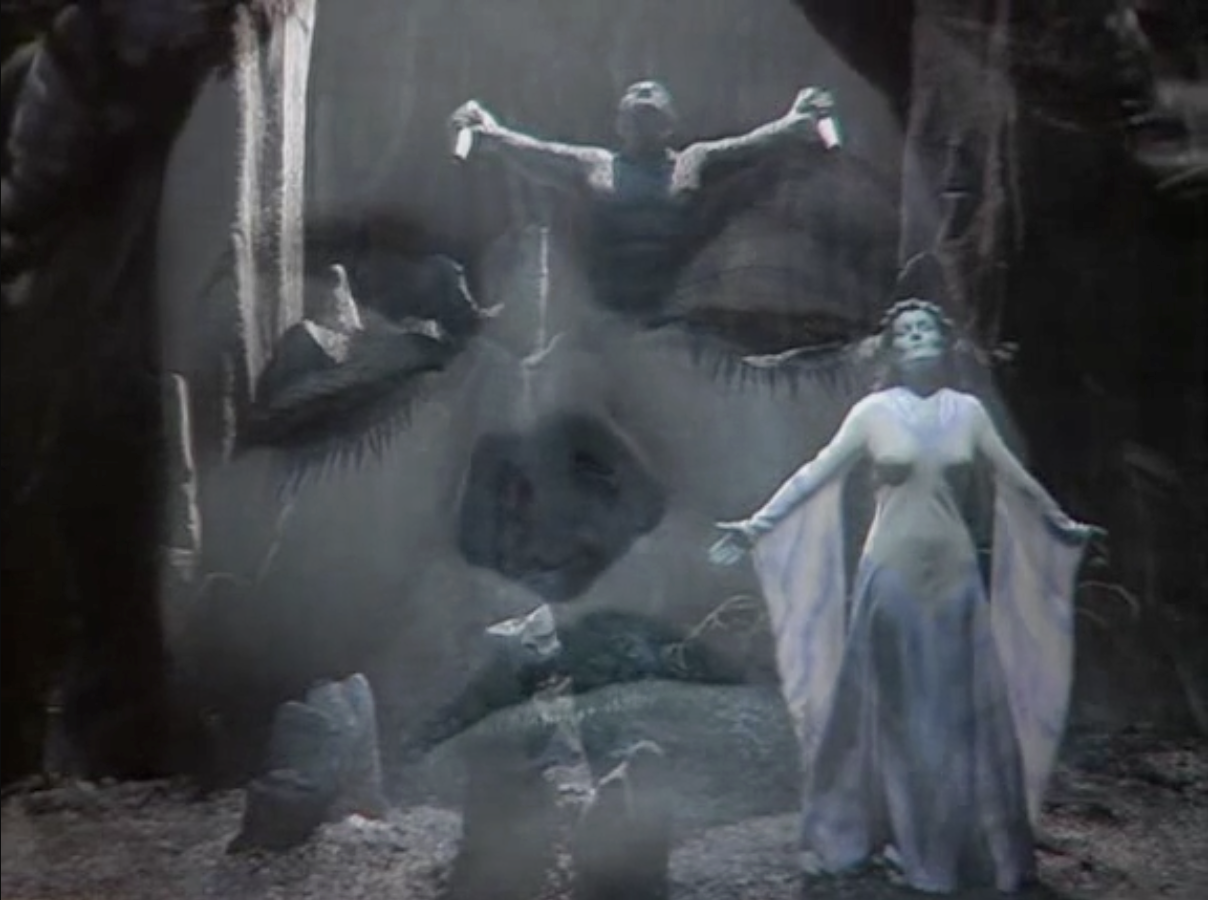
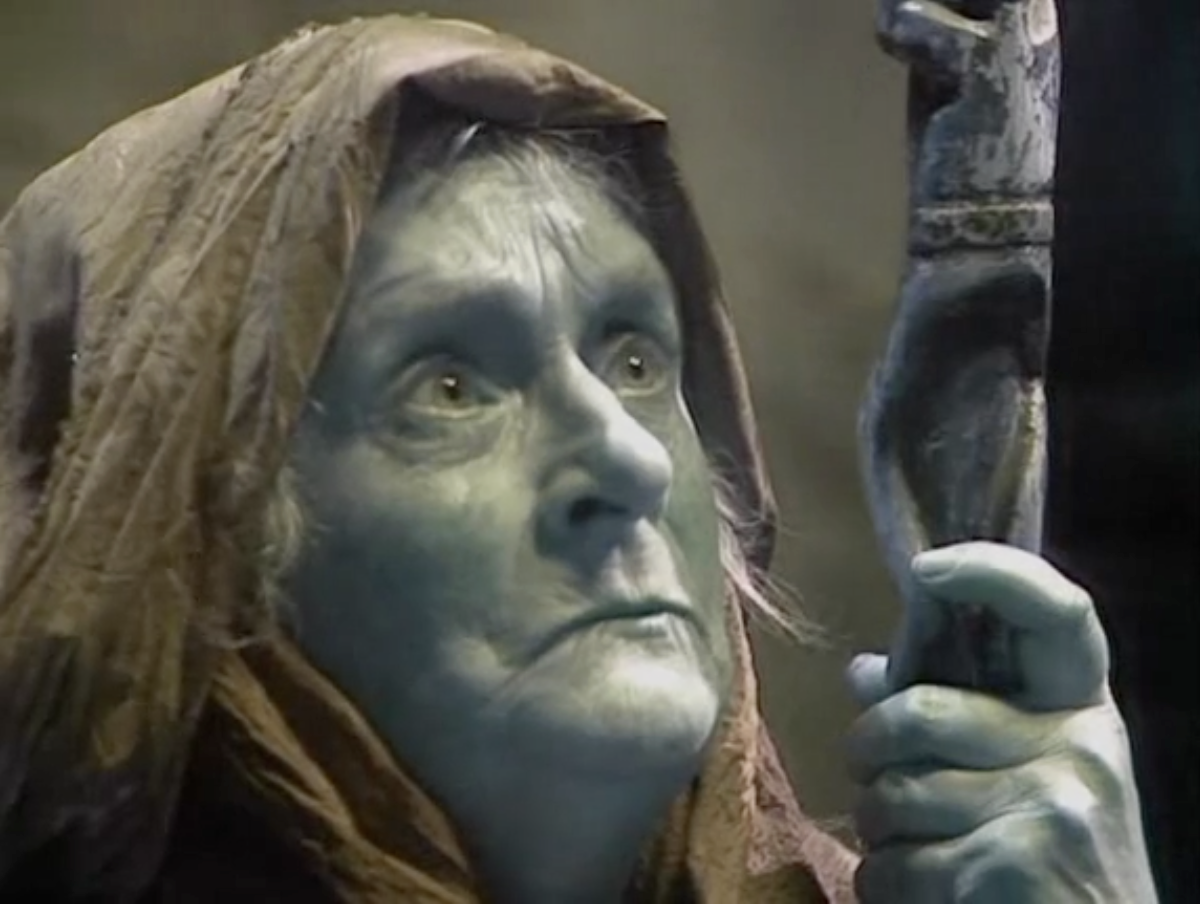
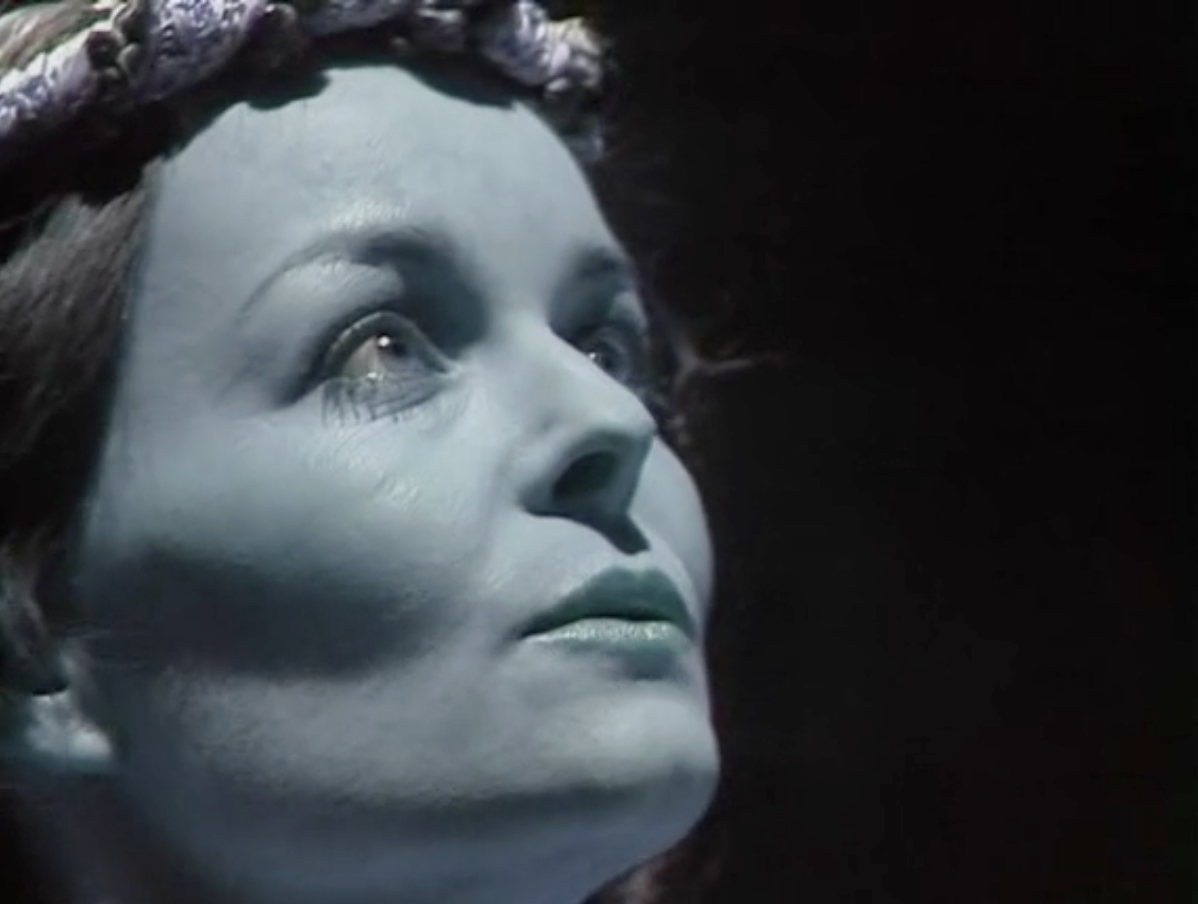
Giroc and Sinofar discuss their plight, and we recognise there is a strong dynamic between them. The words might be directed at each other, but their eyeline and their characterisation are mysterious and oblique. The camera is up close, almost like a third person is standing between them. Their words point towards things we don’t yet understand, or cannot yet be seen. This contributes to a particular line of sight that is upwards and outwards – things that exist outside of the scene. Giroc looks up to Sinofar, who, in turn, looks up into the starry night. The slow mixing between shots, the camera, and sound design recognise this.
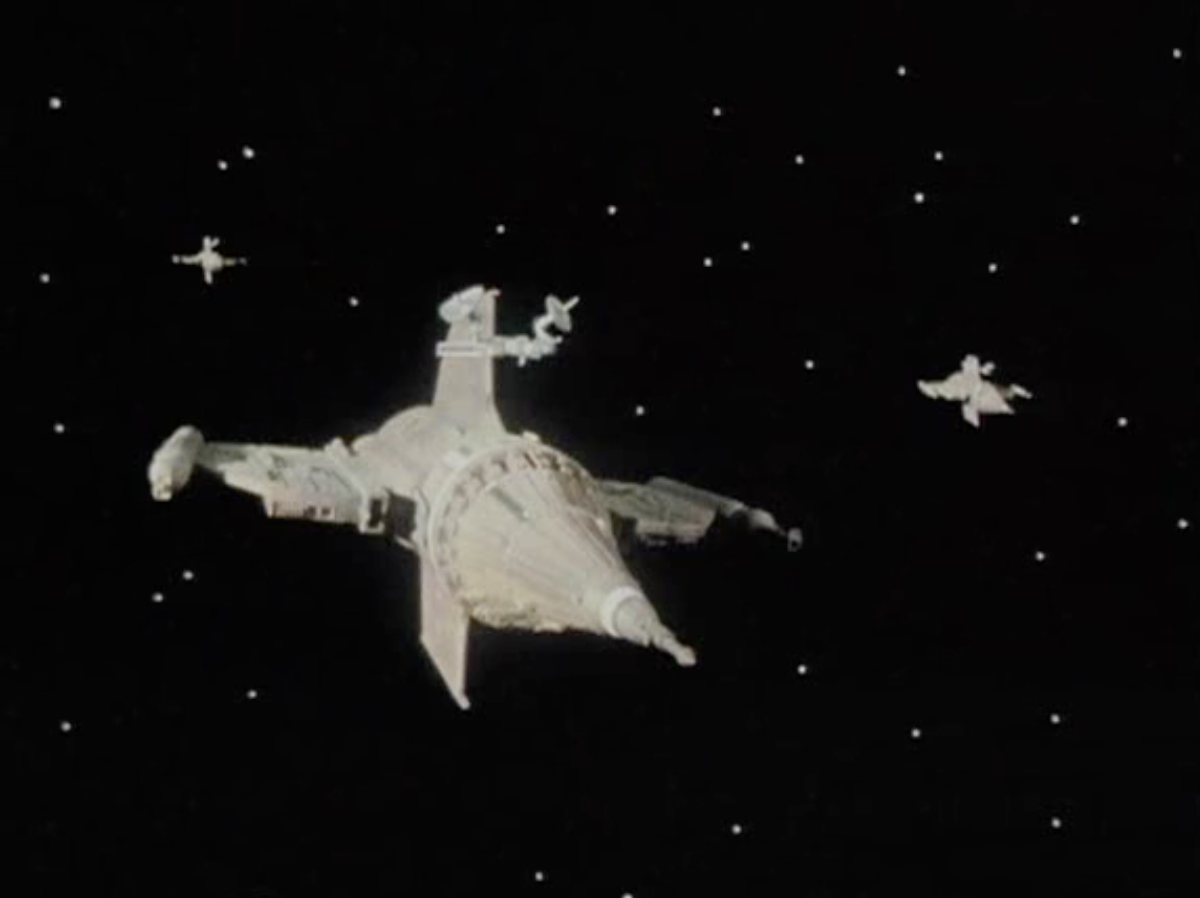
This gaze is immediately apparent once we cut to the second scene – the three pursuit ships, led by Space Commander Travis.
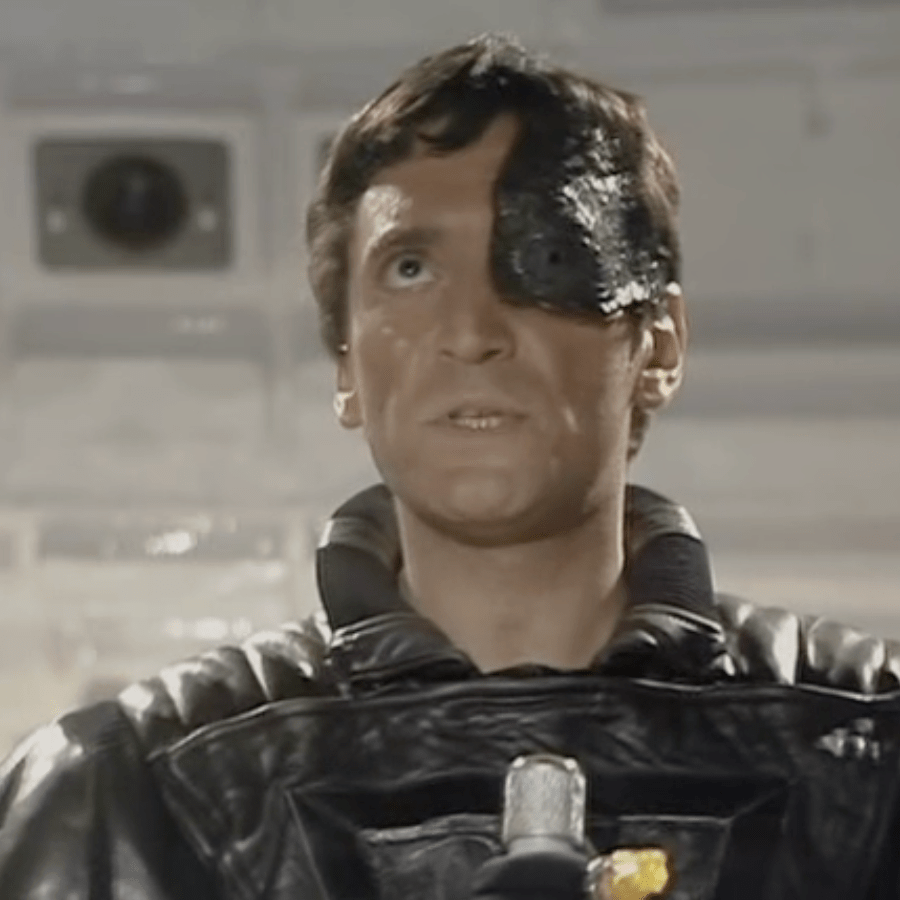
Here, the line of sight is all about detection, concentration, and alertness. Travis’ sight is directed at the scanner screen out of vision, slightly above the camera. The view is not of routine observation, but of predatory instinct: fixed, determined, hawk-like.
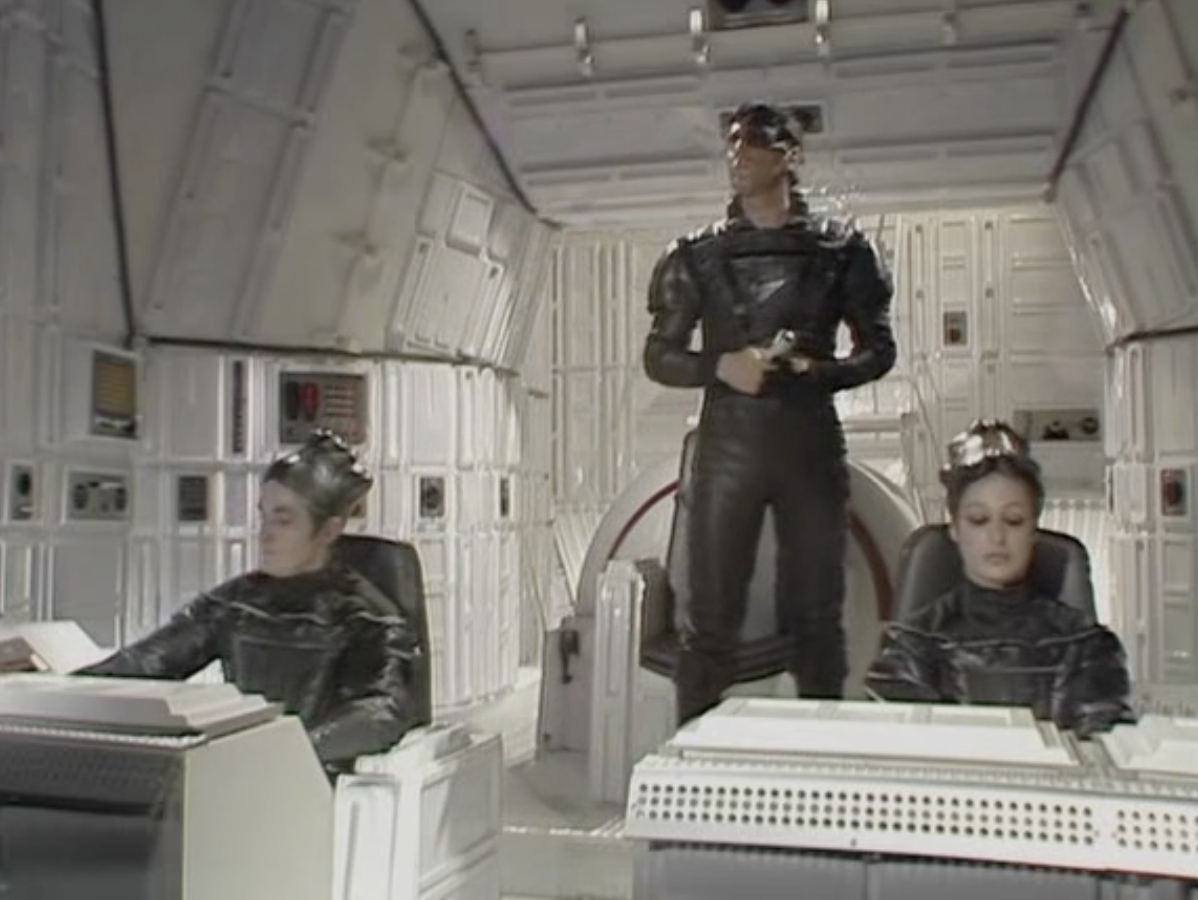
Of course, a scanner acting as the fourth wall isn’t an idea exclusive to ‘Duel’. A good example, a year or so later, is in Doctor Who, where The Marshall, Major Shapp, The Doctor and Romana all witness the war unfolding in ‘The Armageddon Factor’. It’s a key storytelling device in those early episodes. Although we get the odd glance of the screen itself, our attention is solely on the character’s reactions as they witness events not quite working out to their advantage.
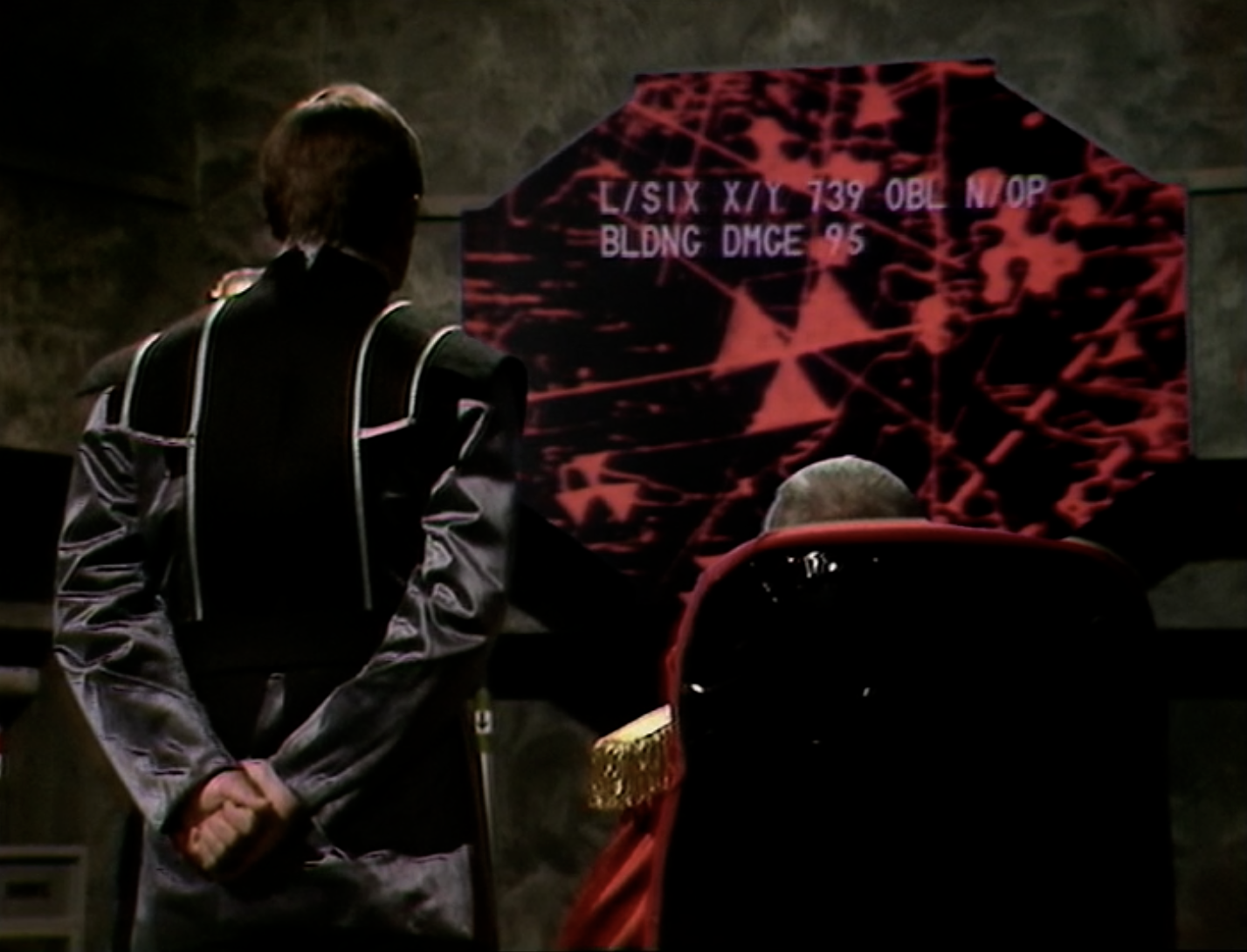
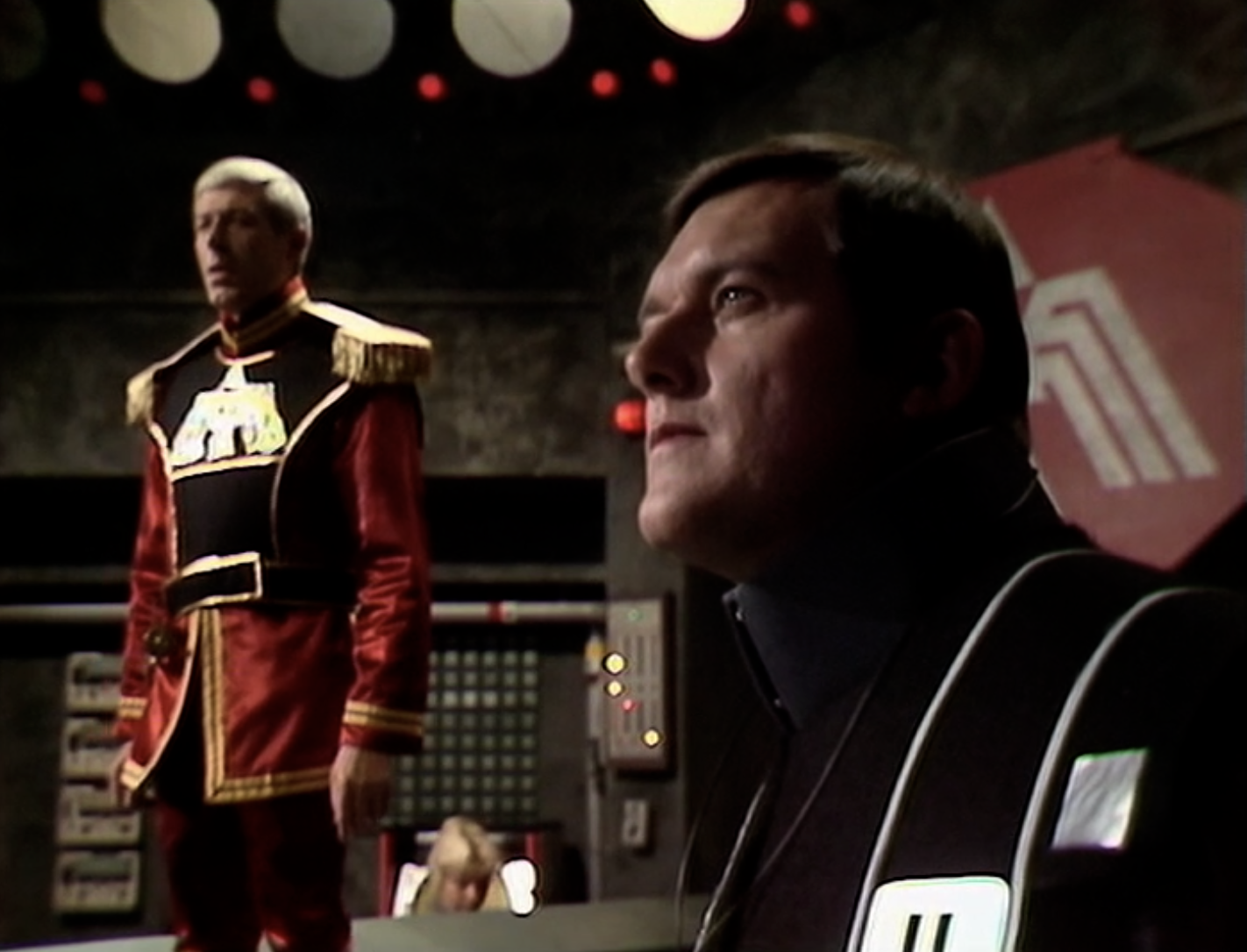
This is where we can see a difference in directorial styles. Whereas Michael Hayes uses some nice camera moves and composition that highlights Shapp’s suspicion in particular, Camfield keeps the camera still and goes straight into the eyes – or in Travis’ case, eye. Every time we return to him, the camera is a little closer, as he is laser-focused on his target. This is further proof that, with Camfield, the viewpoint is rarely static, even between shots.
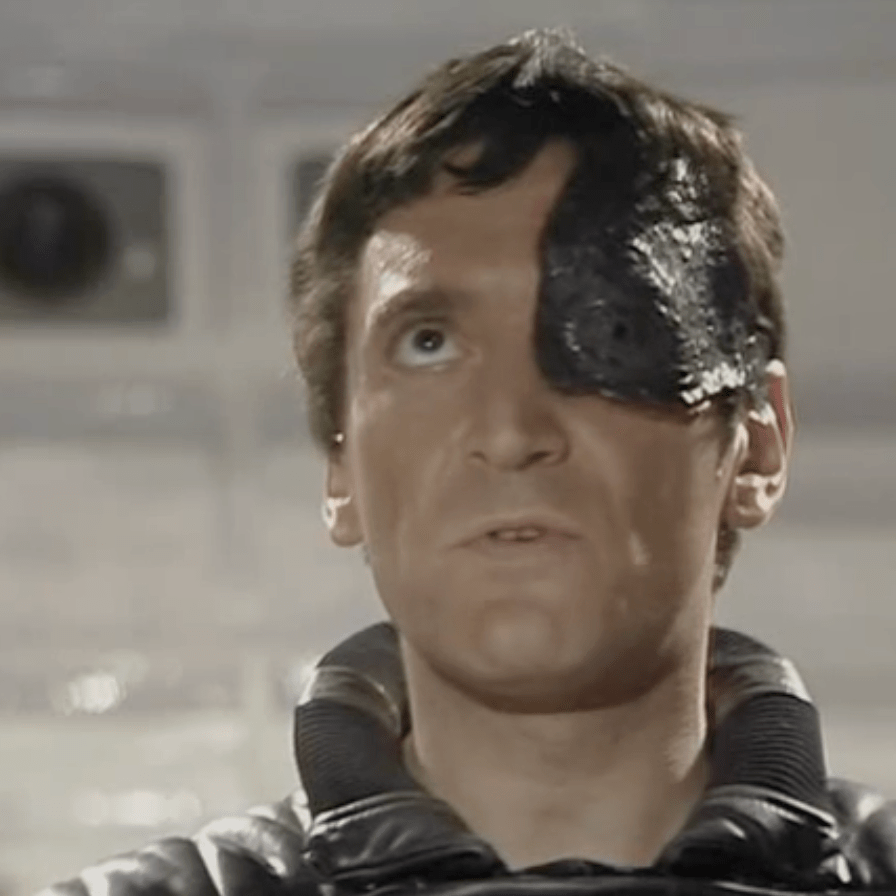
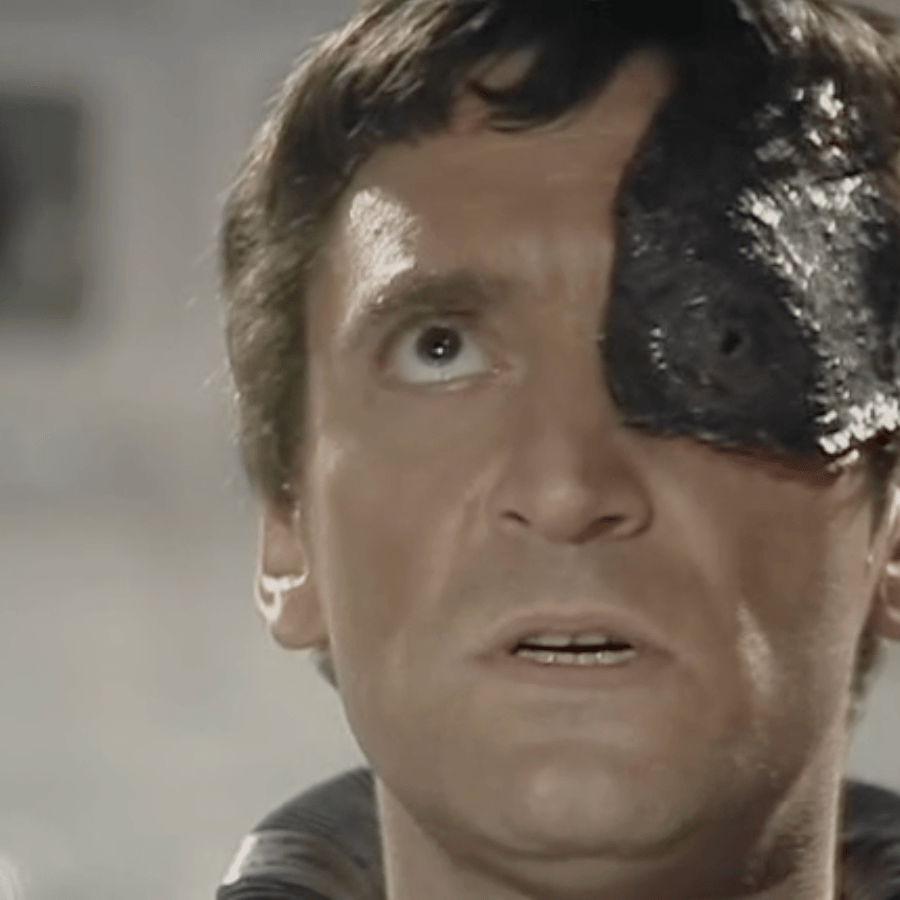
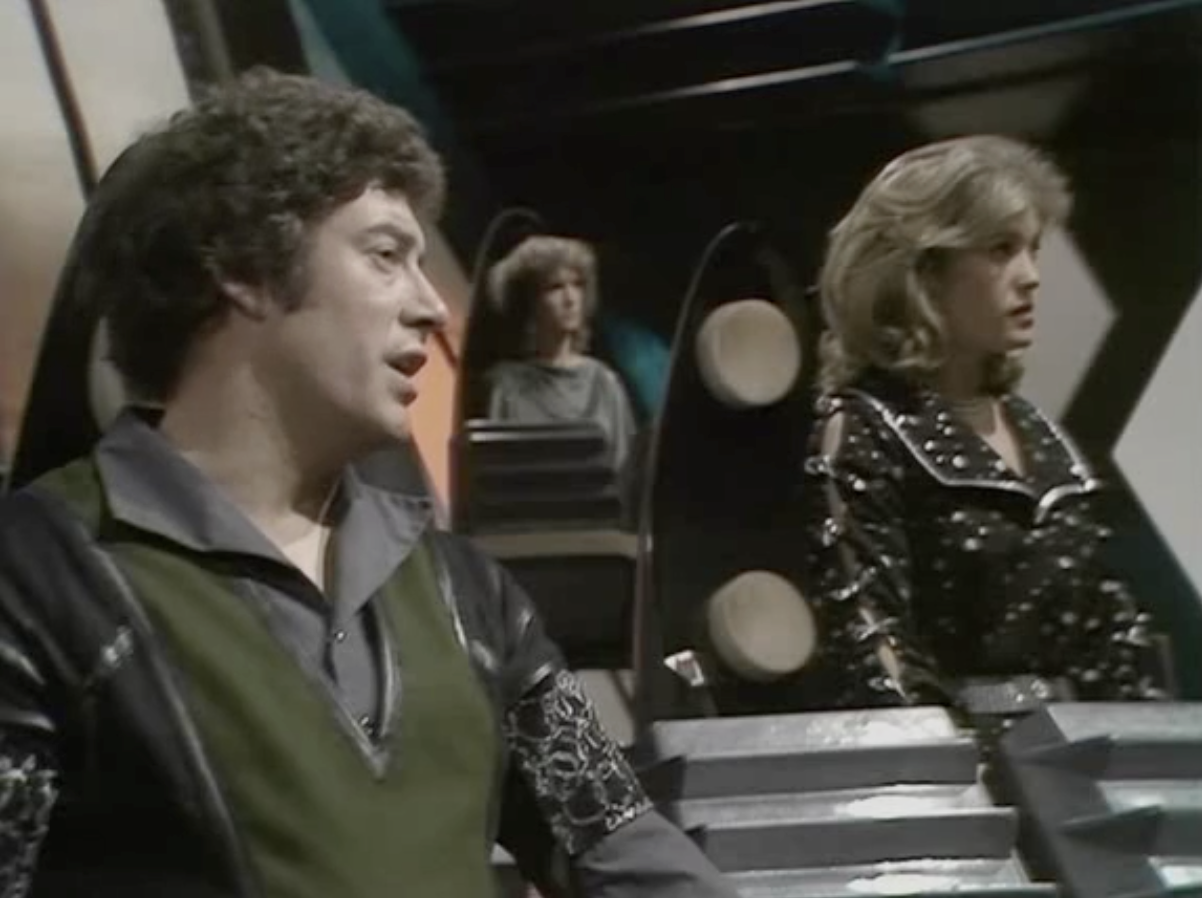
A screen is also the initial focus for the third scene, where we are reintroduced to the Liberator crew and their search for 48 hours of peace and quiet.
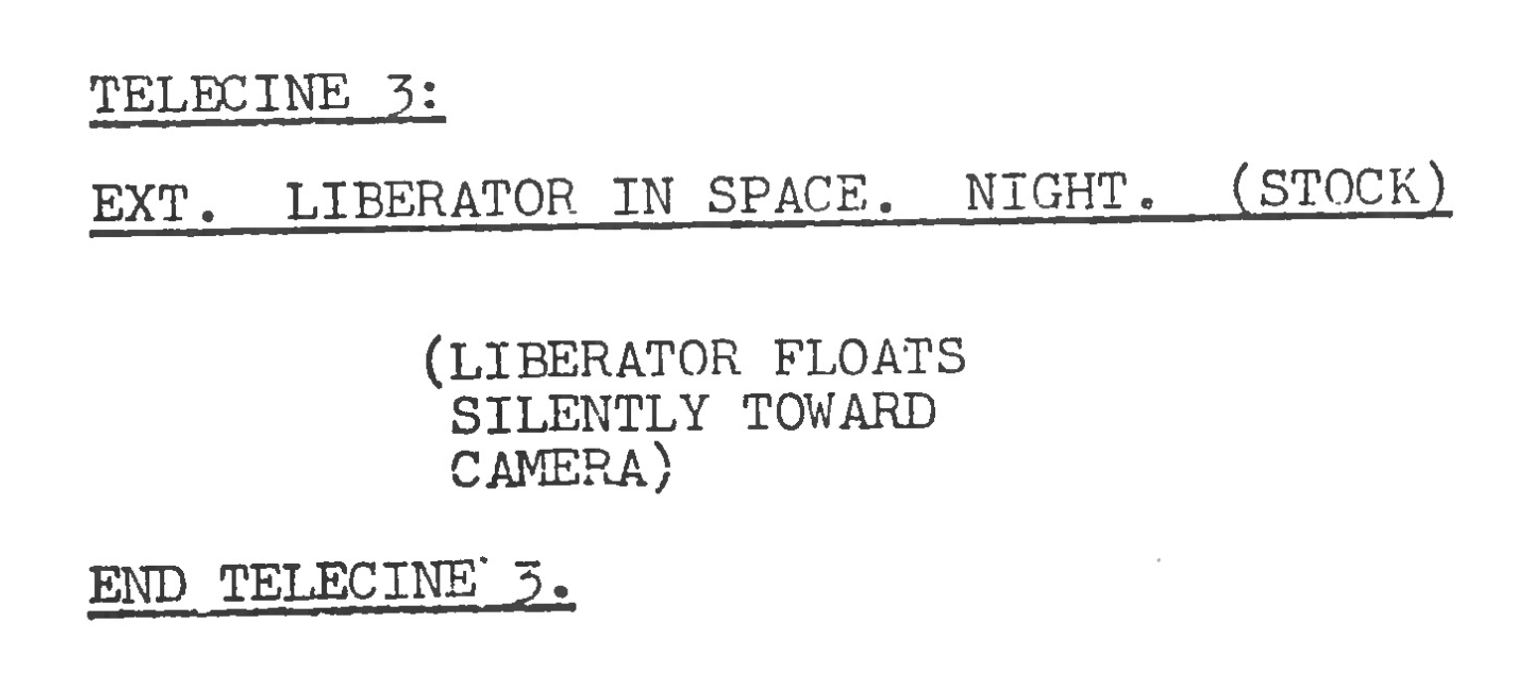
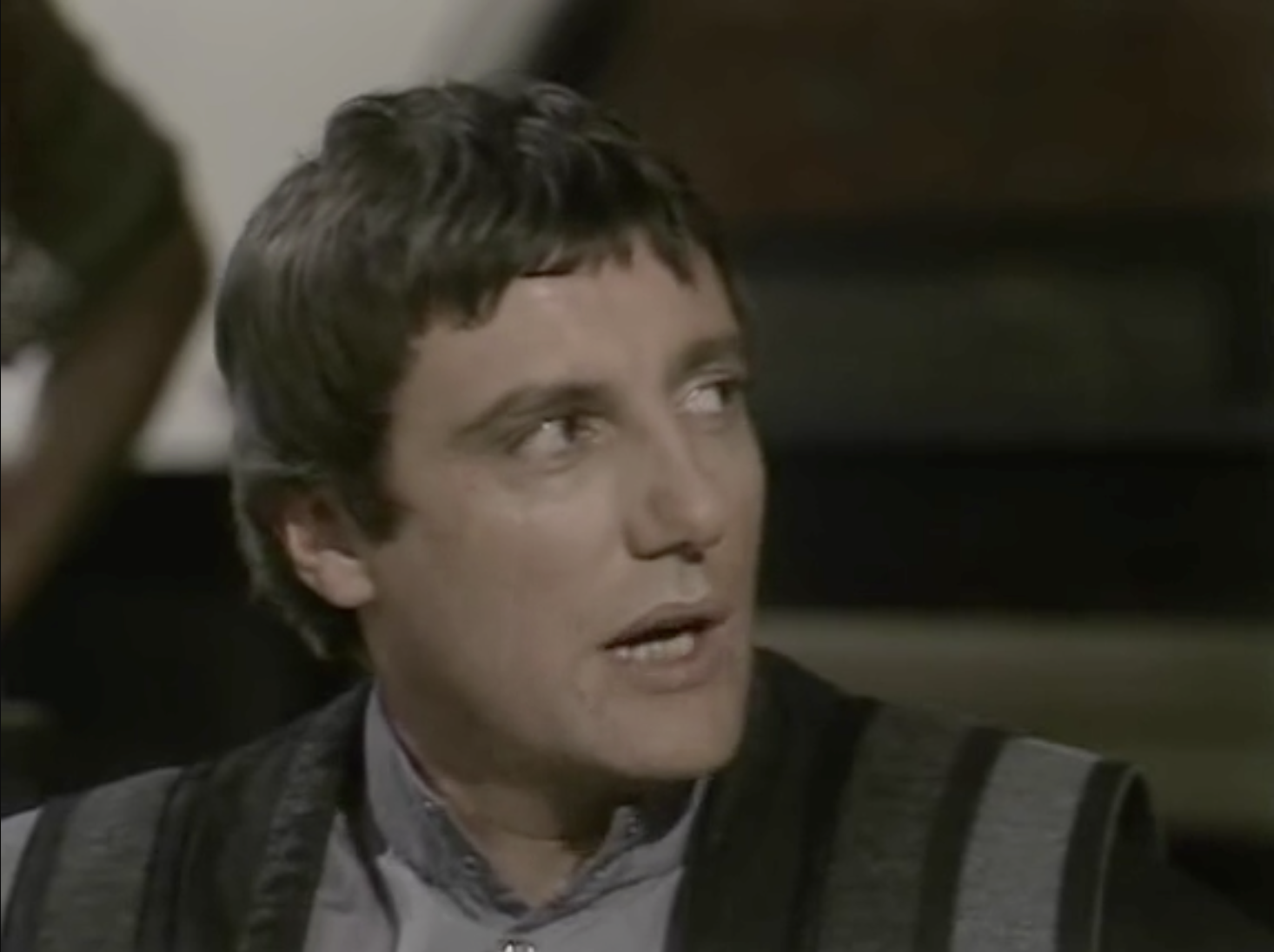
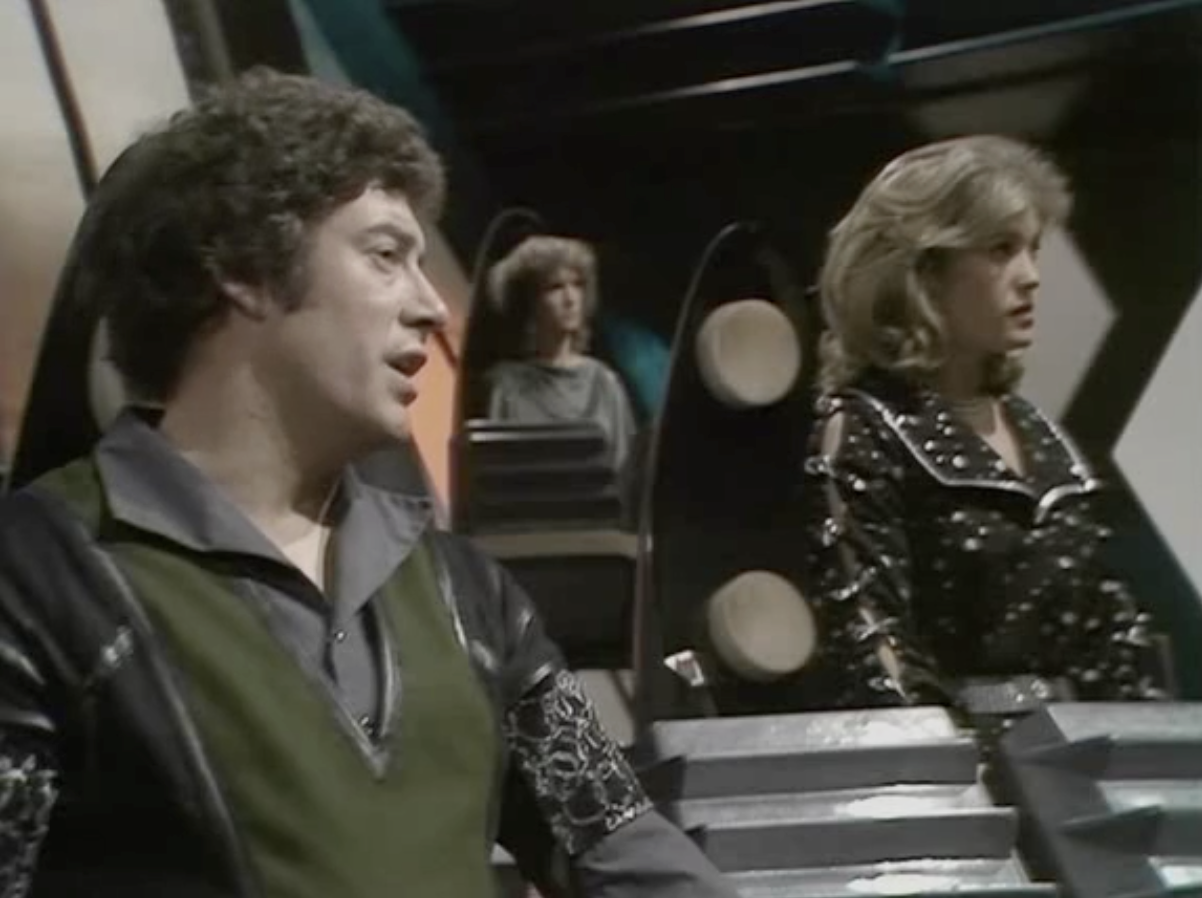
The direction soon picks up on the interactions of the characters, using some nice pull-focus shots and customary close-ups. What is immediately apparent is how Camfield has toned down the pace of this particular section. Picking up on the script description of ‘floating silently’, the music suggests graceful flight through space, and the visuals certainly complement that feel. When we cut to the live action footage, the slow, graceful feel continues, with a measured zoom into Jenna, and a seamless defocus from Jenna to Cally, timing with their lines of dialogue.
What is interesting here is the difference in the choice of camera composition and movement from the scenes on Travis’ ship. There’s a single camera shot that lasts for almost 30 seconds, starting from the moment Blake leaves his position, comes across to Jenna, onto a discussion between four characters, then focusing on a stare-off between Vila and Avon, before resting on a single shot of Avon at his flight deck position. It’s like a relay race, a shot that is blocked carefully, and therefore captures the interactions in a connected way, rather than a series of interconnecting shots. The camera movement conveys the dynamics of the characters, in contrast to the static shots on board Travis’ ship.
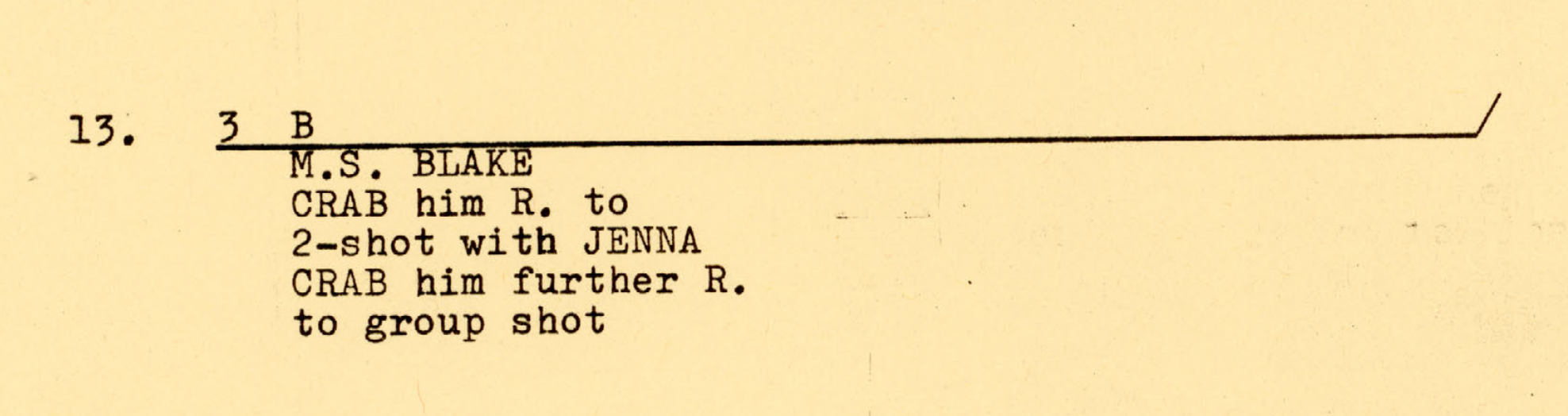
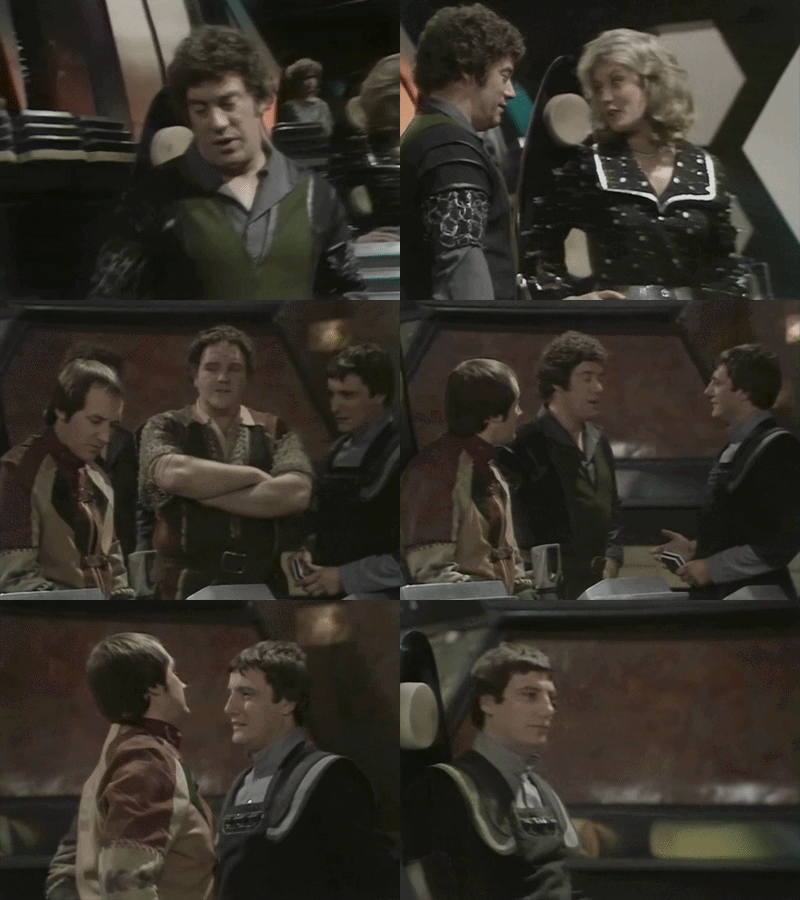
The lighting is important, too. The first three series of Blake’s 7 contained some exceptional studio lighting by Brian Clemett, who was a favoured choice of David Maloney. For ‘Duel’, the choice of lighting is seemingly influenced by Camfield, as it is fundamentally different to the flight deck scenes in other episodes. The Liberator is notably darker and moodier when in routine operation, and suitably atmospheric when in ‘stasis’.
These first three scenes direct the line of sight towards the distance as well as establishing the dynamics of a group of characters forced to co-exist with each other. Camfield uses multi-camera techniques in three completely different ways and showcases a range of approaches to creating atmosphere.
Case study #3 – Camfield and sound design.
Douglas Camfield often uses sound design in a way that blurs the line between diegetic sound (heard within the world in which the story takes place) and non-diegetic sound (heard by the audience only).
The relationship is largely based on sound design as an atmospheric device, where the sounds within the story and mood effects or music have the potential to be the same thing. Doctor Who has never sounded so urban and contemporary as ‘The Invasion’ (1968), where composer Don Harper uses a cymbalom to provide simple, repetitive, and memorable suites of music. Added to this is the grating, sweeping ‘sting’ that accompanies moments of revelation. The sound really feels like it’s a part of the action.
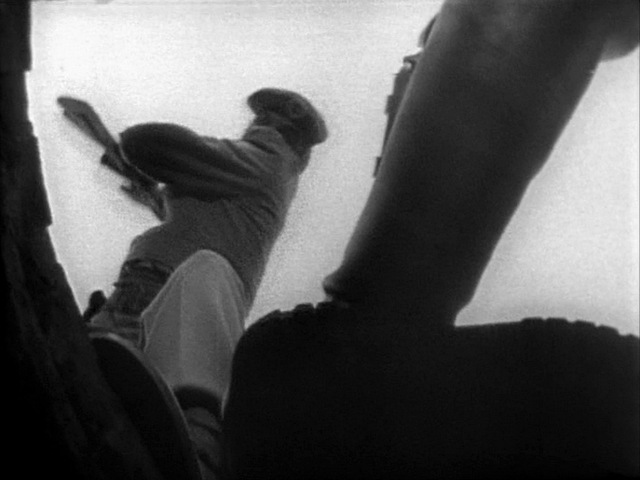
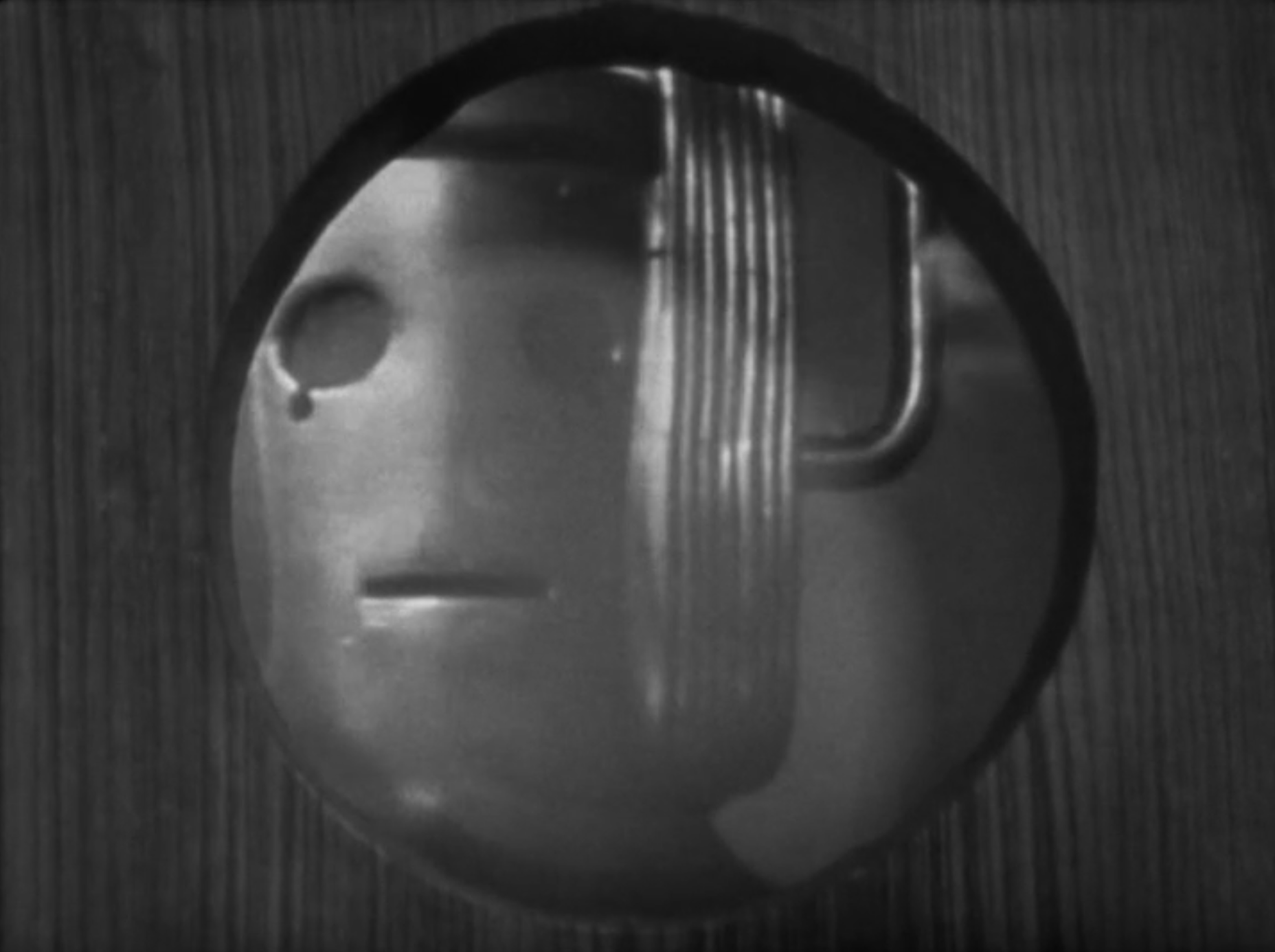
This is taken a step further in ‘Inferno’ (1970), where Camfield uses stock music to convey the ominous and distant ambience of the serial. When we hear Souls in Space‘ by Nikki St. George, or The Delian Mode by Delia Derbyshire, it is not only to accompany moments of possession, but also as a means of defining the whole story, both environmentally (the stark, bleak, industrial setting) and the psychological trauma (whether a loss of control, often aggressive in nature).
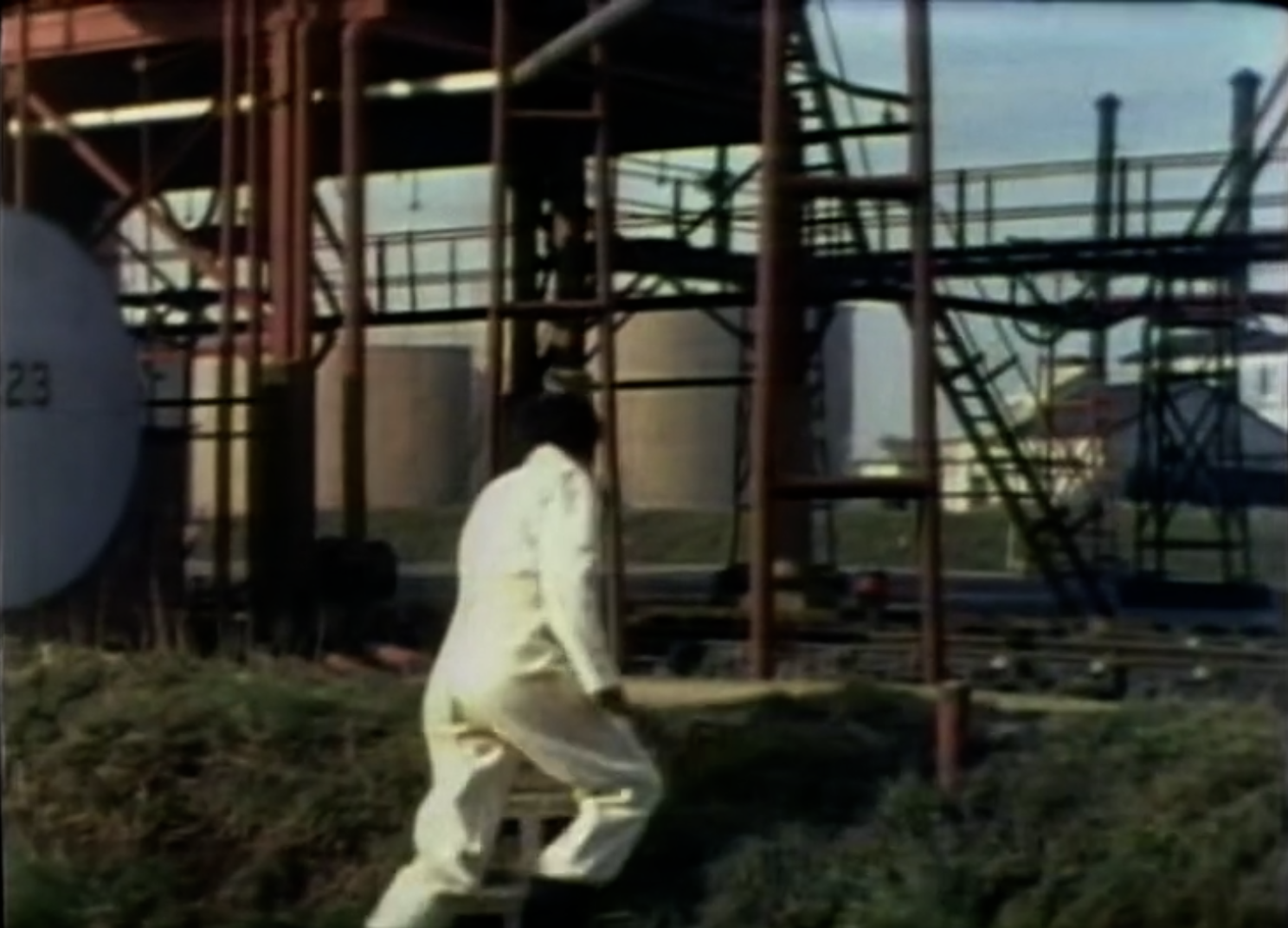
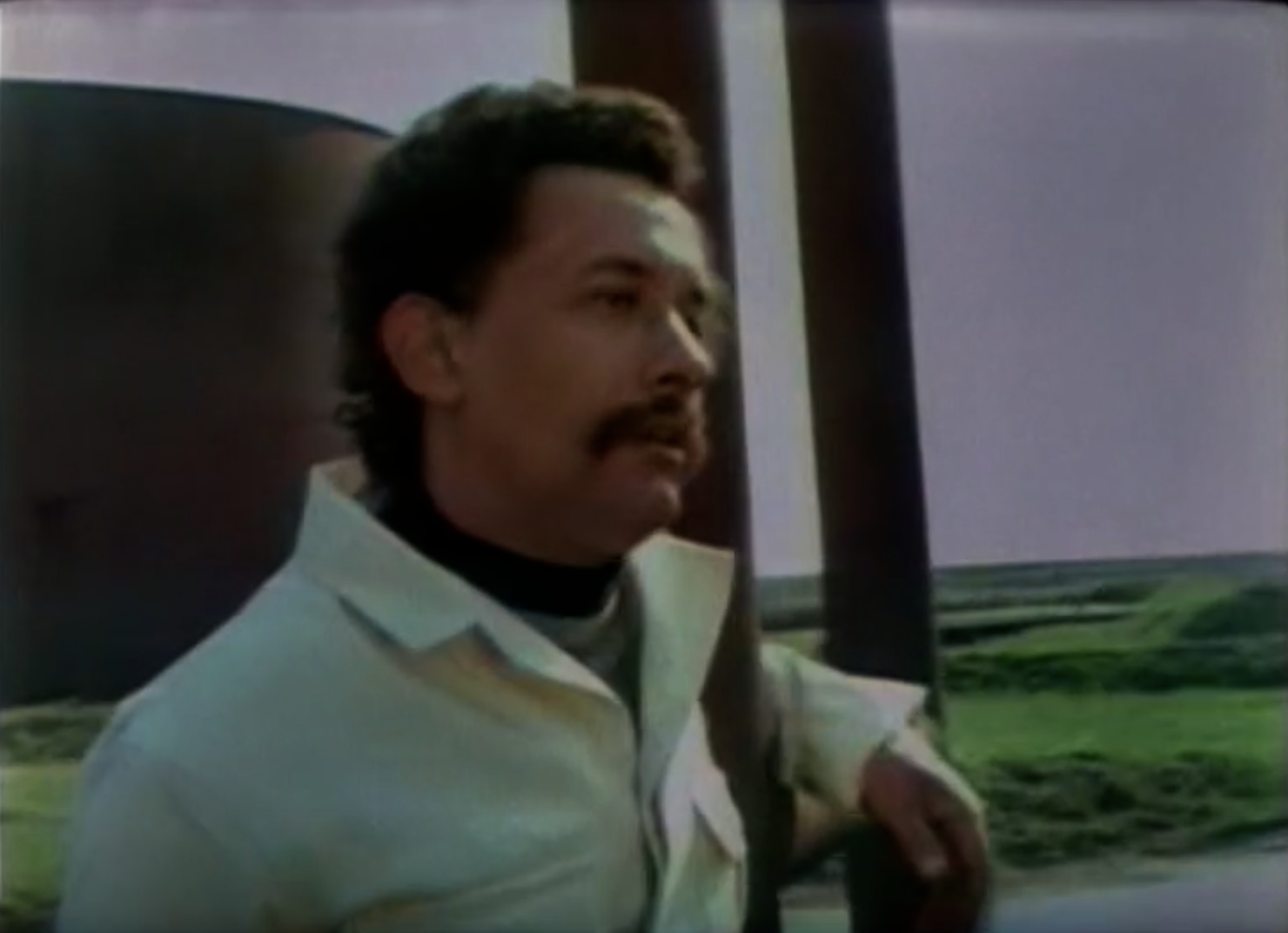
In the case of Doctor Who, Camfield doesn’t always commission incidental music, tending to move away from Dudley Simpson’s complementary score, towards something that is inextricably part of the atmosphere. This isn’t to suggest that Simpson’s incidental music doesn’t contribute to the atmosphere, but rather that it has the capacity to sit further away from it by responding to the events on screen.
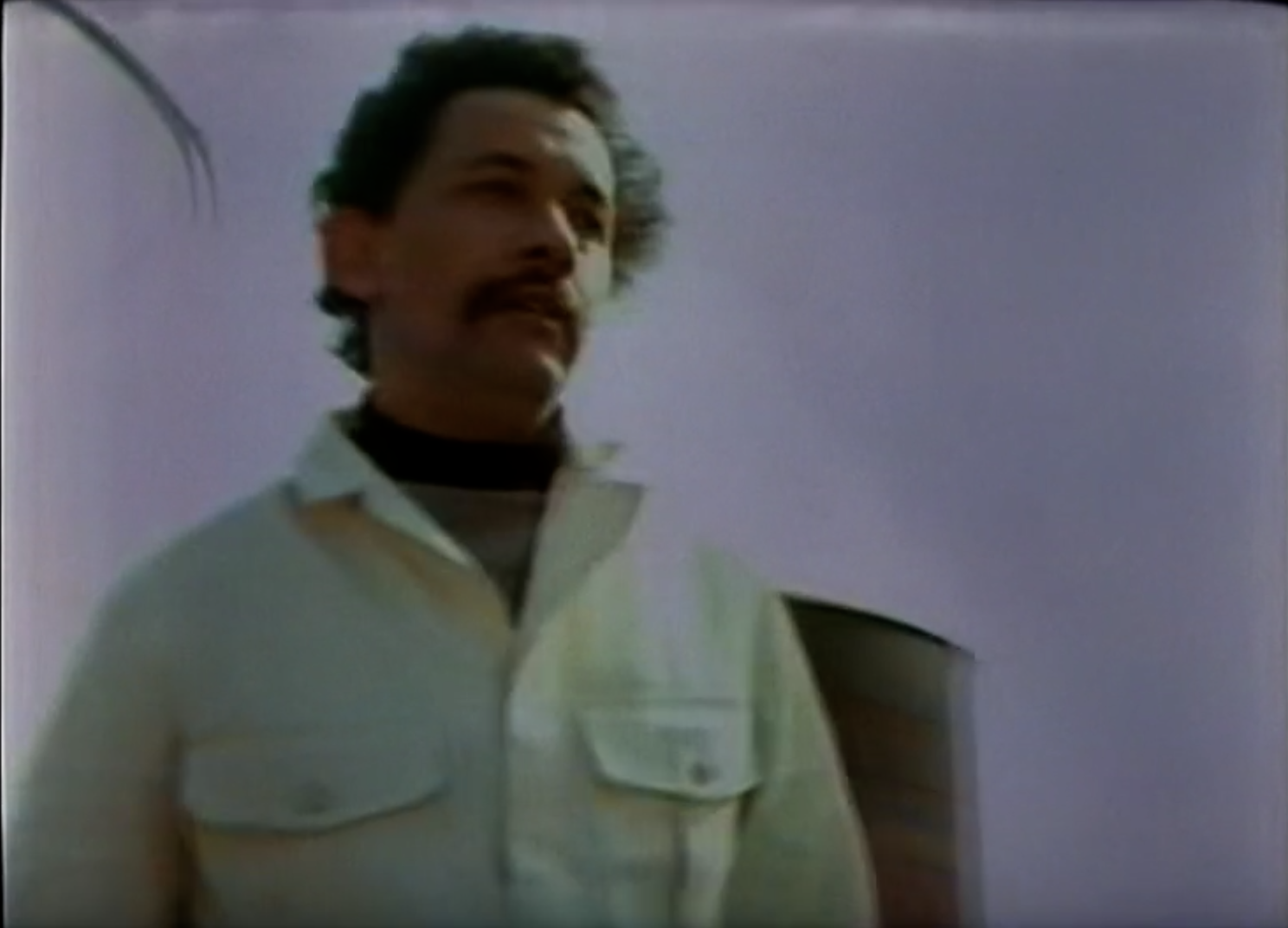
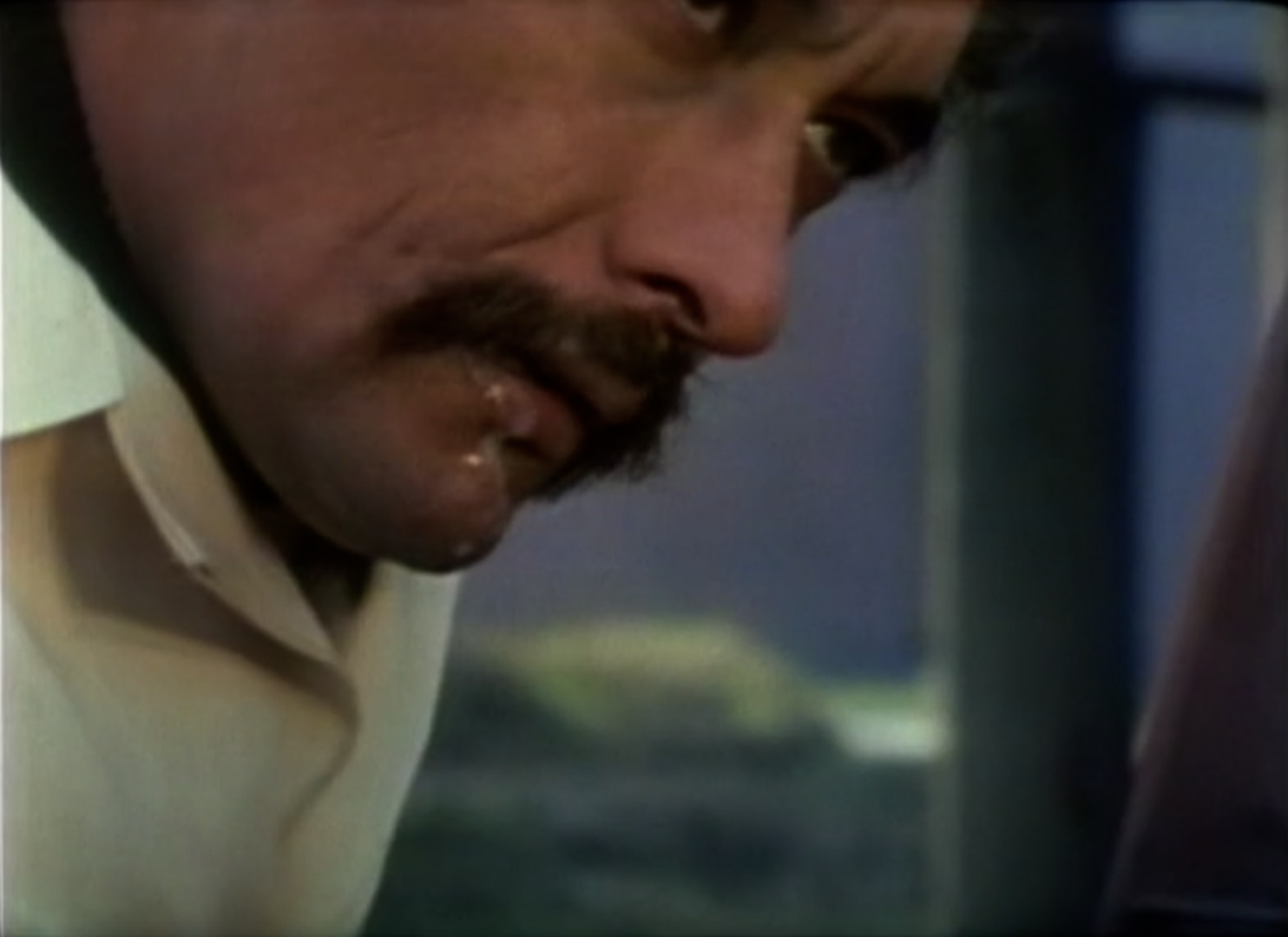
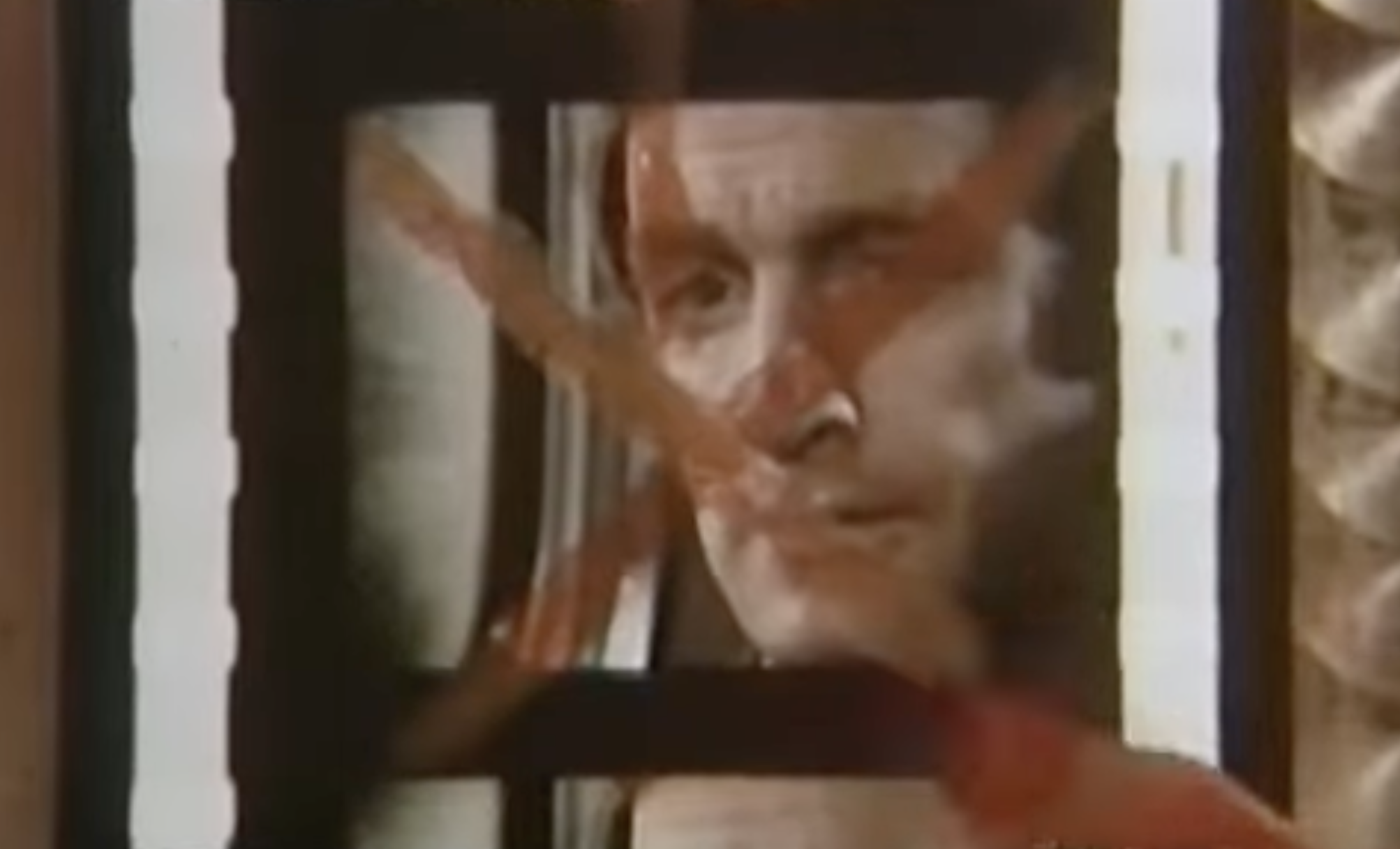
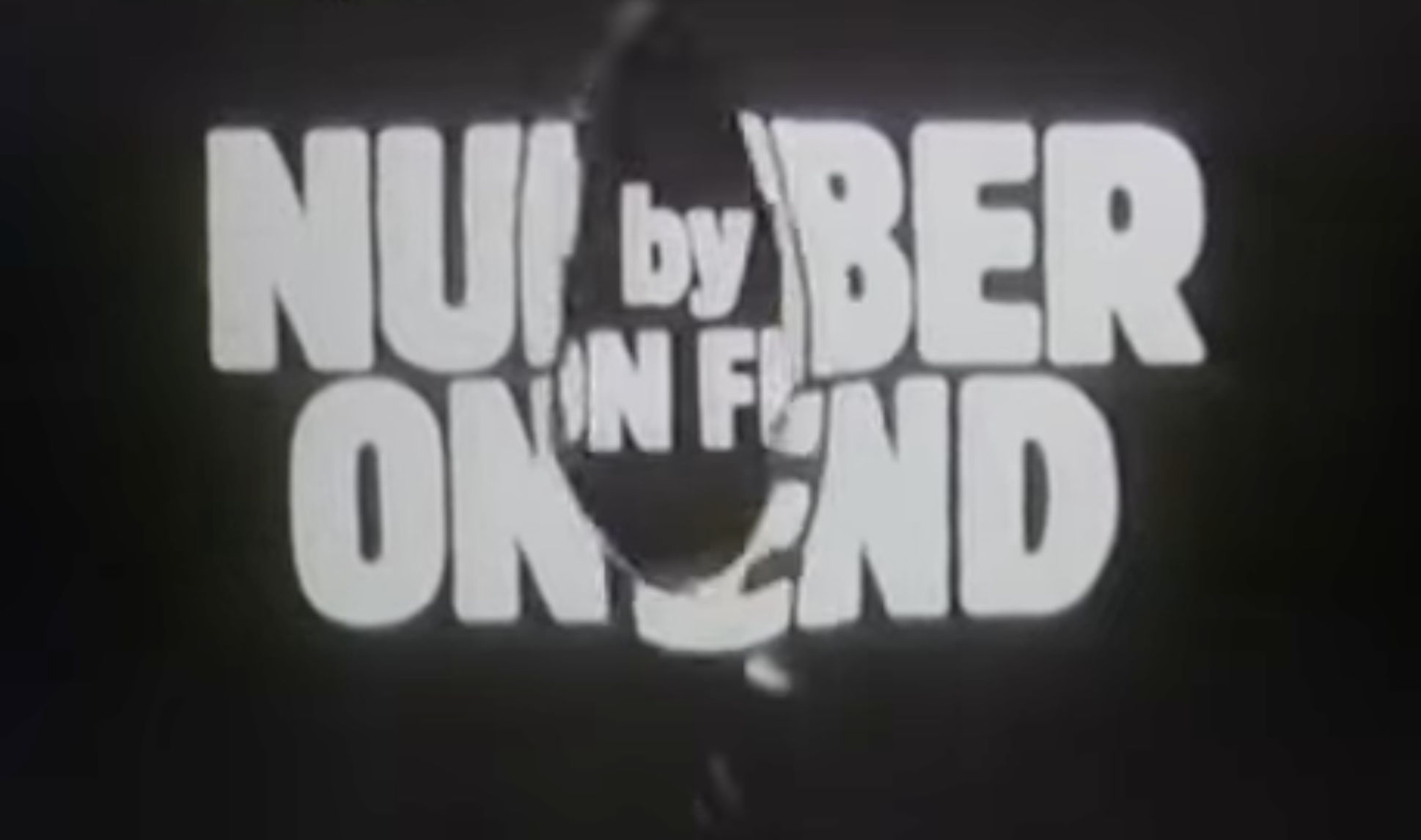
When Camfield does use music, it is bespoke to the context of the production. For example, Geoffrey Burgon’s arrangements speak of a contemporary Earth thriller, which is how Camfield’s Tom Baker stories ‘Terror of the Zygons’ and ‘The Seeds of Doom’ are realised, slightly apart from other Earth-bound adventures of the era. Even a Play for Today, ‘Number on End’ (1980) uses several opposing instruments – cymbalom to synthesiser, electric piano to flute – to create a jarring score that feels appropriately at odds with the tension of the claustrophobic narrative and visuals.
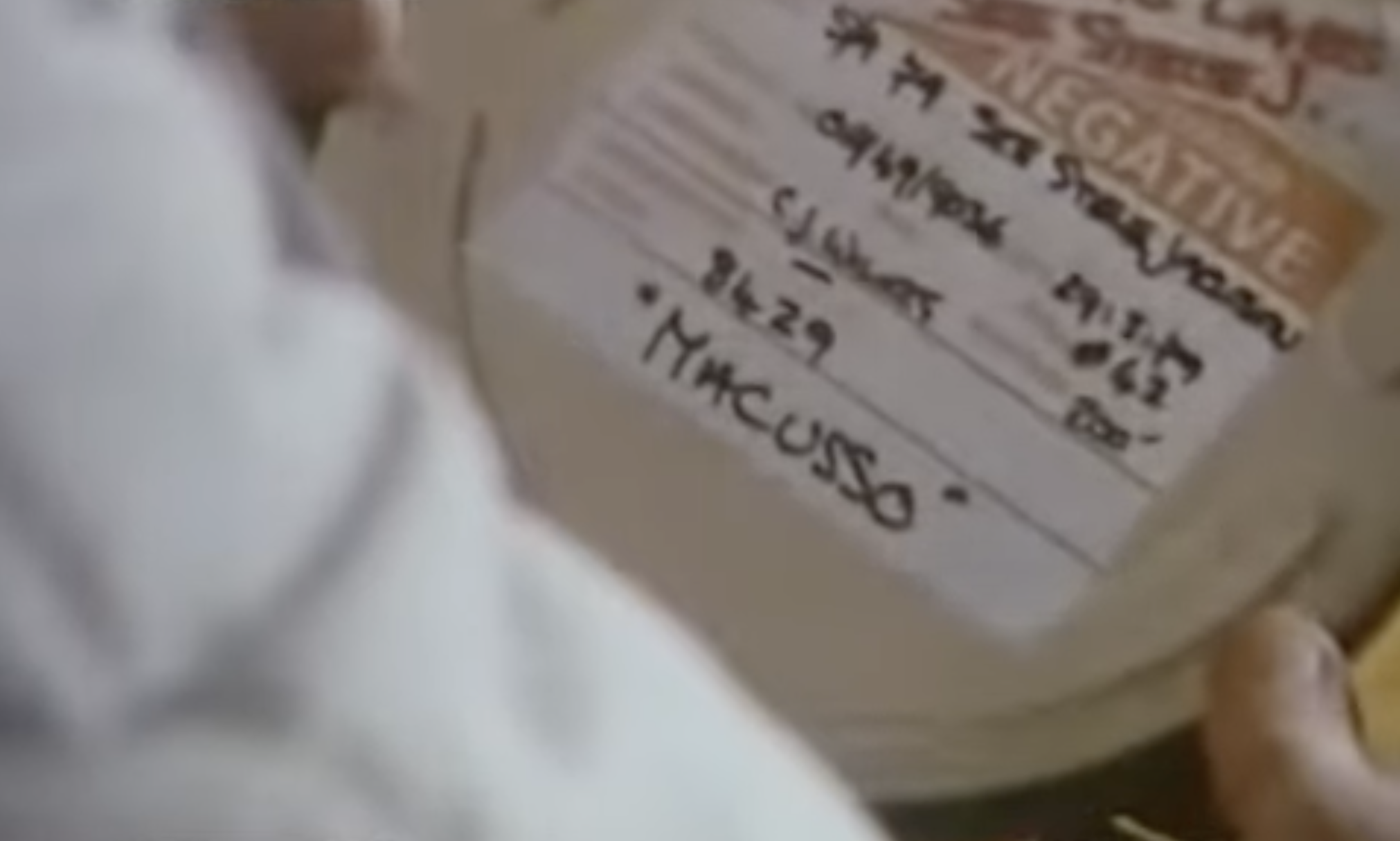
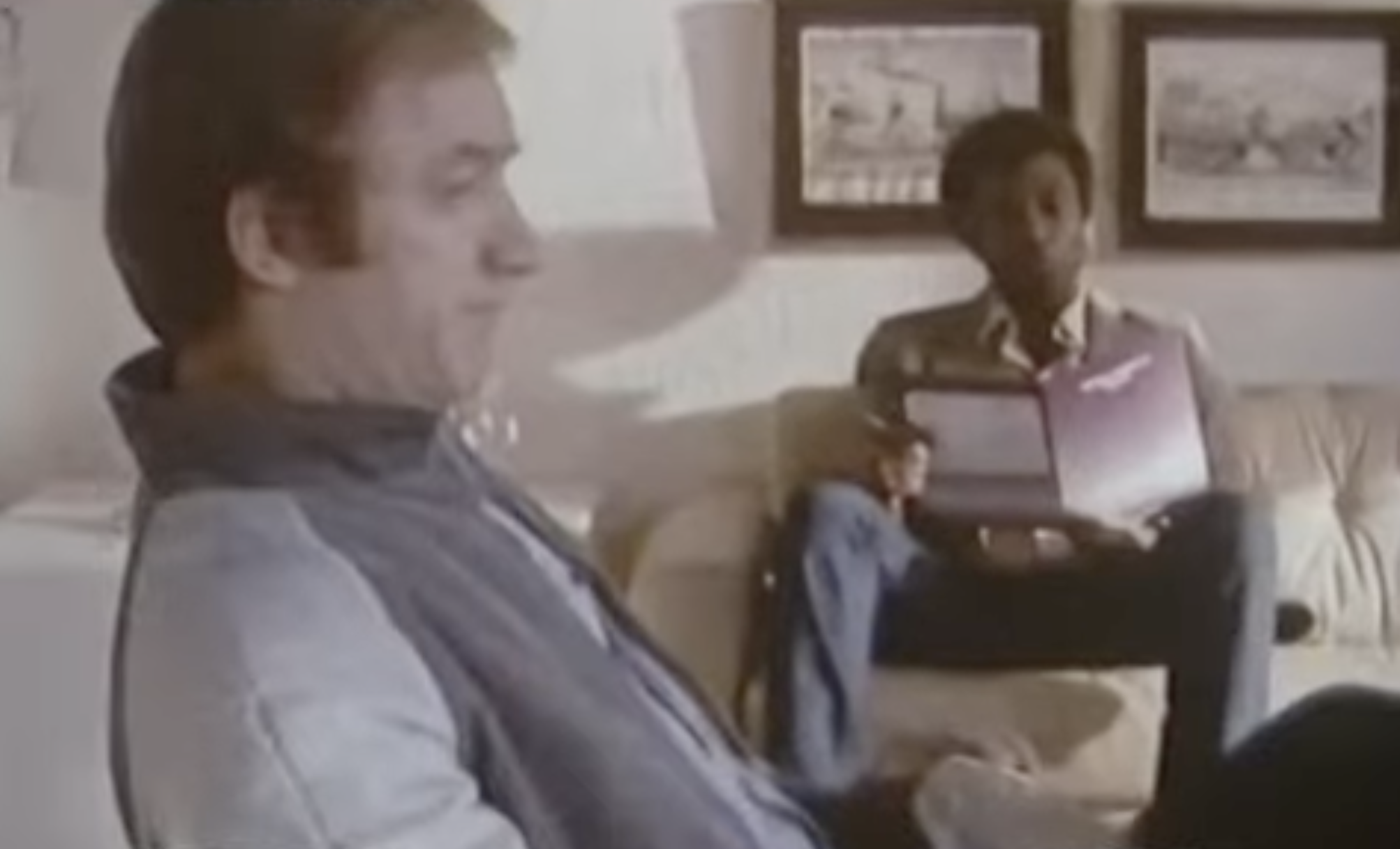
In fact, Camfield’s approach to sound design is pretty much a signature style all of its own. In ‘Duel’, the characters cannot hear the mournful, desolate tones on the planet, or the eerie, menacing pitch heard at the beginning of the first scene involving Travis. Nor is the ‘sailing through space’ music that introduces the Liberator as it glides into shot, heard on the flight deck. Yet, the scenes rely on the soundtrack to communicate the context of each situation, meaning that it feels a part of the story.
It is also worth noting that Camfield holds the score for quite some time into the scenes, so they do not simply act as an establishing sound. When we cut to the scenes on board Travis’ ship, the accompanying sound doesn’t immediately fade out; it bleeds into the scene.
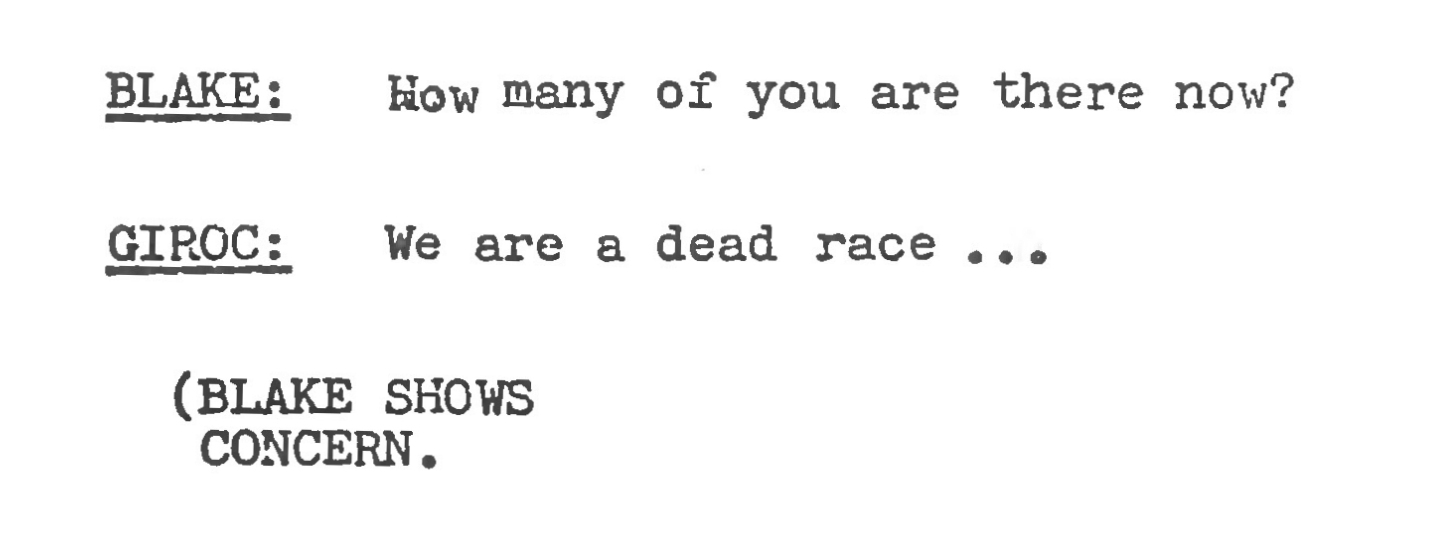
And, there are small details too. Sinofar announces that they belong to a dead race, but it’s the thunderclap (not scripted) that acts as the revelation.
When Travis says the command “Attack formation“, an intensifying rhythmic, grating score is cued in. It’s a distinct moment where the vast, replicated machinery of the Federation is ramping up.
So, what can we learn from Camfield’s choice of score, and how does this contribute to the ‘inner-eye’ of his directorial approach?
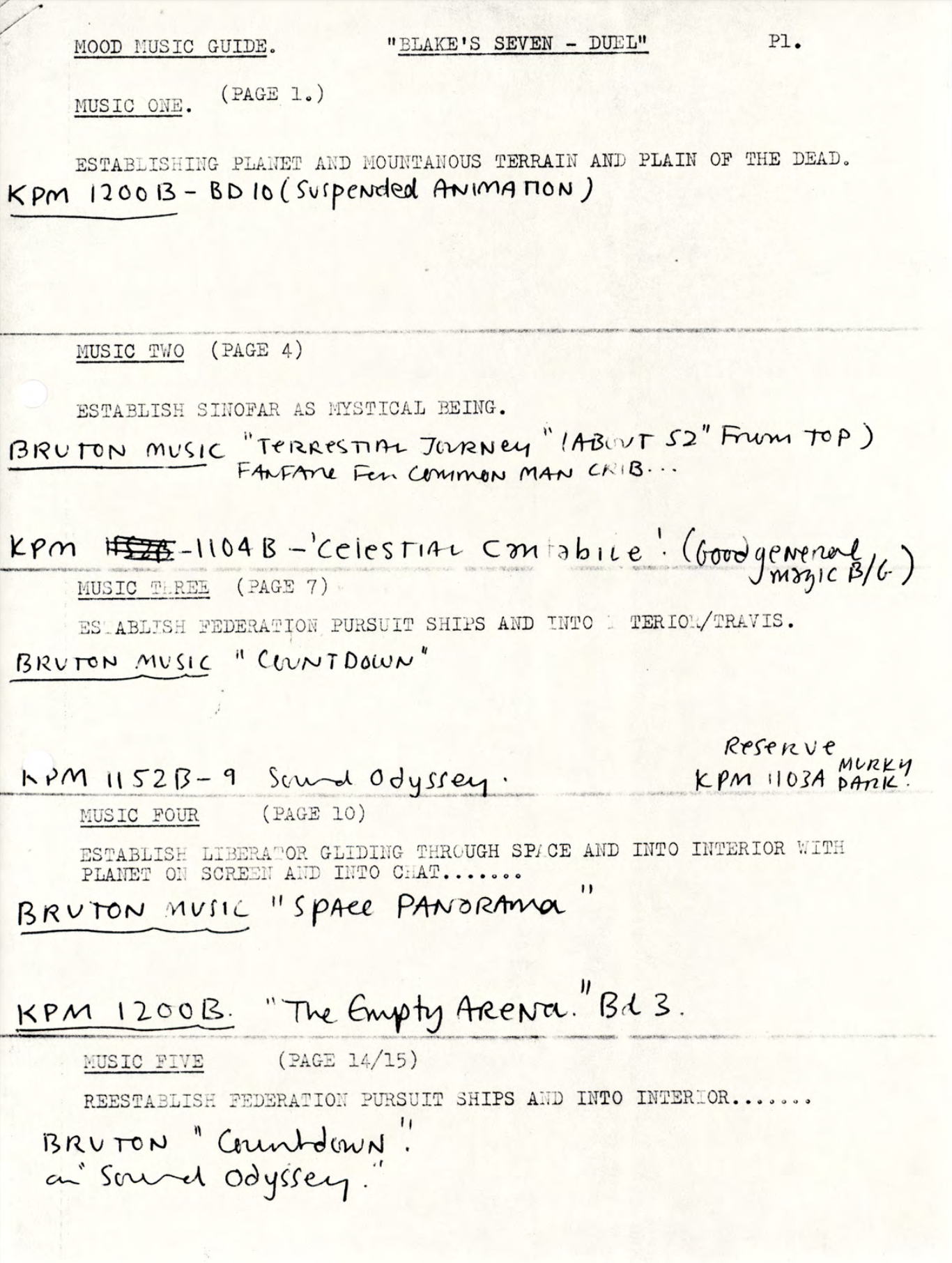
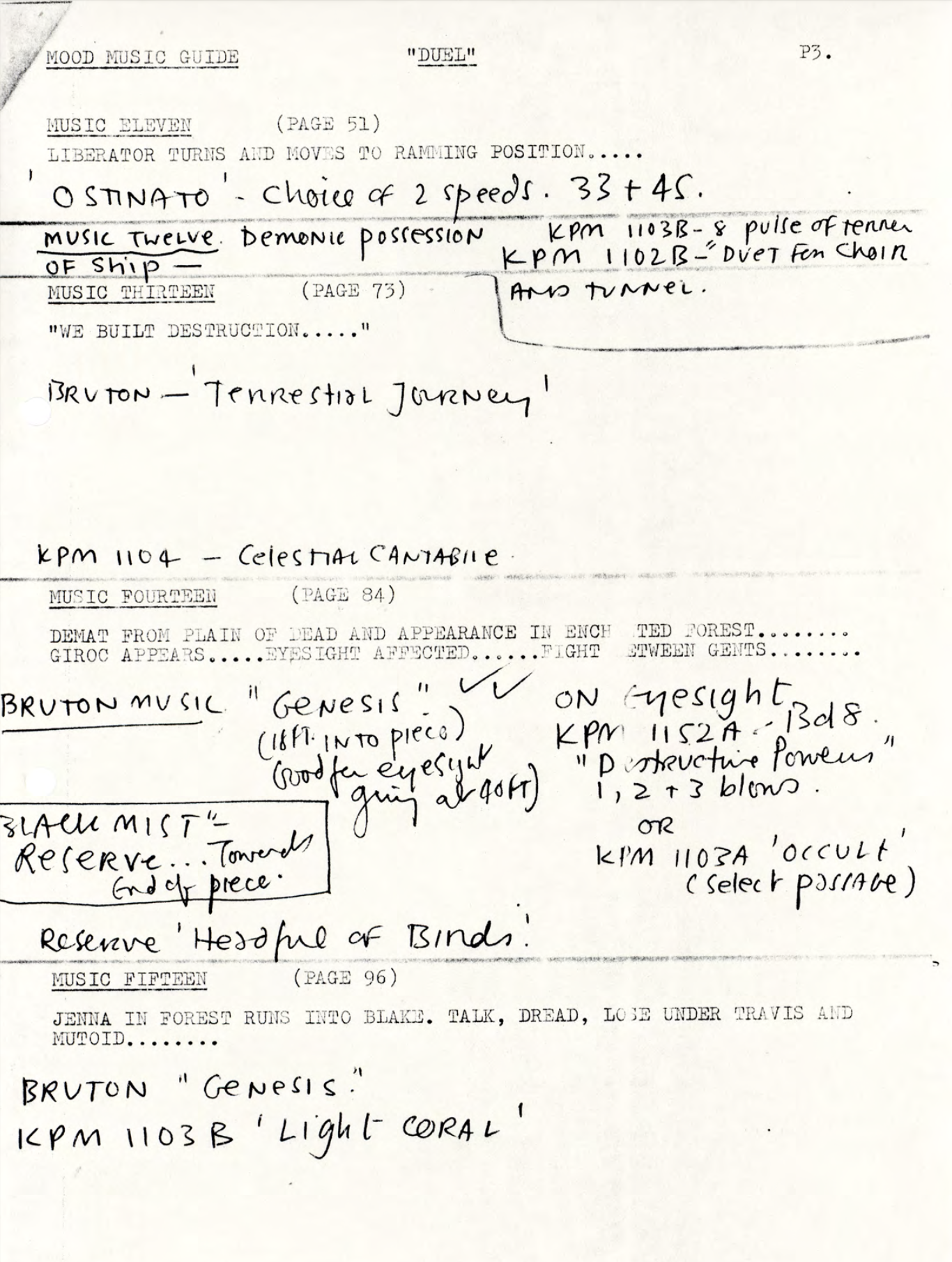
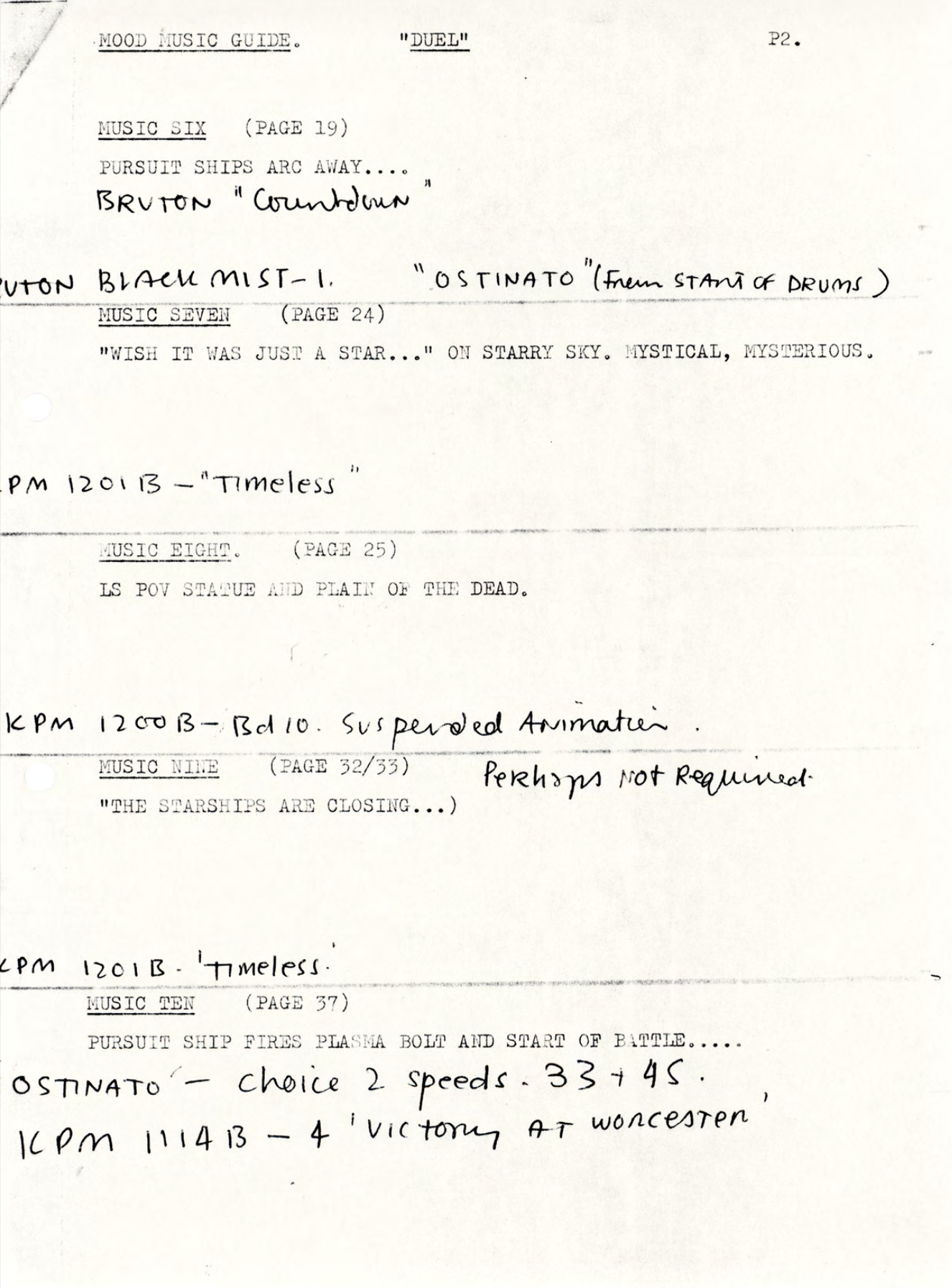
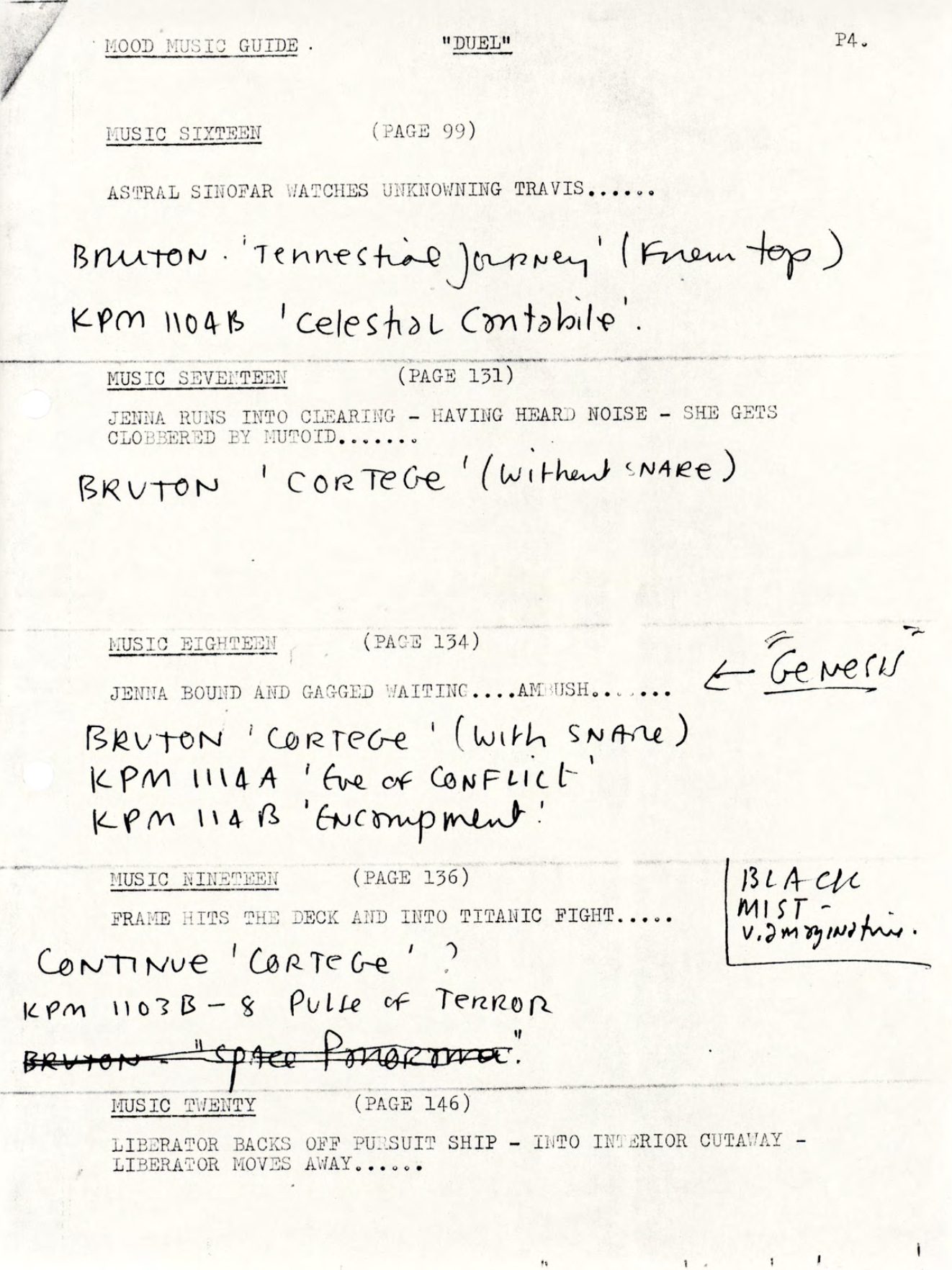
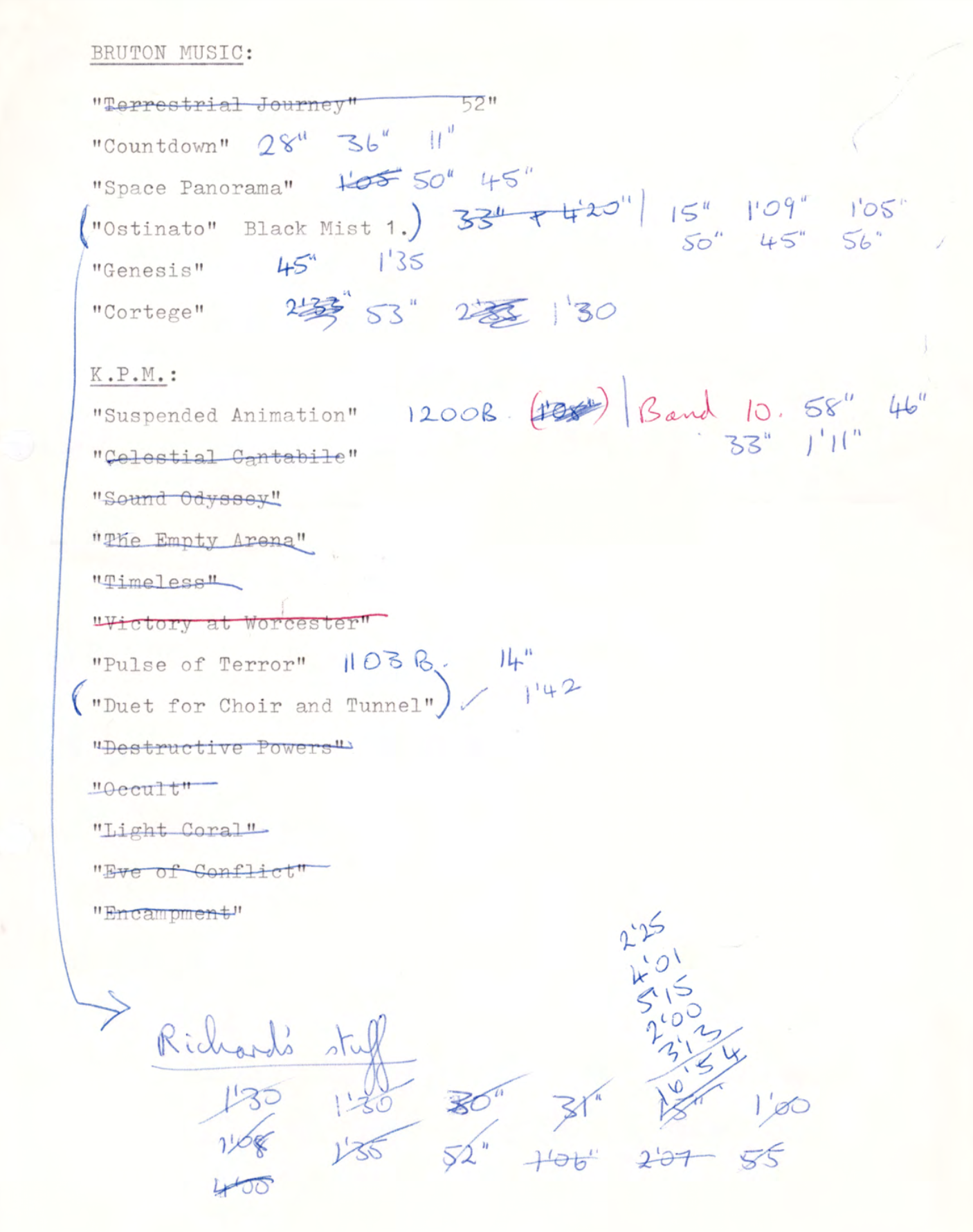
The first thing to notice is that Camfield has an eye on the current or contemporary. The 1978 Bruton Music LP ‘Terrestrial Journey’ includes a track by Alan Hawkshaw called ‘Space-Panorama‘, which is described as ‘Suspended beauty‘ – so a fairly straightforward choice it would appear, when accompanying The Liberator gliding through space. The fact that the scene is edited to fit the tempo of the musical score is another reason why the soundtrack feels a part of the scene, rather than an accompaniment. It’s in the same mode as Stanley Kubrick uses sound design as an integral part of the narrative in ‘2001: A Space Odyssey.’
From the same LP is ‘Countdown‘ by Alan Hawkshaw (no, Susie Dent fans, not that ‘Countdown by Alan Hawkshaw’) used as the suspenseful Federation surveillance. This track really does straddle the line between music and sound effect, clicking, beeping, and unsettling. Either way, as a mood piece, it perfectly suggests high technology as a means of impending danger.
The opening score to ‘Duel’ is ‘Suspended Animation‘ by Keith Mansfield. This featured on the KPM LP ‘Olympiad 2000’ from 1977. This accompanies the scenes on the barren planet. For me, the howling wind and thunder are only part of the world-building. It needs a score for it to sit within, and the resultant tone conveys the stark desolation of a post-apocalyptic war.
When Sinofar uses her power to slow down time, we hear the Ron Geesin track ‘Duet for Choir and Tunnel‘ from the KPM LP ‘Electrosound’ from 1972. Once more, this is all about atmosphere and density, and is a suitably suffocating piece, perfect for a psychological moment that cannot naturally be melodic.
Into the forest, and a sense of anticipation is created through John Cameron’s ‘Genesis‘, featured on the Bruton Music LP ‘Fear’ (1978). It’s sparse and uses sustained notes and sharp bursts of melody to create suspense.
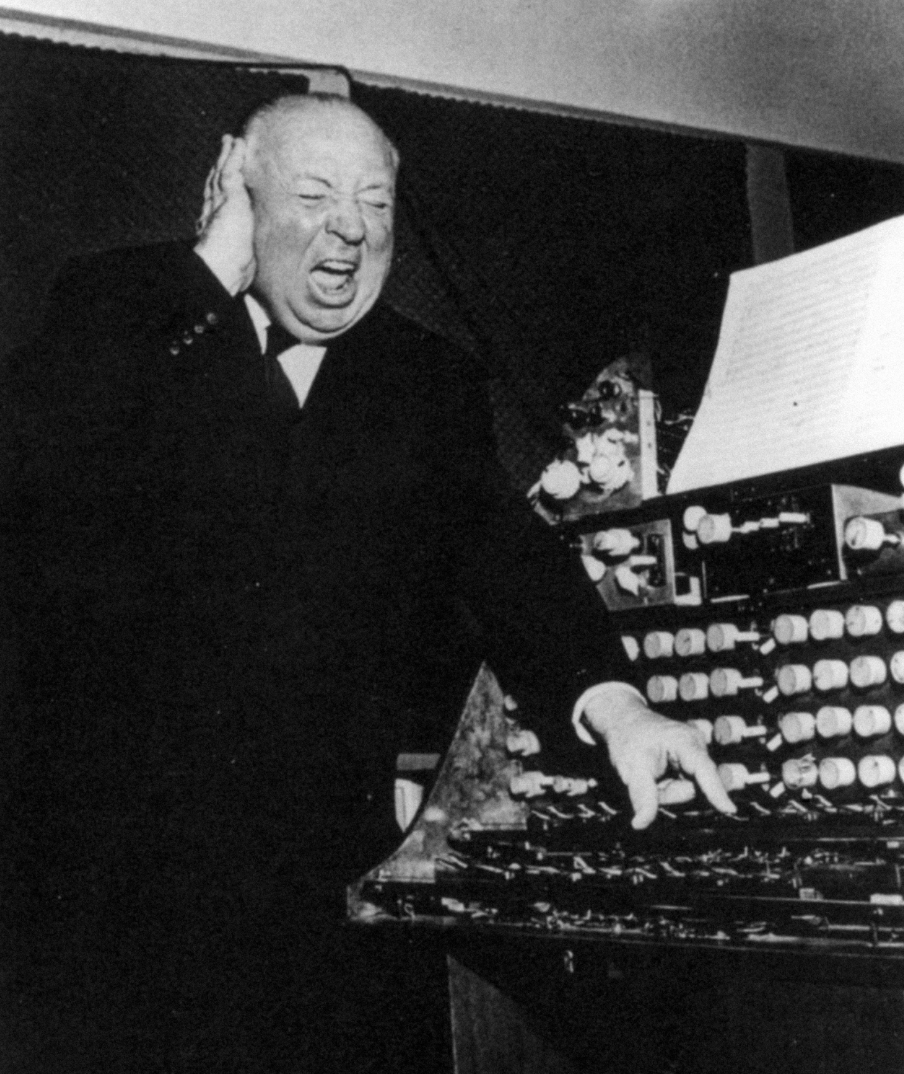
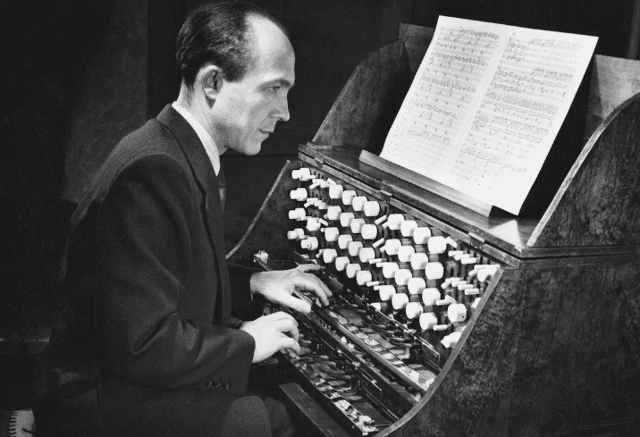
For me, the most interesting track is what accompanies the imminent commencement of battle – Ostinato, by Oskar Sala, from the EMI LP ‘Electronic Virtuosity’ (1970). This track uses a Trautonium – an electronic synth – developed in Berlin in the 1930s by Friedrich Trautwein. This instrument isn’t necessarily struck by hand in the same way as a piano. In fact, a finger can slide or rest along a wire. Contact with a rail underneath helps to control the pitch. The composer of ‘Ostinato’, Oskar Sala, was responsible for the screams of the birds in Alfred Hitchcock’s 1963 thriller ‘The Birds’. The Trautonium was the method used to achieve this, and Hitchcock was taken by the results, as you see in the photo below. 11
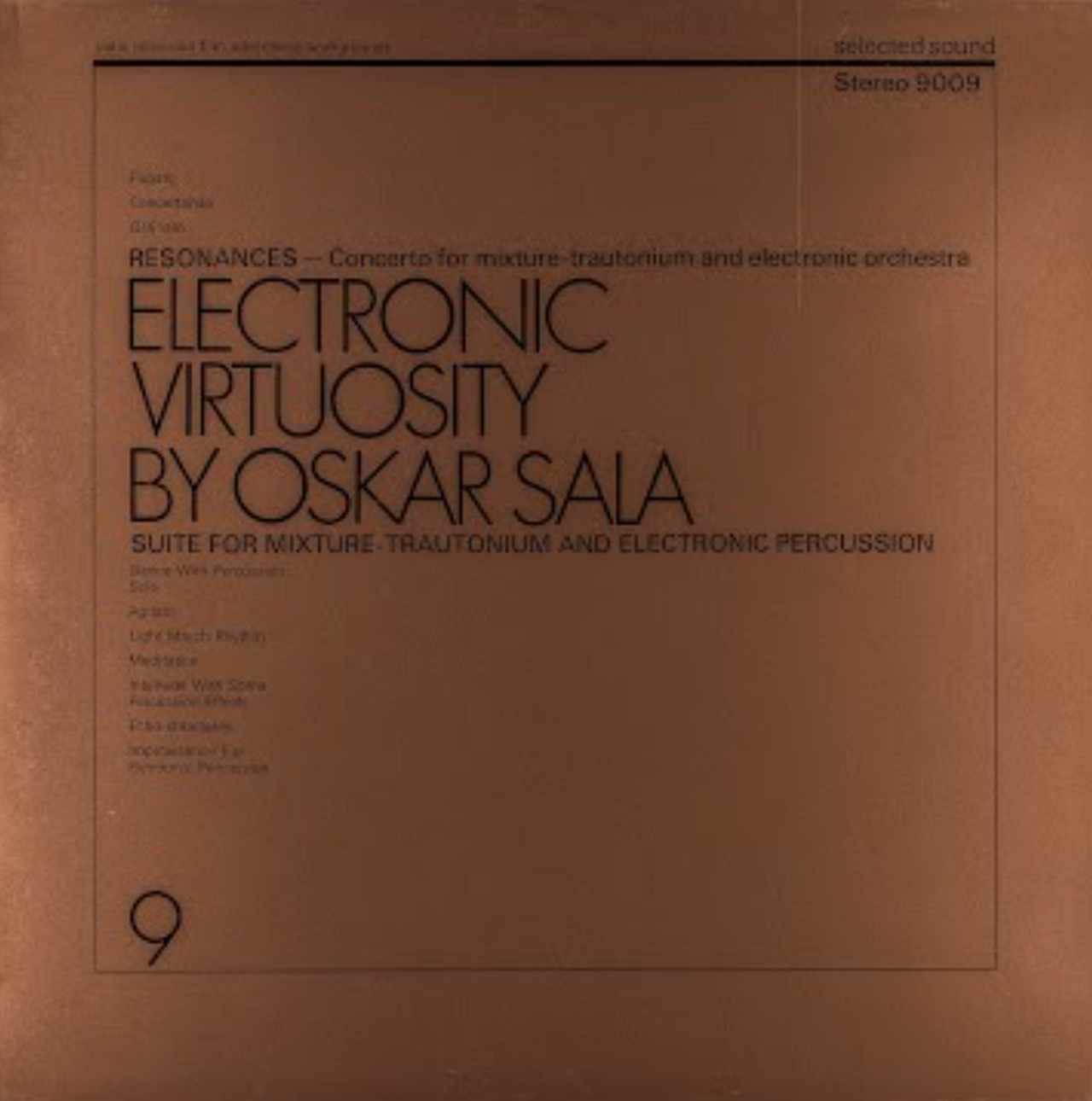
It is interesting to consider how Camfield selects the ‘mood music’ for his productions. To explore this, we look toward the other tracks that were either not selected or are used so infinitesimally that we don’t easily pick up on them. I will outline them below, and then it will be time to wheel out the television into the classroom to watch a video.
First up is Lew Stern’s ‘Pulse of Terror‘ (KPM, 1972), which uses a shrill ethereal background, alongside echoing percussive sounds. These both suggest the mystery behind Sinofar and Giroc, alongside the echoes heard during the climactic battle between Blake and Travis.
And we return to the ‘Terrestrial Journey‘ LP, where the title track conveys a mystical magic, intended to be used to announce Sinofar within a scene.
Presumably, an alternative to the beauty of Alan Hawkshaw’s ‘Space Panorama’ is the ending of ‘Black Mist’, also by Hawkshaw, which is slightly less melodic, but equally representative of the expanse of space.
Also identified as a reserve was ‘The Empty Arena‘ by Keith Mansfield, from the KPM LP ‘Olympiad 2000’ (1977). This track is slightly more Star Trek in nature, beginning with a series of high-octane notes before moving into a more synthesised and triumphant melody. Watch the video later in this chapter – it’s interesting to note how differently the audience might have interpreted the Liberator flying through space if one score replaced another.
Elsewhere, we have ‘Celestial Cantabile’, credited to Harper/Russe/St George (Don Harper, Brian Hodgson and Delia Derbyshire.) This is taken from the ‘Electrosonic’ LP. This sounds like a signature Derbyshire piece and may have been considered for the explorations on the barren planet.
From ‘Electromusic’ is Eric Peters’ ‘Occult‘, also suggested as an accompaniment to the barren wasteland, or the early scenes in the forest.
For a sense of combat, we have David Fanshawe’s ‘Destructive Powers‘, available on KPM’s ‘Sound Odyssey’ LP. It is described as ‘4 sound smashes. Dynamic echoed piano with anguished cries.‘
The reserve track to establish Travis and his pursuit ships (‘Countdown’) was ‘Murky Dark‘ by Eric Peters, also from 1972’s ‘Electromusic’. Also, chosen for these scenes was the title track to a 1975 KPM LP, ‘Sound Odyssey‘ by Peter Cox. This was a more gentle, ethereal track.
For the view of the starry sky at night, Ron Geesin’s ‘Timeless‘ was chosen. Featured on the 1977 KPM LP ‘Atmospheres’, this track is expansive, gentle, and delicate.
For the scenes of Jenna being threatened, two other tracks were considered, both from the KPM LP ‘A History Of War And Peace’ (1973). The first track was ‘Eve of Conflict‘, described as a tense anticipation. I read it as more mournful than anything. The other track was ‘Encampment‘, a suspenseful snare drum-led piece, recorded alongside the Kneller Hall State Trumpeters and the Regimental Band of The Coldstream Guards.
The battle between The Liberator and the pursuit ships could have been accompanied by ‘Victory at Worcester‘, performed by The Kneller Hall State Trumpeters, the Regimental Band of The Coldstream Guards, and Laurie Johnson. This also featured on KPM’s ‘A History of War and Peace’ in 1973. It’s a more traditional military rallying call, heavy on the snare. On first hearing, I dismissed it. But it grows on you, you know.
The blu-ray production notes for Series A (kudos to Richard Bignell) include references to the dematerialisation from the plain of the dead, the enchanted forest, Giroc appearing, eyesight going, and a fight between the gents. The reserve choice is a Mike Vickers track from 1972 called ‘Headful of Birds‘. This is an often staccato synthesised piece, which would suggest various forms of disorientation, although certainly softer in nature than the sonic piece that accompanies Giroc’s psychological attack on Blake in the forest.
We also have this Eric Peters track from the 1972 LP ‘Electromusic’. This piece, ‘Light Coral‘, is an ethereal score, which sounds like it might accompany the detmaterialisation of characters from one place to another. The notes identify it as a possibility for the moment where Jenna meets Blake in the forest, and a sense of dread.
‘Duel’ – the unused score. A supercut.
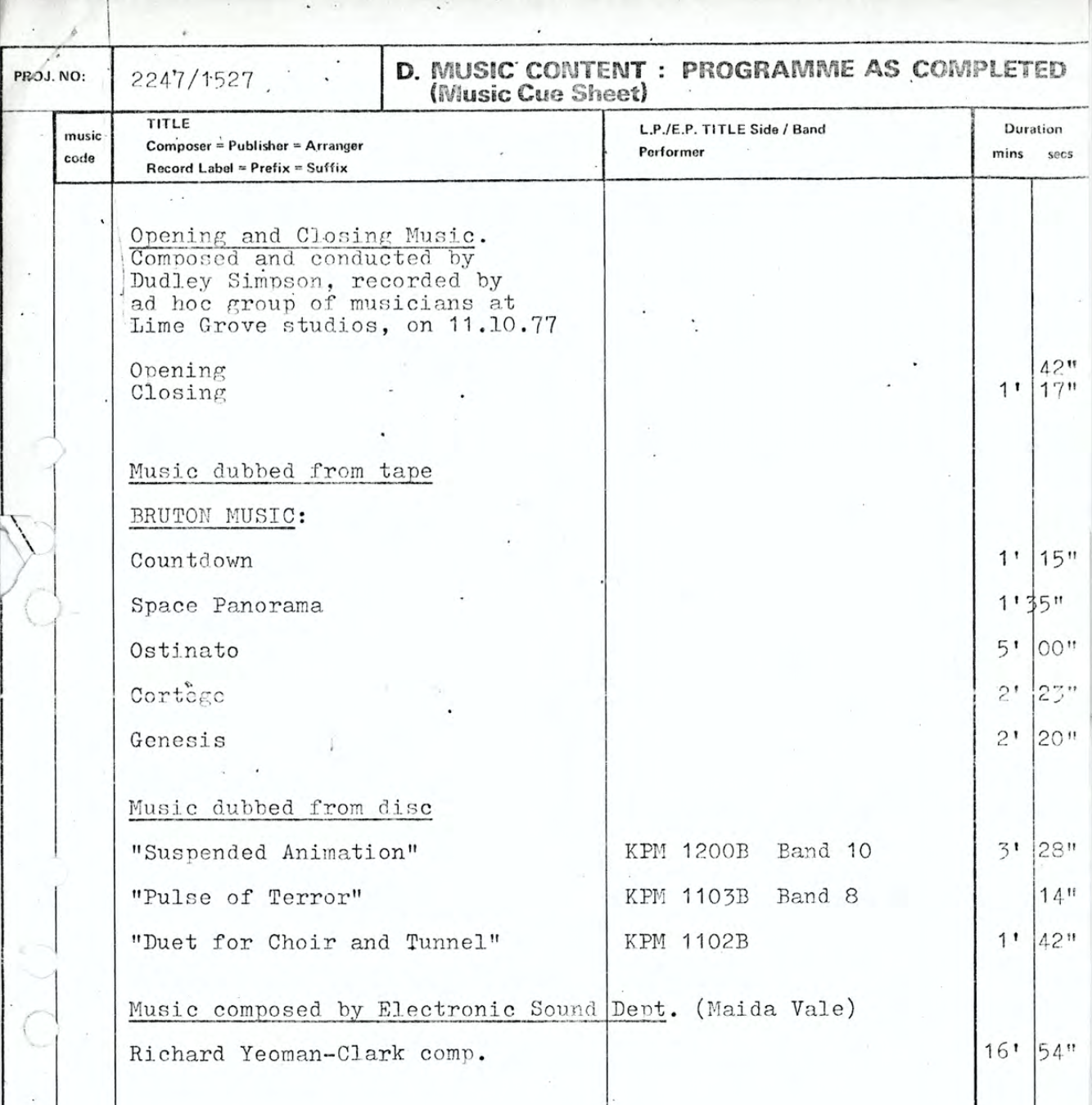
These ‘other’ tracks are a fascinating collection, and suggest what ‘Duel’ might have sounded like in a parallel universe.
To illustrate this, here is a video that takes the details from the production paperwork and lines up the reserve or rejected cues to the scenes they accompany.
What is clear to see and hear is that Camfield had an inner eye for good pictures, and also a keen ear for sounds that drive the atmosphere. I’m particularly struck by how close to Dudley Simpson’s Liberator motif is to ‘The Empty Arena’, both when we see the ship gracefully move through space, and in the final moments, when it moves away from the pursuit ship. Even though it is familiar in what it represents, it’s a slightly different approach, yet oddly affecting, in the same way we experience joy when we hear the familiar heraldic call of the Liberator.
Also, it’s apparent that he knew which ideas and selections needed to be vetoed. The final tracks chosen are superior to these reserve choices in the way they mirror the visual action. Nonetheless, these selections are still pretty impressive in storytelling terms and highlight the mood that Camfield was aiming for.
Given that this video is designed to illustrate how Camfield carefully selected his music scores, rather than accurately document these alternative choices, I have exercised a degree of creative license, with a few tracks layered on top of each other, or some subtle re-ordering. There’s even some authentic crackles from the sound effects. I hope you enjoy it.
Camfield’s approach to sound design echoes cinema conventions and many groundbreaking directors. Alfred Hitchcock’s use of sound is highly instructional. His sounds of fear point toward a visceral audience reaction that is synonymous with his work – it’s no surprise that the Trautonium found him. Stanley Kubrick also famously uses sound in a way that enhances emotional and psychological response. ‘2001: A Space Odyssey’ is an obvious example, from the unsettling and unconventional use of choral textures to the abundance of silence – even if there’s no such thing as true silence.
Perhaps a more interesting director, in this regard, is Agnès Varda, who also blurred the lines between diegetic and non-diegetic sound. Her 1962 movie ‘Cléo de 5 à 7’ is notable due to the use of wildtrack, inner monologue, and the ticking clock that signifies impending death, which crucially could be diegetic, but is not. 12 Add to that Varda’s use of camera, perspective and viewpoint, and you have an approach that you could well believe was an influence on Camfield.
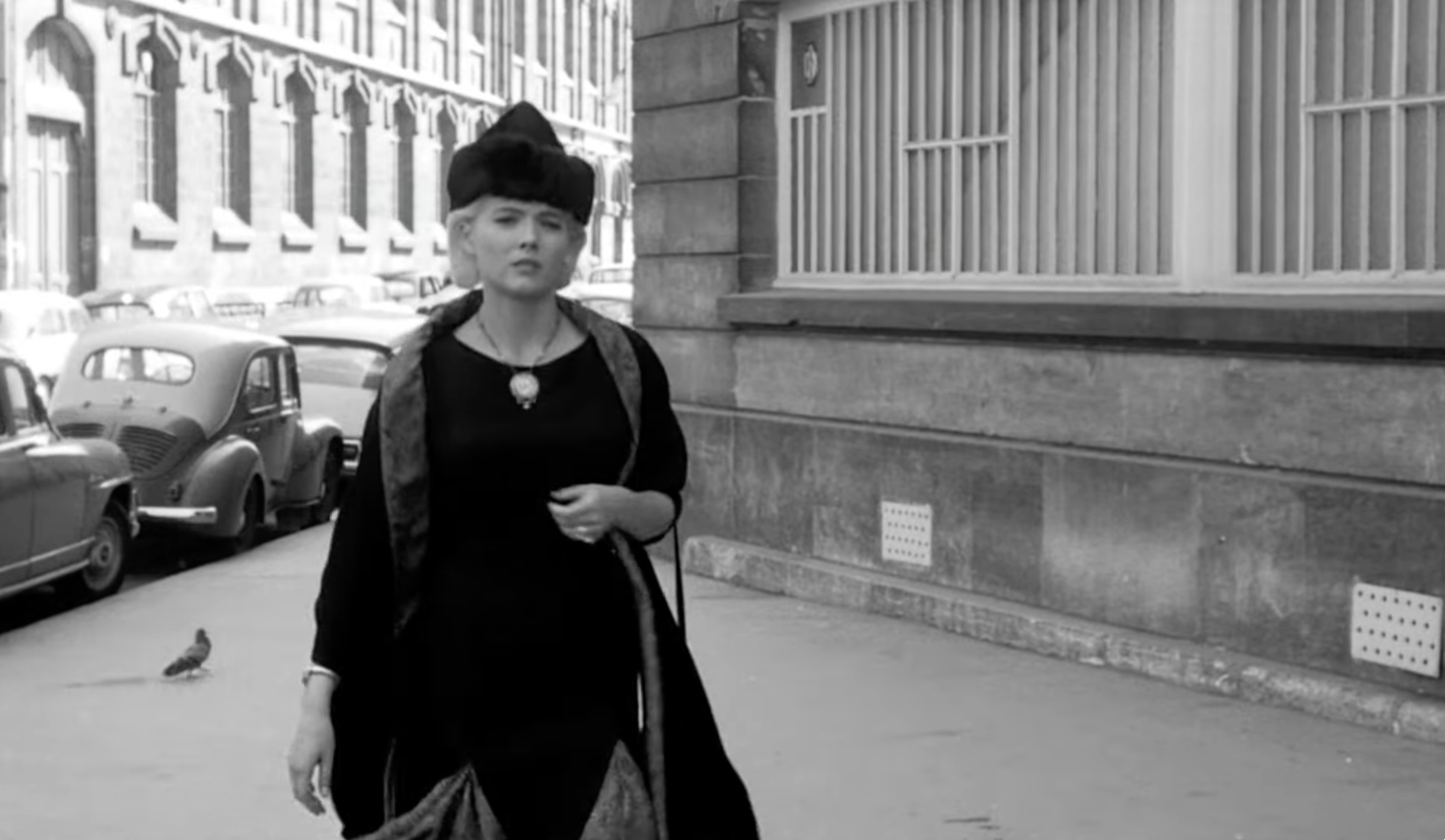
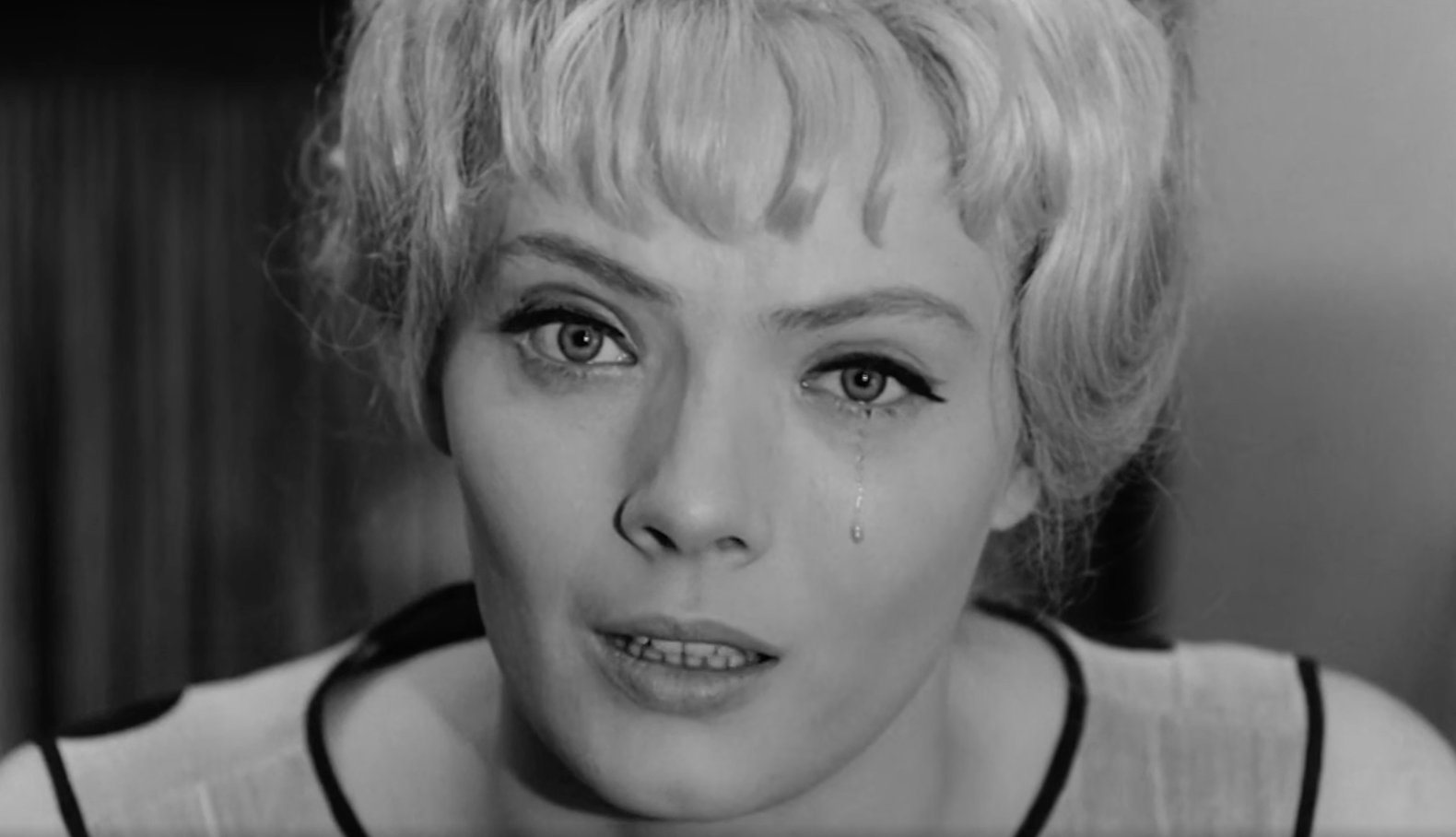
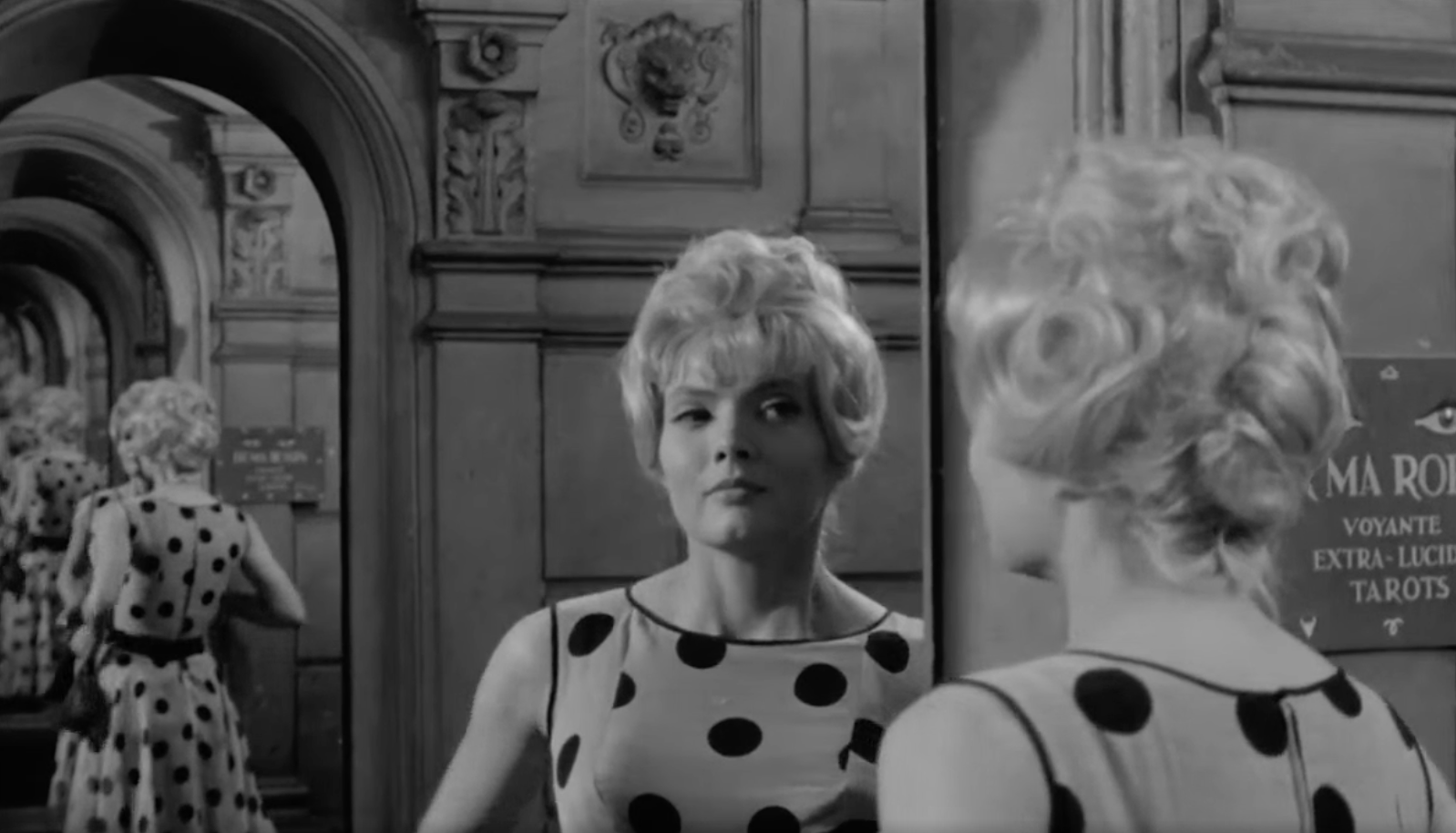
Camfield’s use of sound is an approach to direction that gives ‘Duel’ its own unique style. It’s the same principle as the line of sight. Where he uses the camera to capture the action and confront the audience with it, his use of sound, and his choice of musical cues also directly talk to the audience, sometimes camouflaging the fact that it might be diegetic or otherwise.

Case study #4 – Lights, camera, WALLOP!
Watching ‘Duel’ again, I’ve noticed that Camfield’s blocking of scenes, and the shot selection itself, is determined not only by the action but also by the portrayals of the characters, and how both of these are connected. Perhaps this is an ingredient that distinguishes Camfield from other directors.
A few examples spring to mind.
Let’s start with Gan. Poor Gan. He never has much to do. While Terry Nation writes the character into the scenes on the planet, it is what Camfield does with him that is interesting.
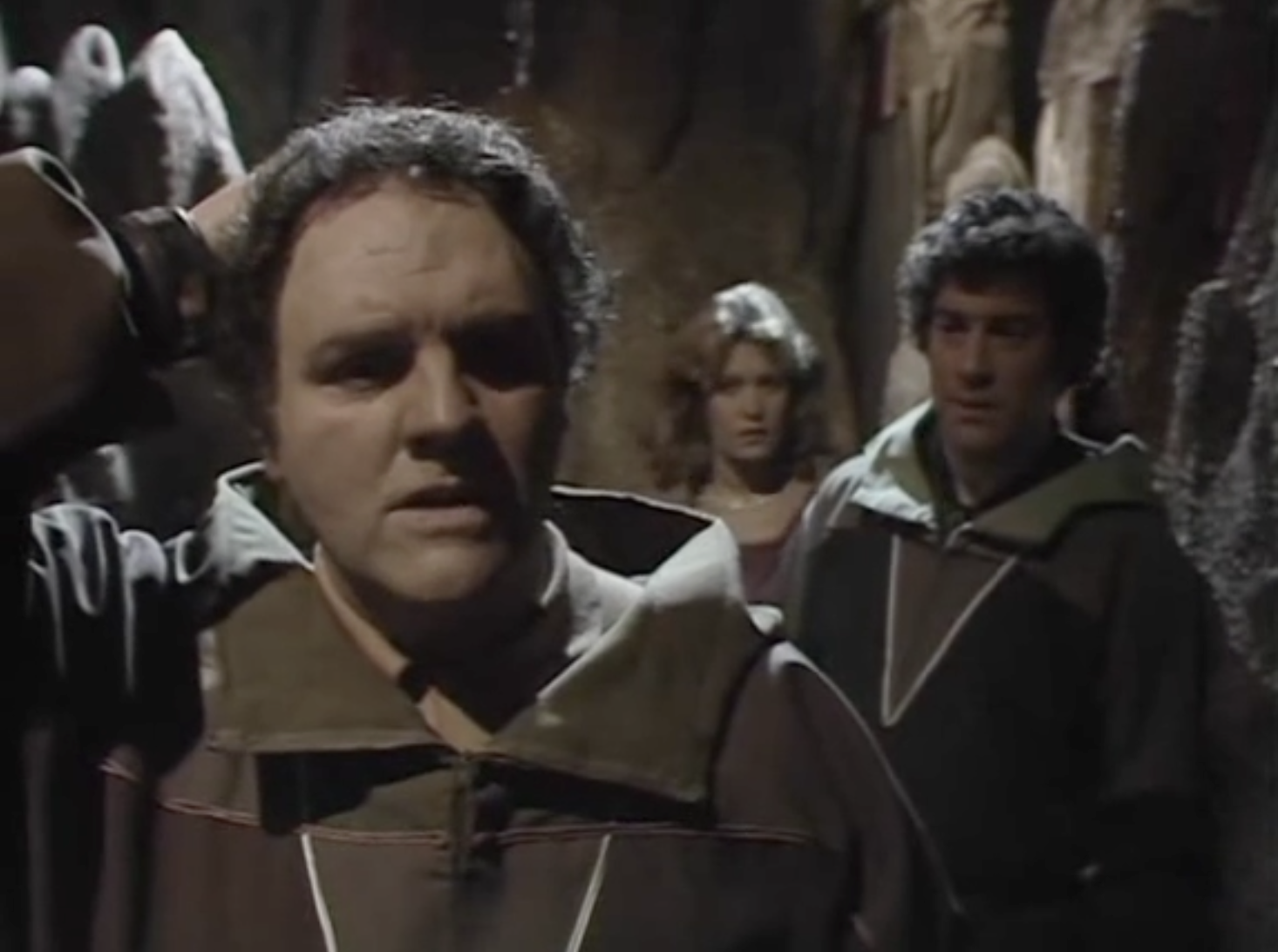
Firstly, there is his surprise at glimpsing Sinofar and Giroc, followed by concern about his limiter. This is powerfully portrayed, as he shouts out his disbelief across the wasteland. When Gan shows concern that his limiter might be malfunctioning, Camfield’s three-shot might initially appear conventional, with the protagonist addressing the middle distance just off-camera. However, it is effectively framed, with the audience facing him directly, his concern amplified by the expressions of Blake and Jenna behind him.
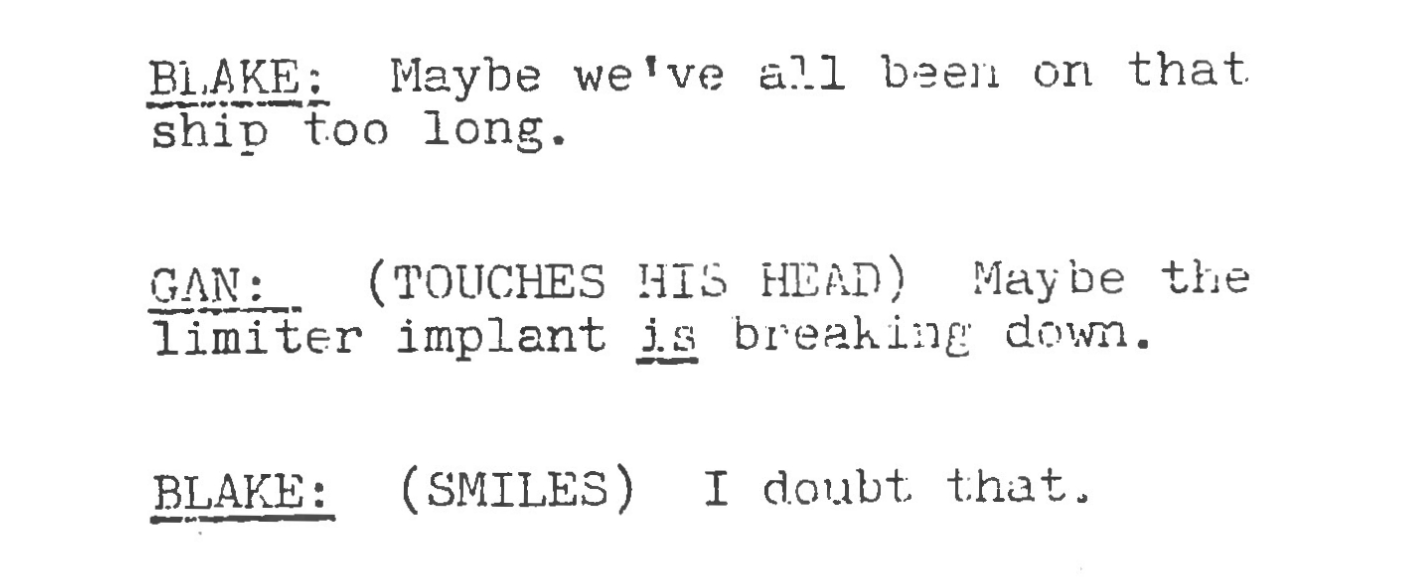
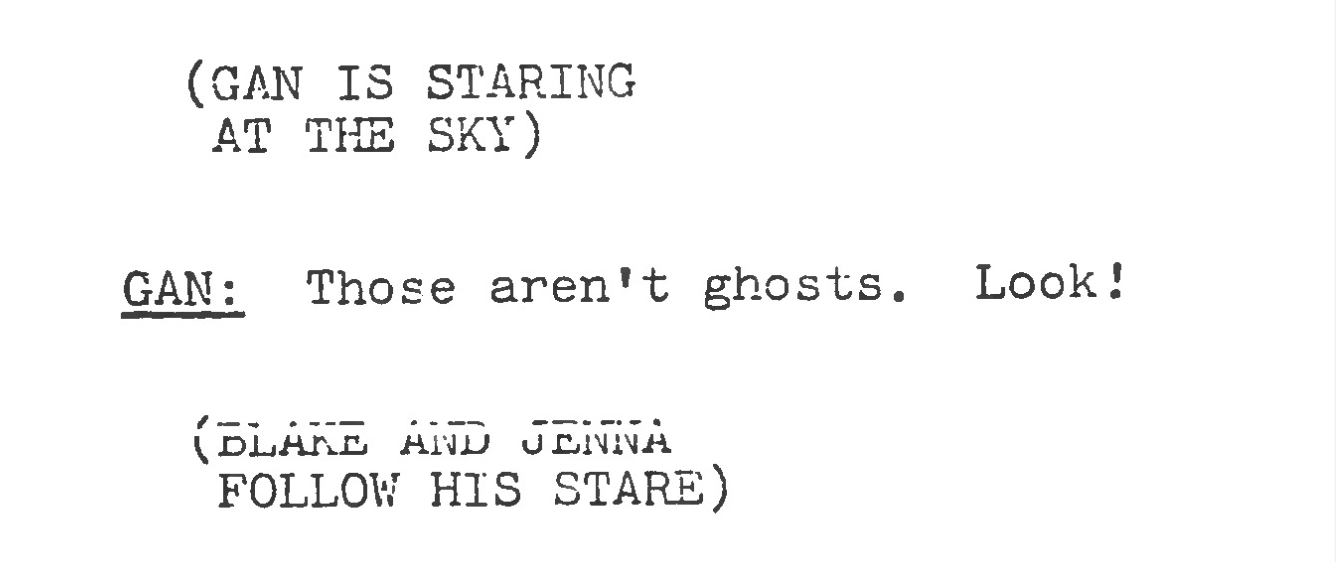
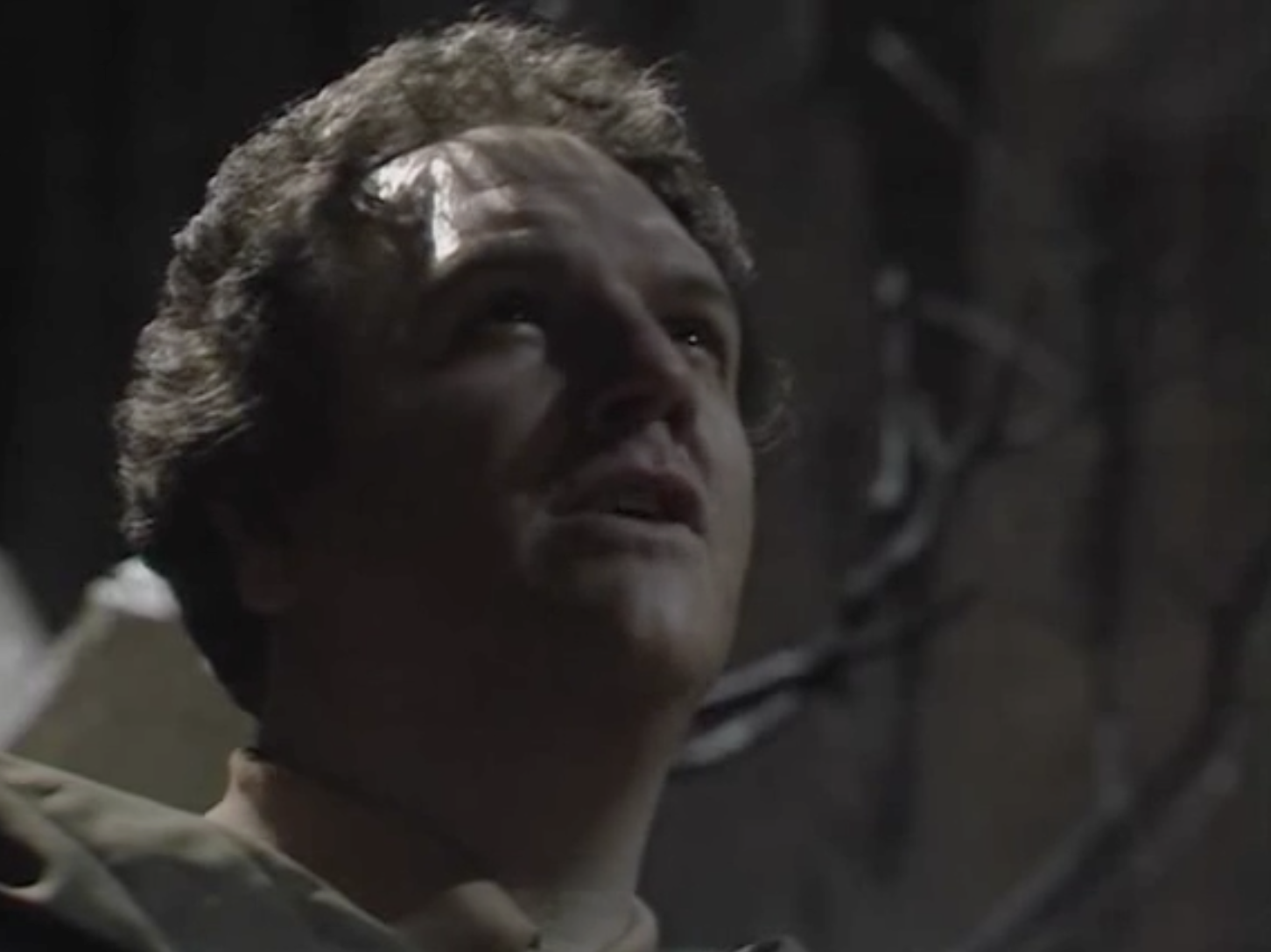
Even better is the close-up that David Jackson gets when Gan says, “Those aren’t ghosts!” It is one thing to look up at the sky, but to have the camera at a low angle, also looking upwards, brings out the dramatic intensity of Gan’s realisation. For an actor who rarely got good coverage from the scripts (even his death was out of focus) this might be his most effective close-up of them all. Camfield also elects to remove the following word, “Look!” from the script. It’s the right decision, leaving the three words to retain their impact.
The second example is Jenna. Sally Knyvette’s performance is miles apart from any other episode. She can expand her portrayal beyond the cynical space pirate, towards a character of deep suspicion and mistrust, but also with glimpses of affection and trust towards Blake. She delivers her lines in the woodland with a breathy, hushed tone that captures the survival instincts required in this particular duel.
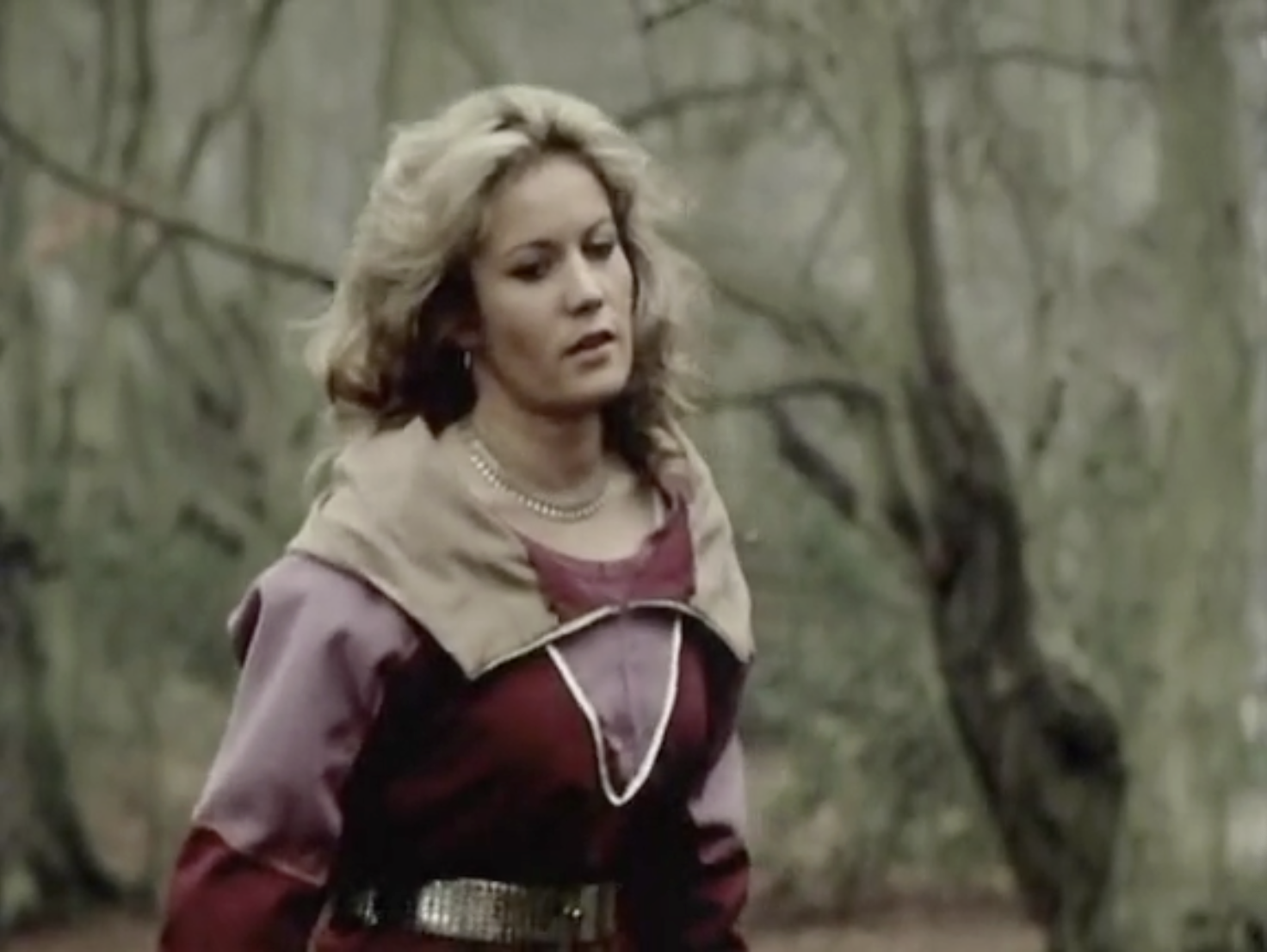
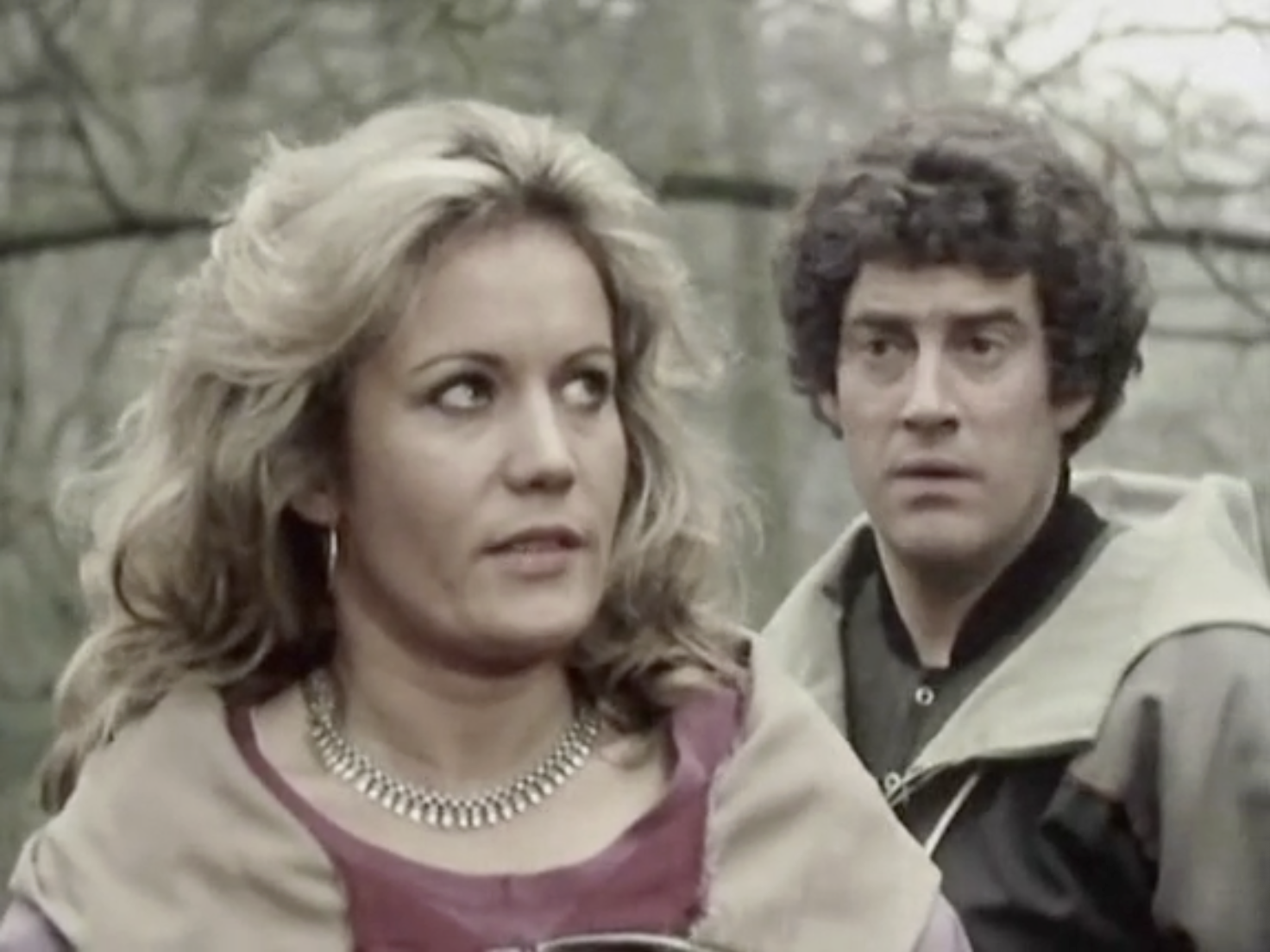
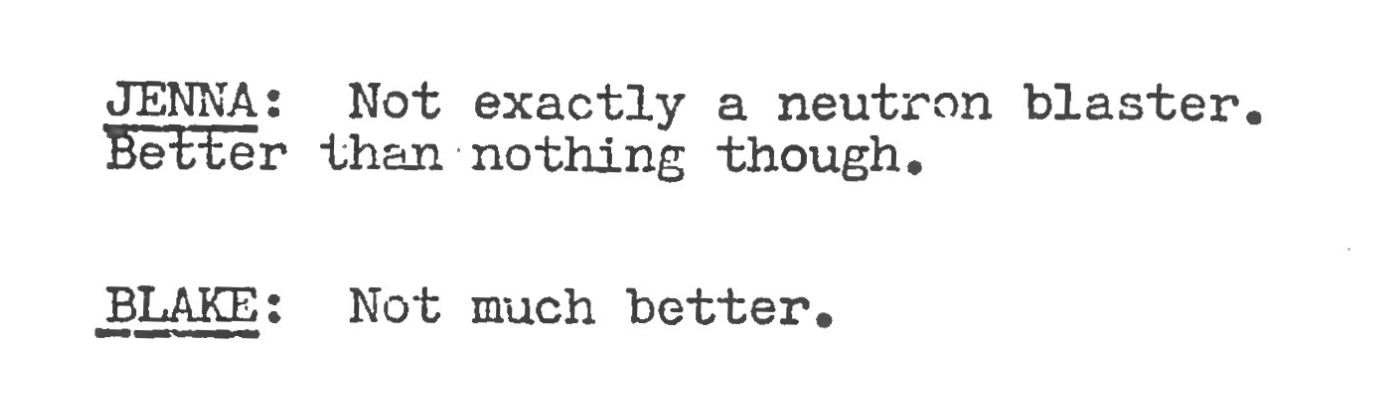
The difference in portrayal is best captured in her assessment of the spears that apparently will be better than nothing. “Not much better, though“, Jenna mutters to herself. Interestingly, the rehearsal script has the lines swapped between Blake and Jenna.
It would appear that, on location, the decision was made to give Jenna the last line. And it makes sense, allowing Jenna’s cynicism to cut right through Blake’s optimism. Opposites attract.
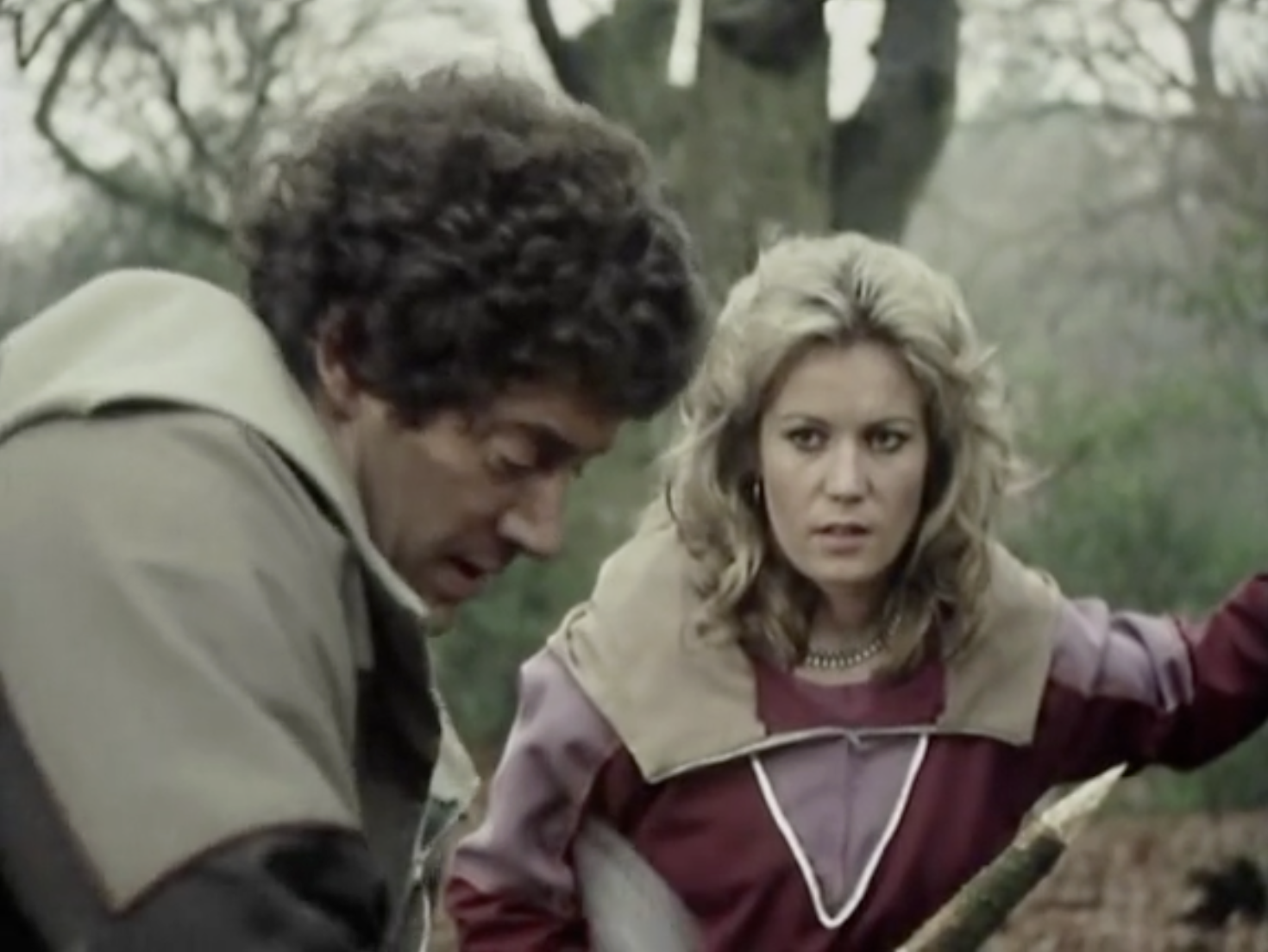
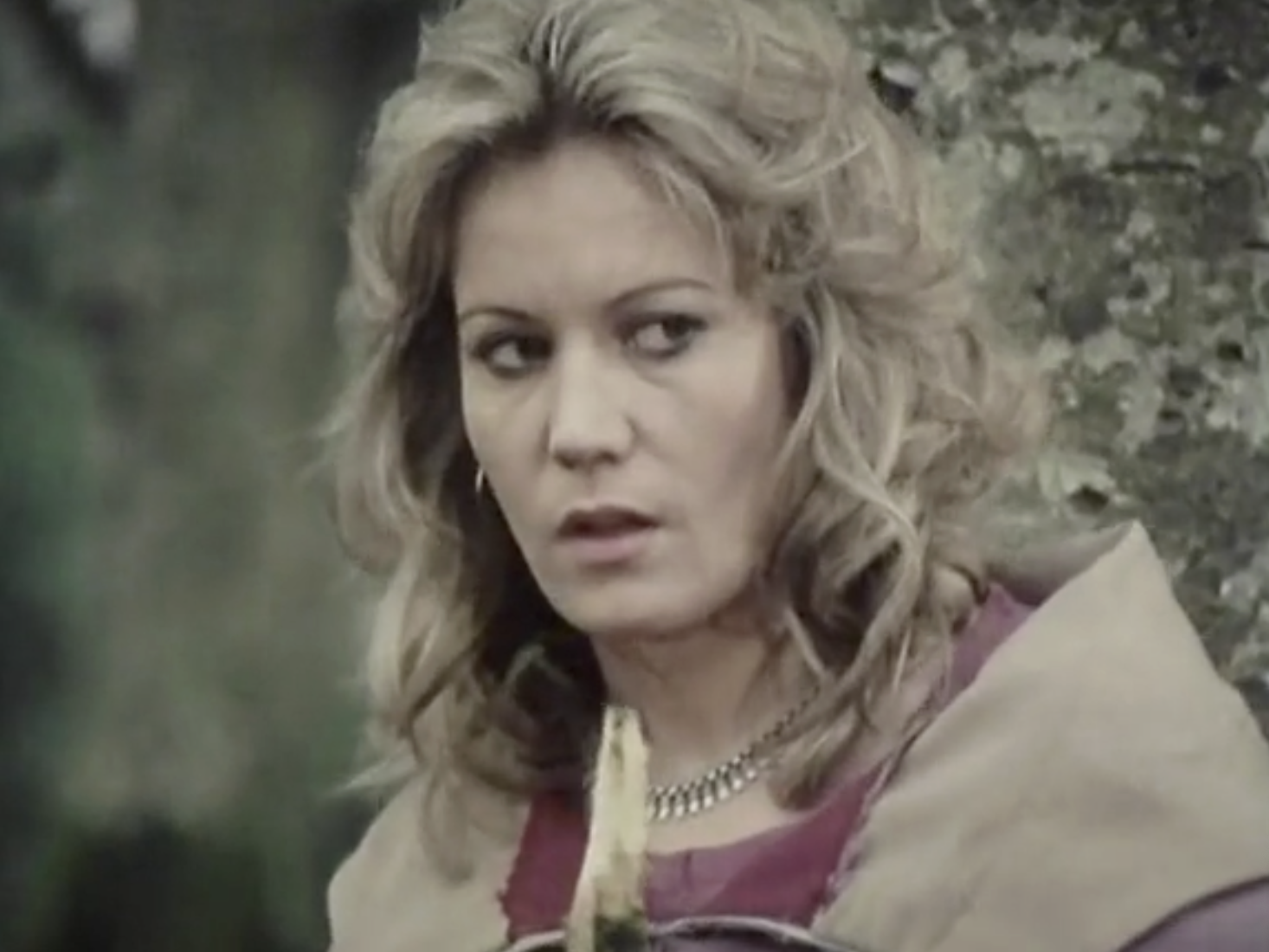
It’s like the director has stopped to think about the suspicious and savvy smuggler, and empowered the performer to emphasise these qualities in the portrayal. Knyvette noted Camfield’s encouragement. Even 20 years later, in the Blu-ray commentaries for Series B, she recalls how Camfield gave time to the performers and their performances, and also steadied the ship when recording time was running out. For a relentless juggernaut such as Blake’s 7, and the demands placed on performers, these recollections suggest a director who offers a ‘reset’ – a chance to rediscover the essence of the character, or at least, provide the time to return to it.
Indeed, Camfield’s popularity with cast and crew is, like so much of his reputation, the stuff of legend.
One thing I always noticed about Douglas was that when there was a tight budget and very little time to spare, he was everybody’s favourite person. Ian Fairbairn.13
He was a good guy. He always thought several shots ahead, so in a way, acted like the first assistant director as well as the director. Her certainly knew what he was doing. Nigel Slatter.14
There are other examples. As already mentioned, Travis is slightly more vindictive and sharp than in any other episode, and several shots show this off. Cally is slightly softer and wiser, and Camfield’s close-ups on her as they watch the events unfolding on the screen are contemplative. This includes her stare into the middle distance during the moment where Blake decides not to kill Travis. It emphasises her mystical roots, and is a very different directorial decision from the rehearsal script.
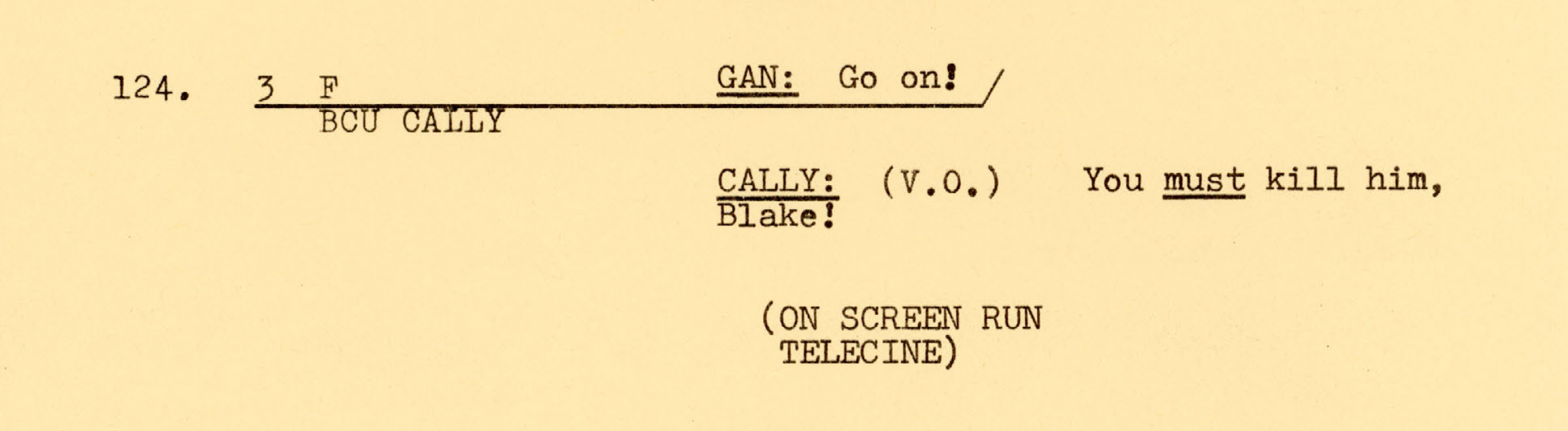
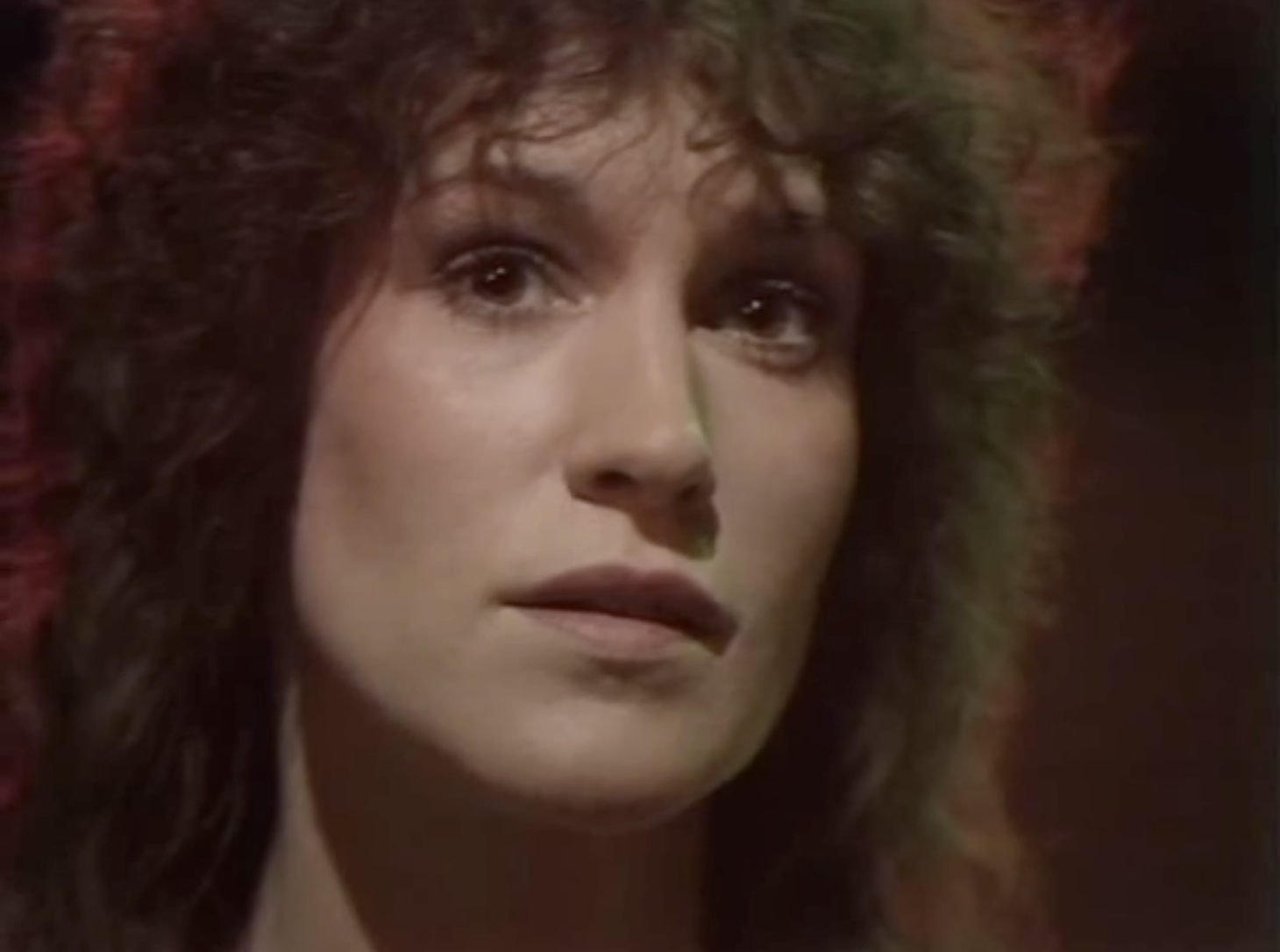
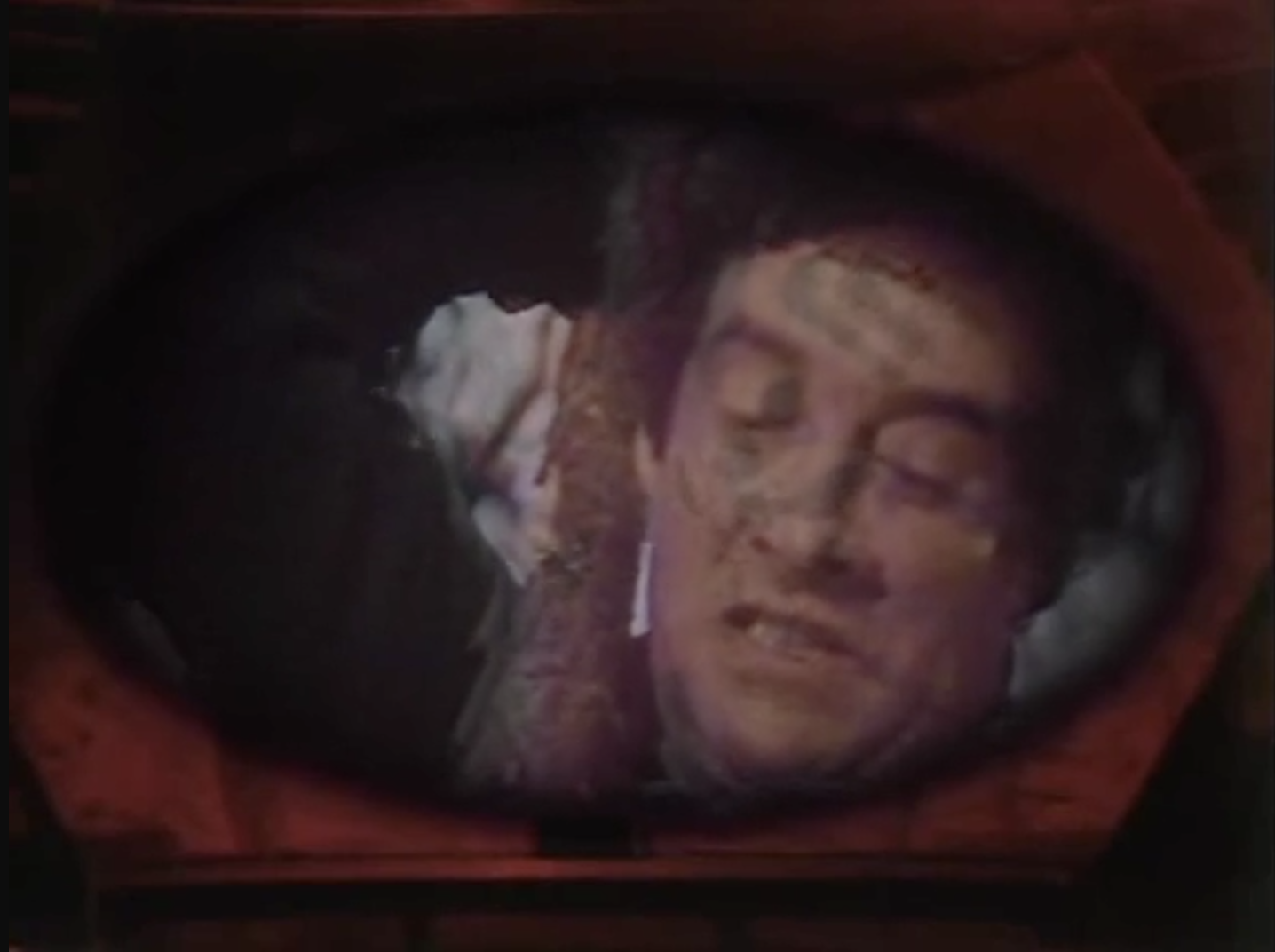
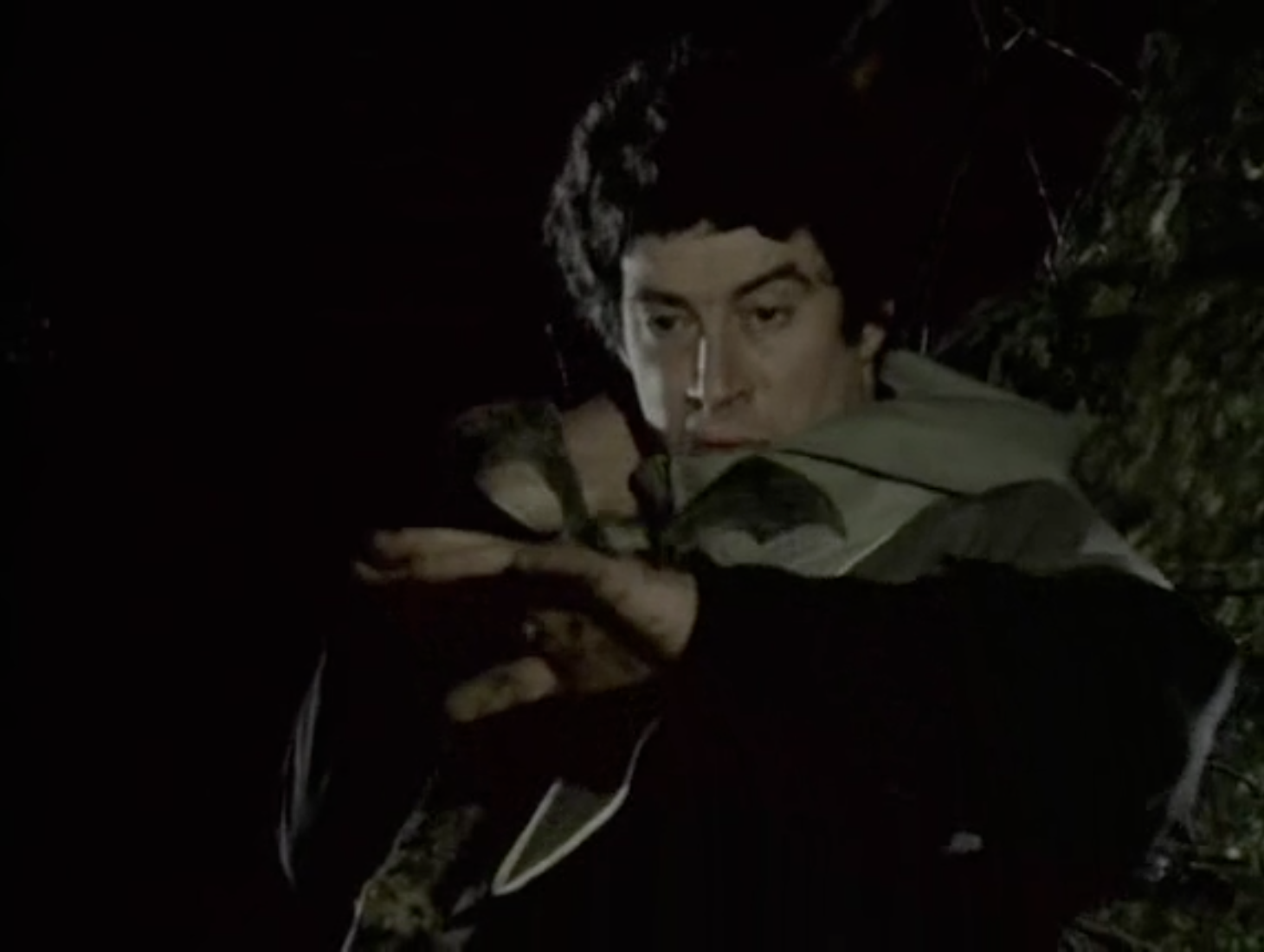
As for Avon, thoughts often turn towards his all-knowing shake of the head when Blake decides not to kill Travis, and it is a good shot. However, a more interesting moment is where the camera nonchalantly pans across the characters watching the duel, but then cuts suddenly, and almost prematurely, to Avon holding an implement. The almost rattlesnake sound effect echoes the nighttime wildlife that Jenna and Blake are navigating, but also captures Avon’s self-determination to conduct himself however he wishes. It’s a step up from the original script that simply has Avon get up and walk away from the flight deck.

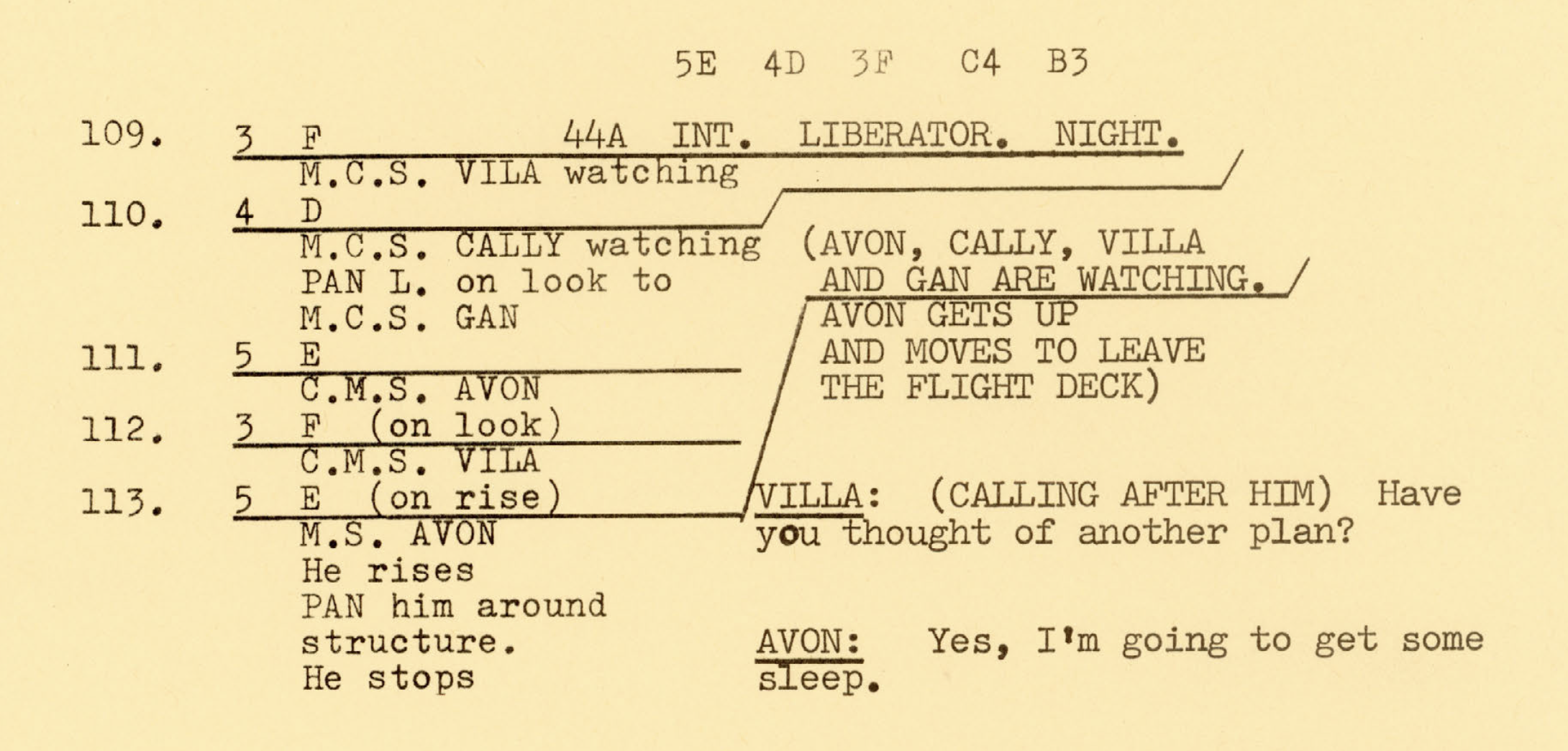
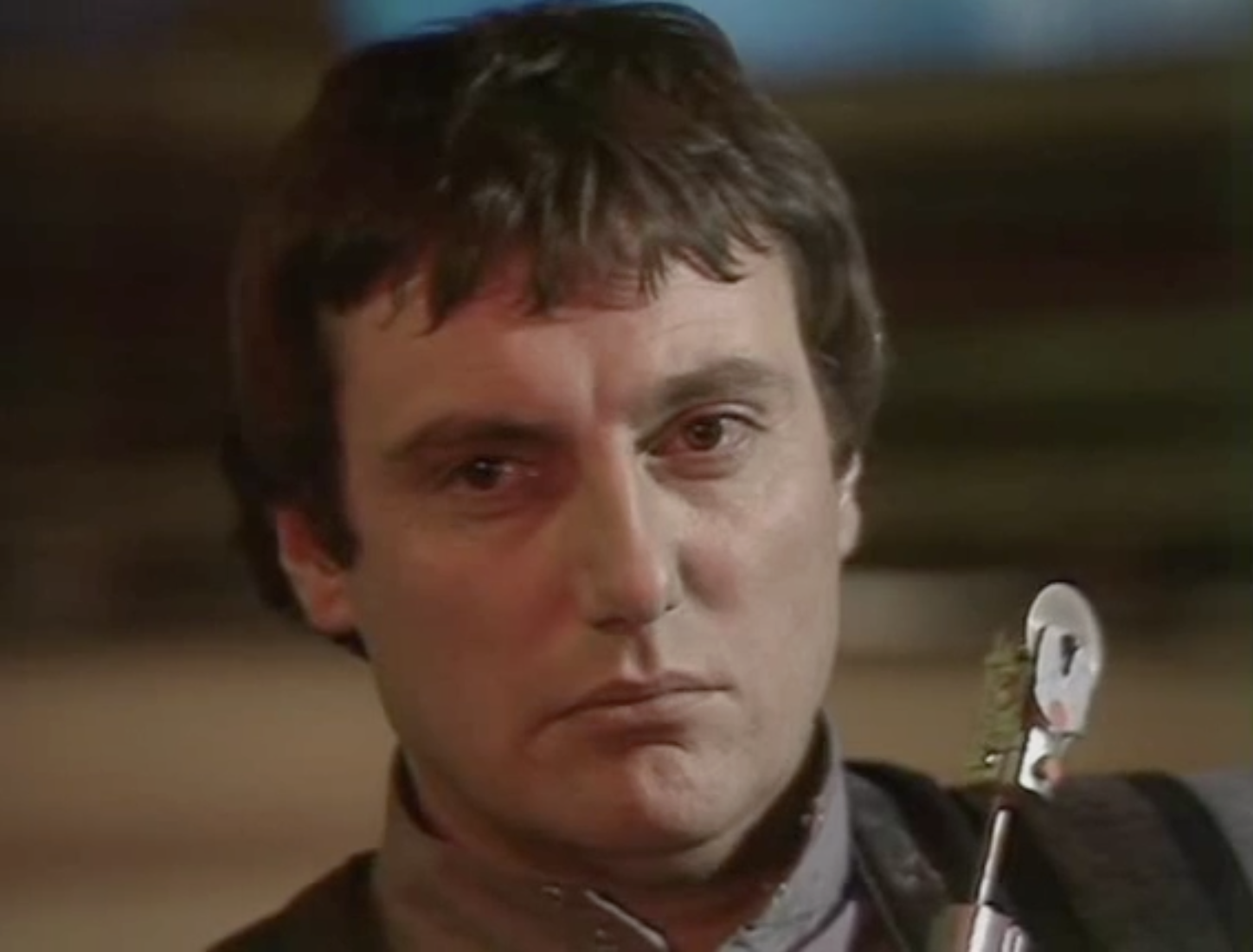
Travis’ hunt to elicit something from the Mutoid is highlighted by some subtle amendments to the script. In the rehearsal script (issued after the location filming), the Mutoid does not repeat the name she was given. However, on location, she utters the name in response to Travis, suggesting a faint trace of identity. Carol Royle briefly looks into the middle distance, reaching for a memory.
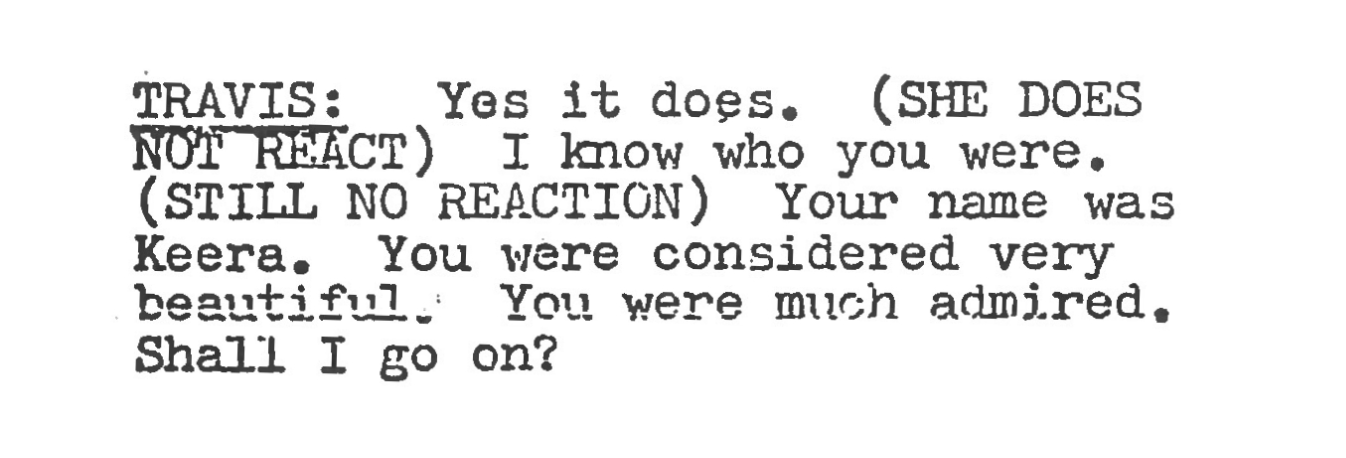
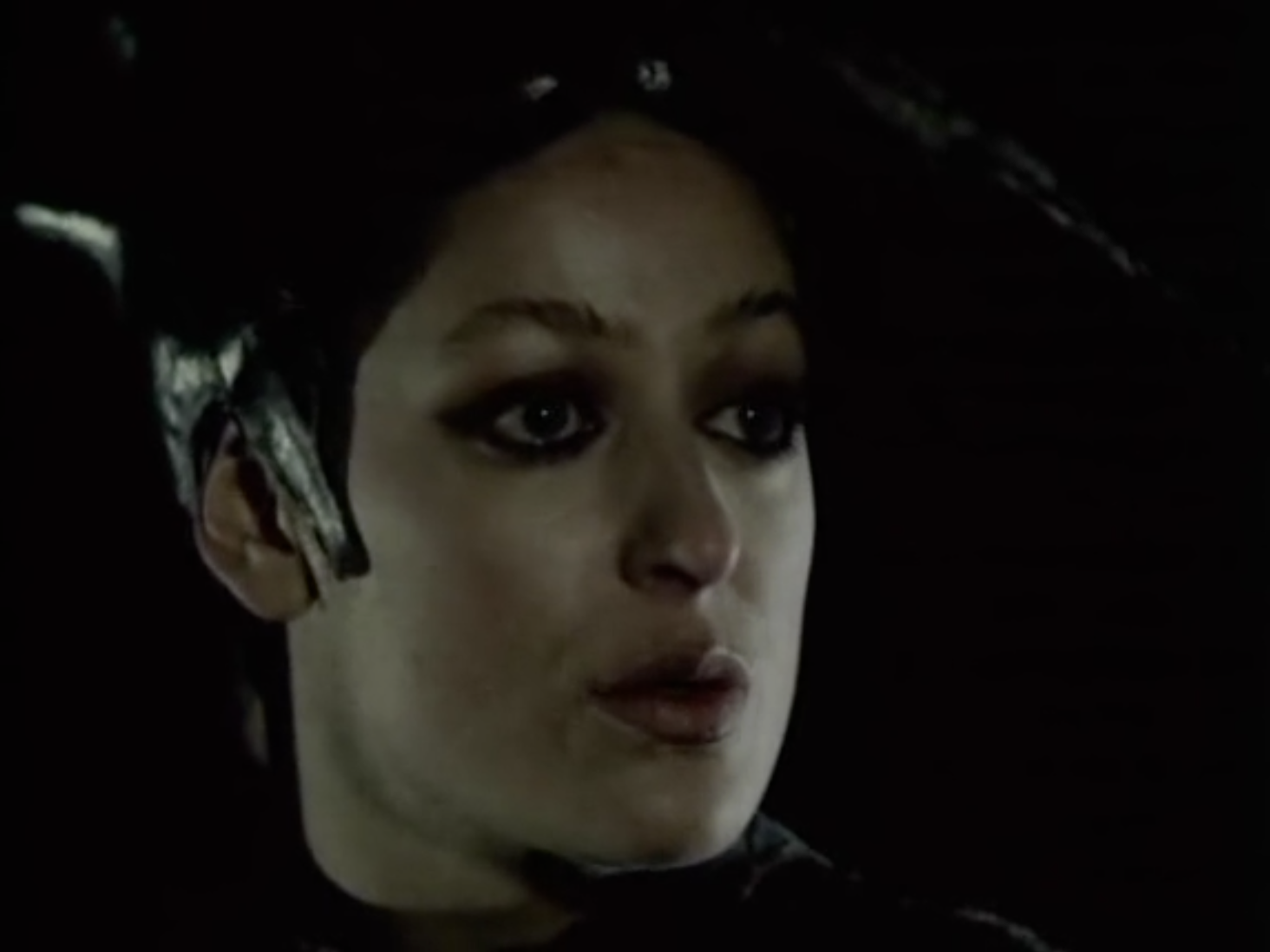
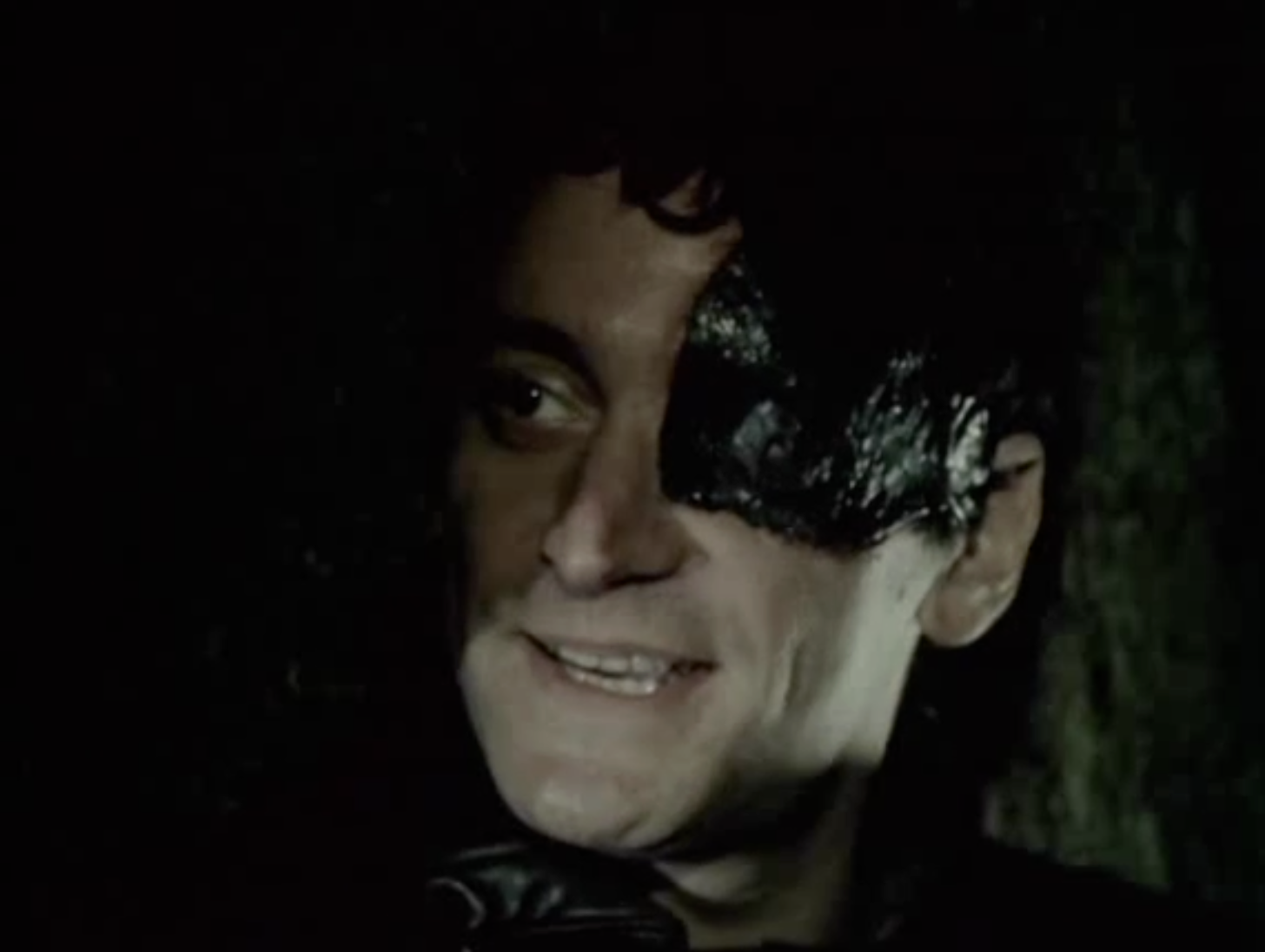
This seems to please Travis, feeling he has broken through her mindset, only for the Mutoid to return to its emotionless state, leaving Travis somewhat of a sore loser in this psychological battle.
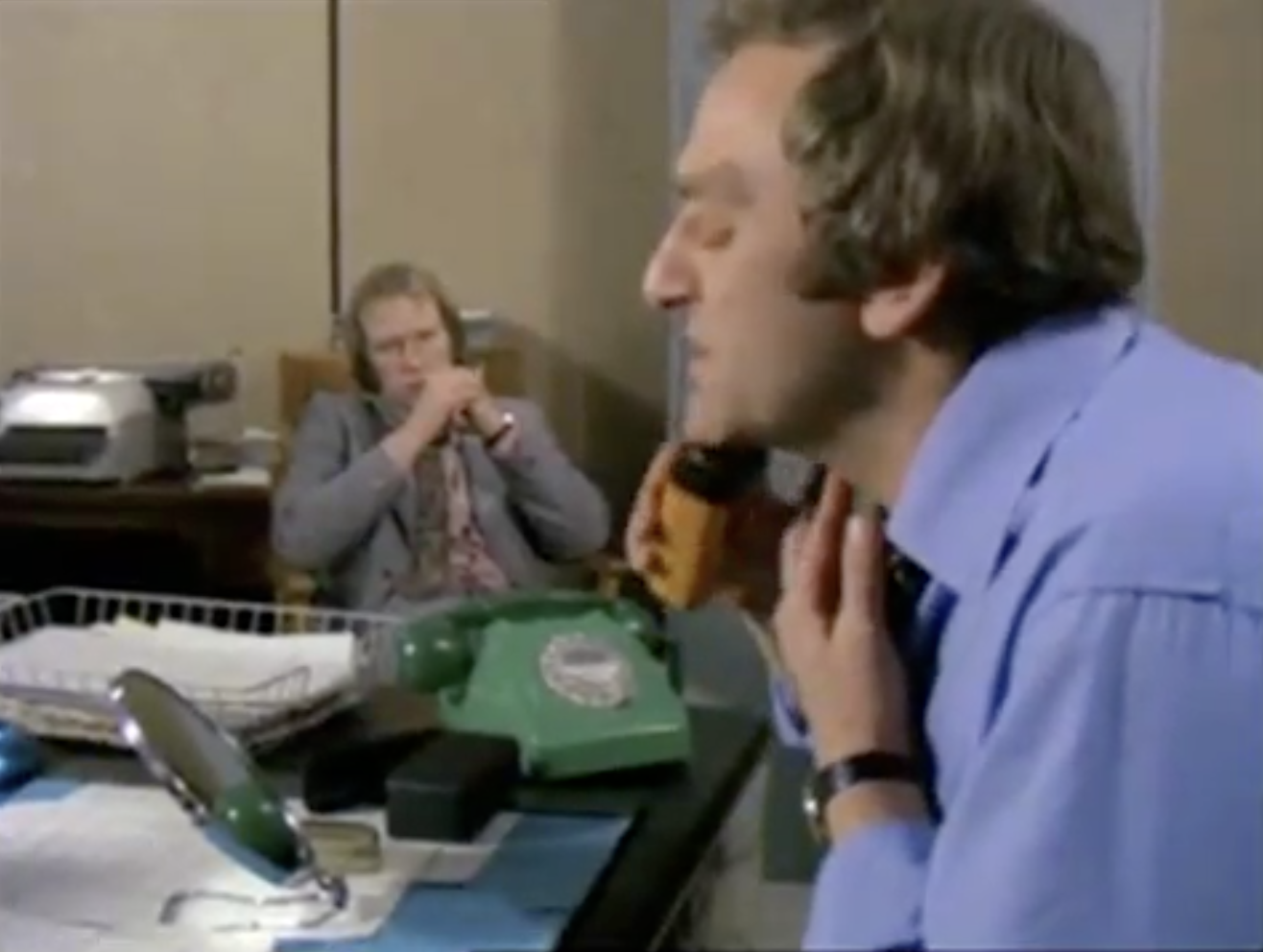
As an aside, Camfield uses some lovely two-shots, that really make use of perspective and camera position. Once I’ve seen them in ‘Duel’, I seem to keep seeing them in many of his other productions.
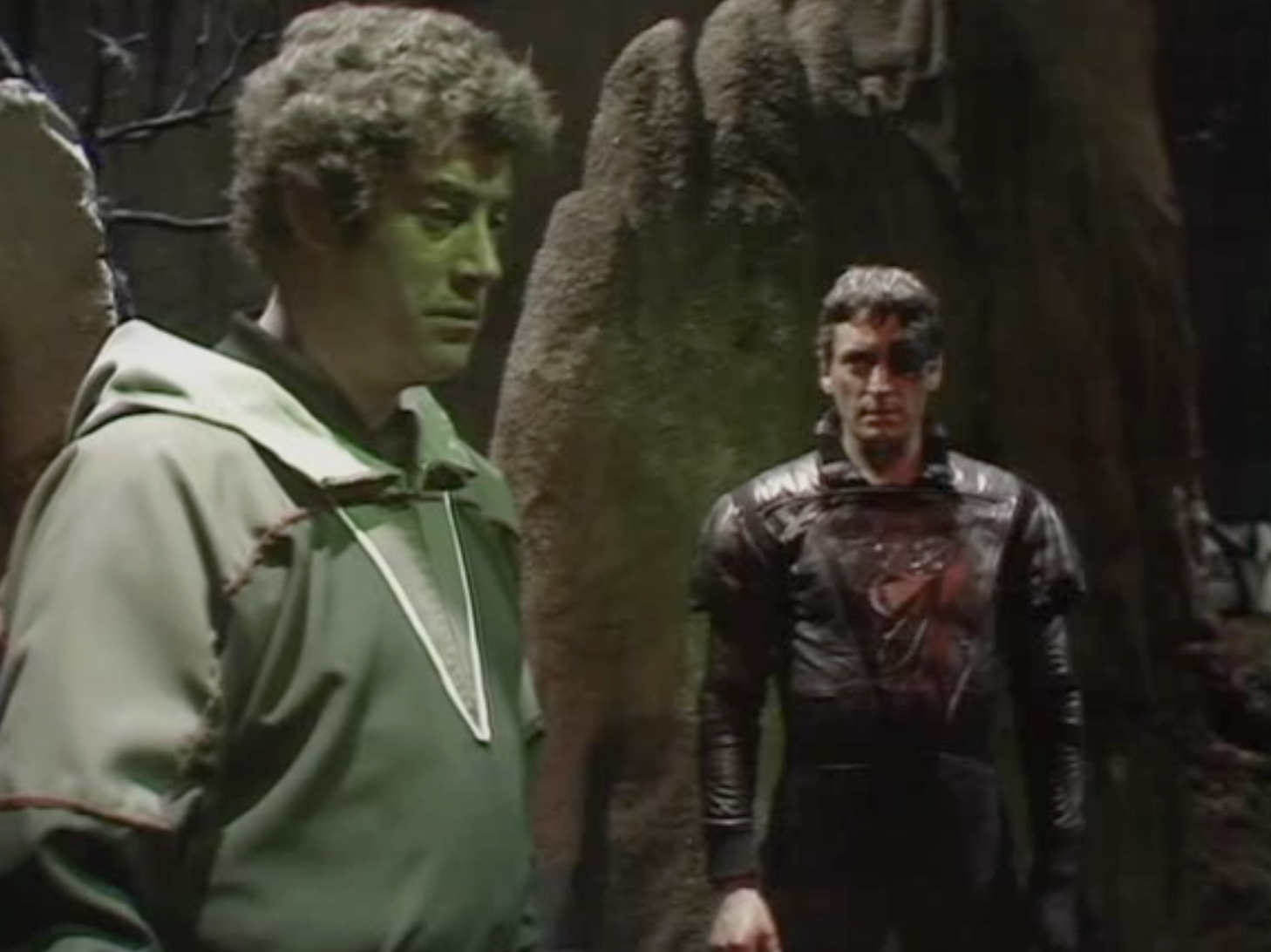
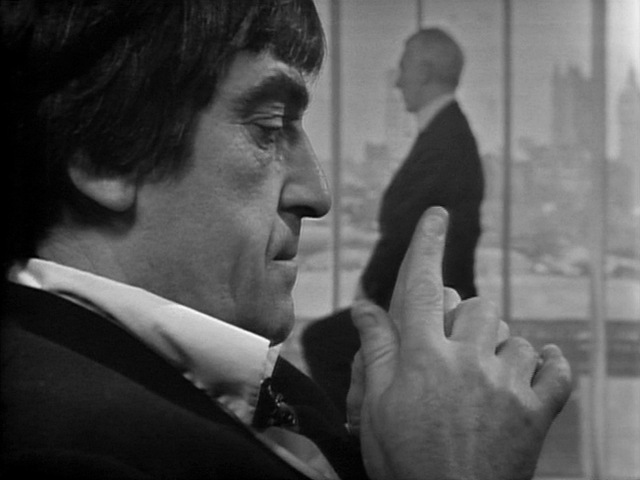
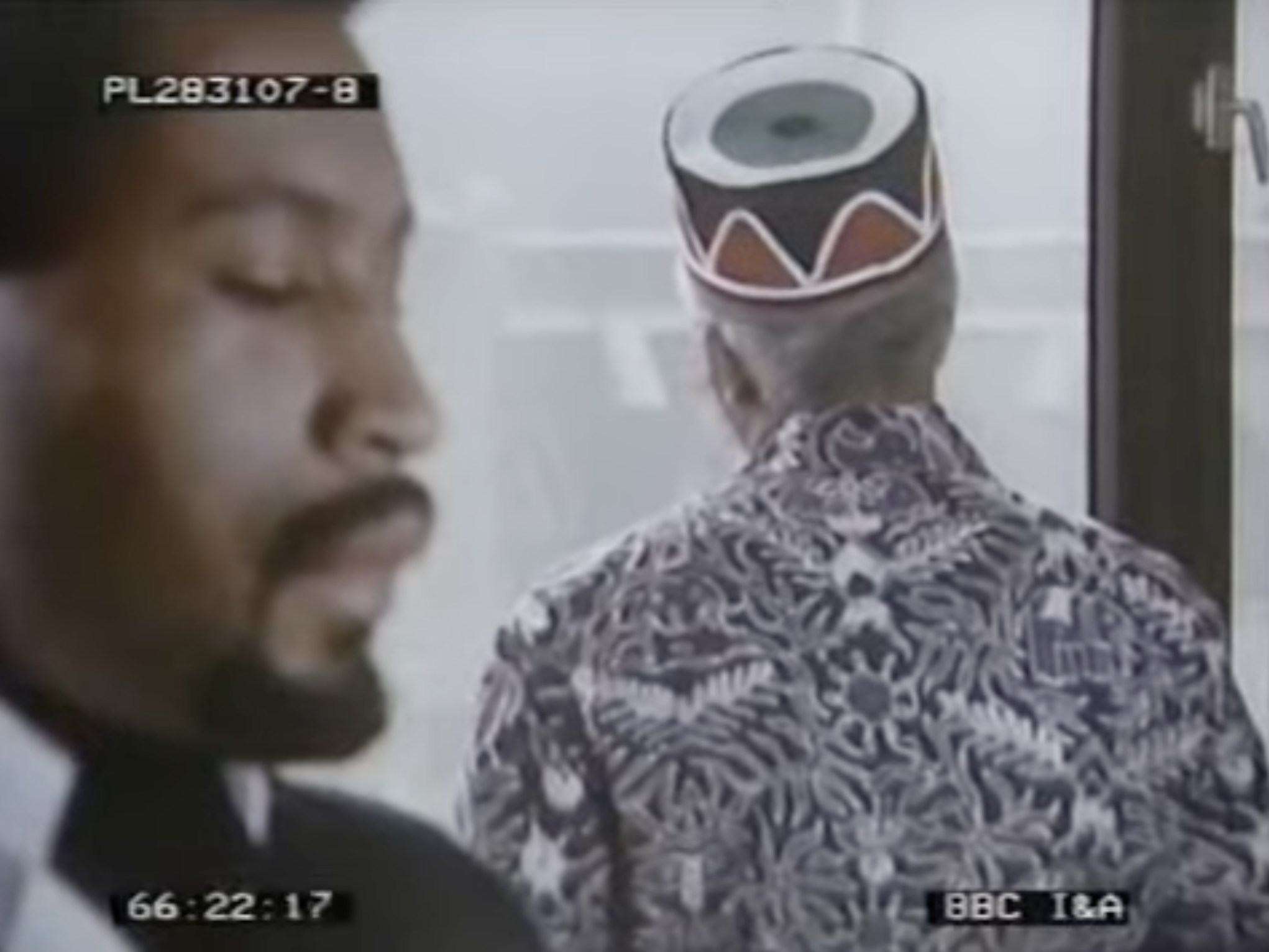
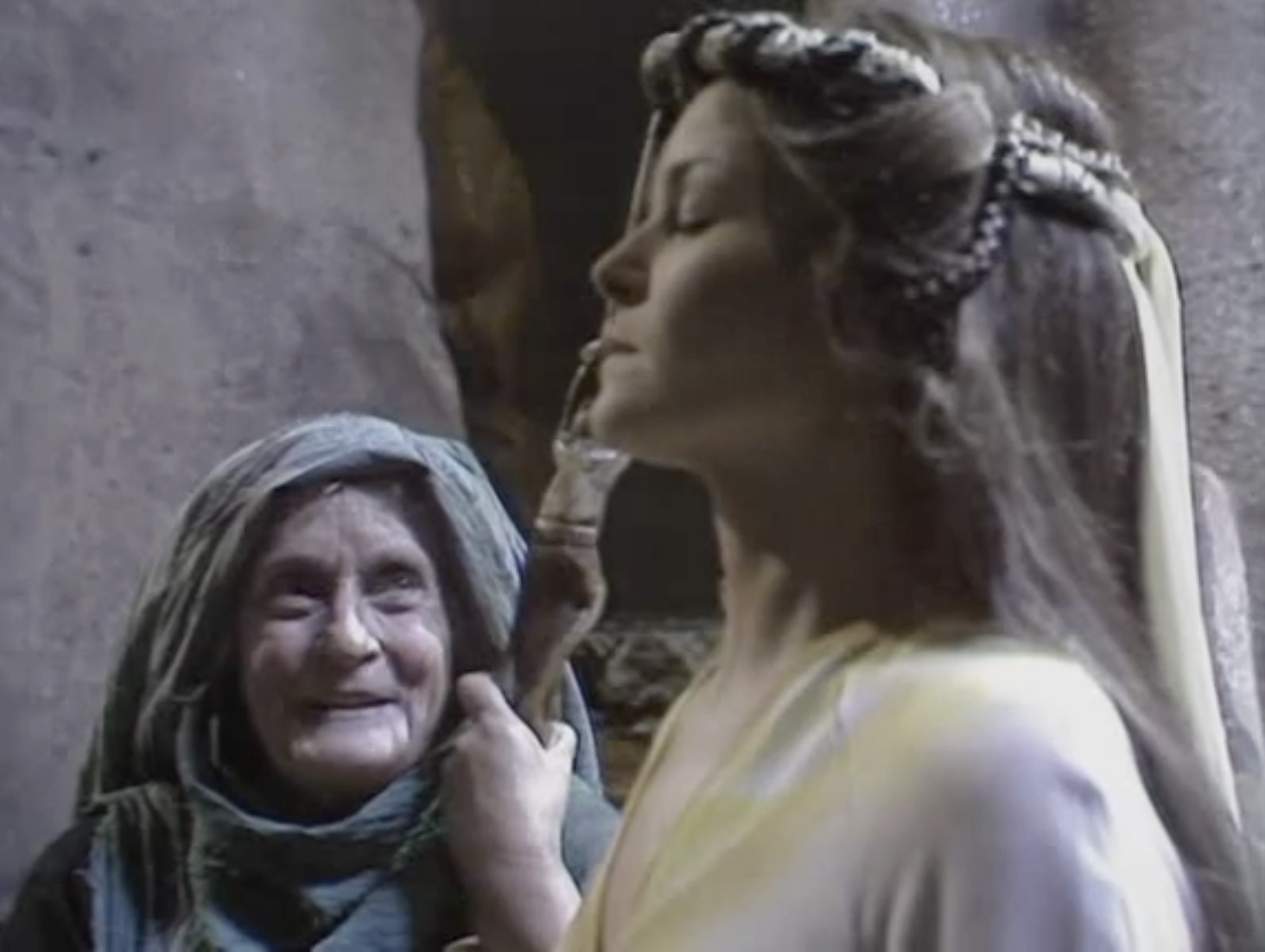
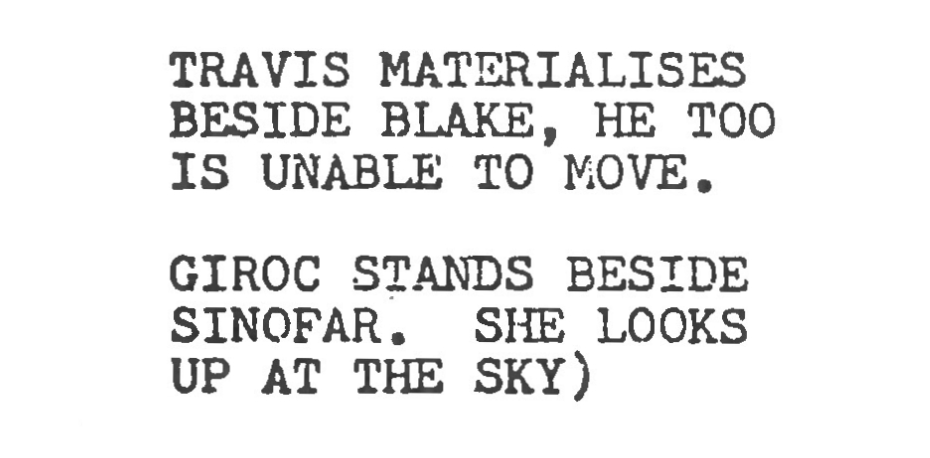
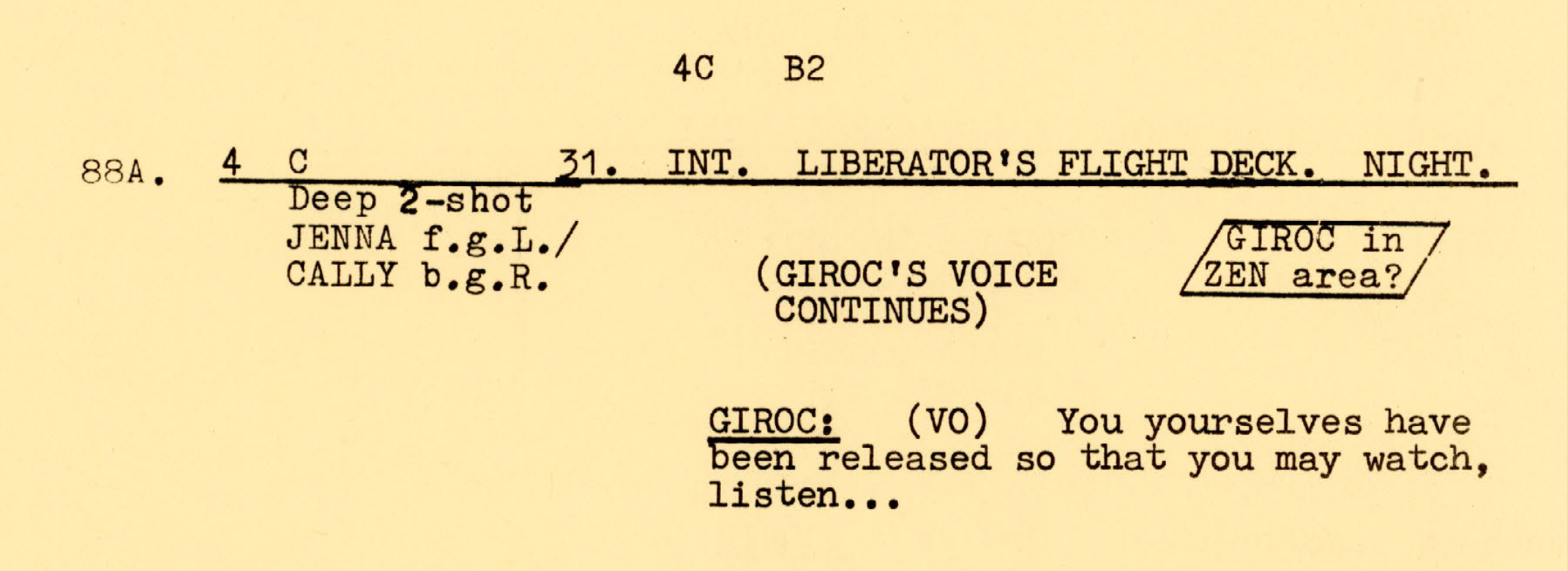
One moment can be found on the planetary surface, where Blake is in the foreground, and Travis is in the background, facing him. They might be paused in time, but it is the proximity of the characters and the relationship they have within the frame, with Blake looking outwards, and Travis looking directly at Blake, that defines their characters and gives the shot added impetus. The shot is replicated with Sinofar and Giroc, suggesting a subtle duel of their own. Of course, these shots are not specifically ‘composed’ in the rehearsal script, so it is another example of the ‘inner eye’.
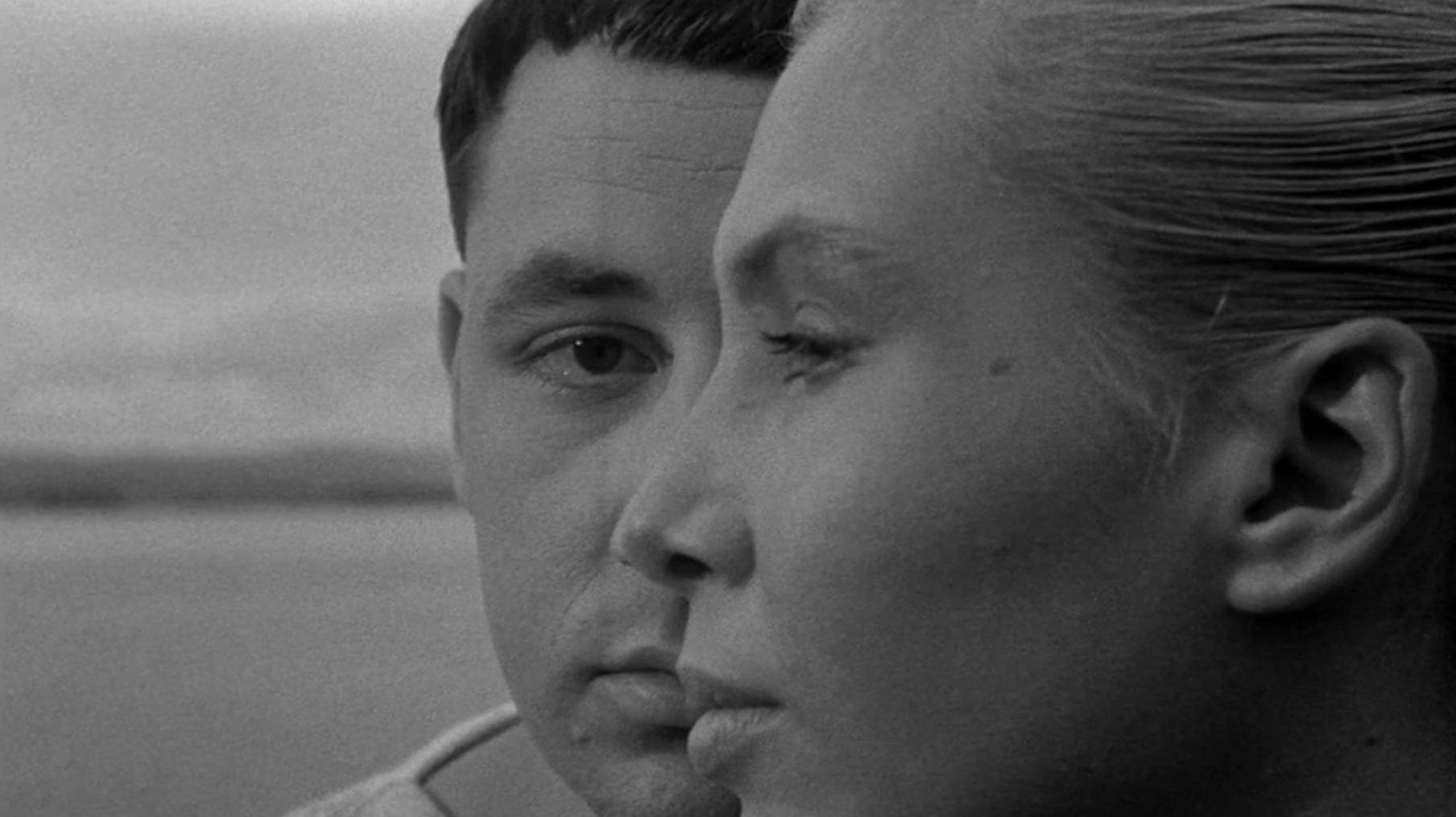
Once again, I’m reminded of Agnes Varda in the mix of side profile and directly facing the camera.
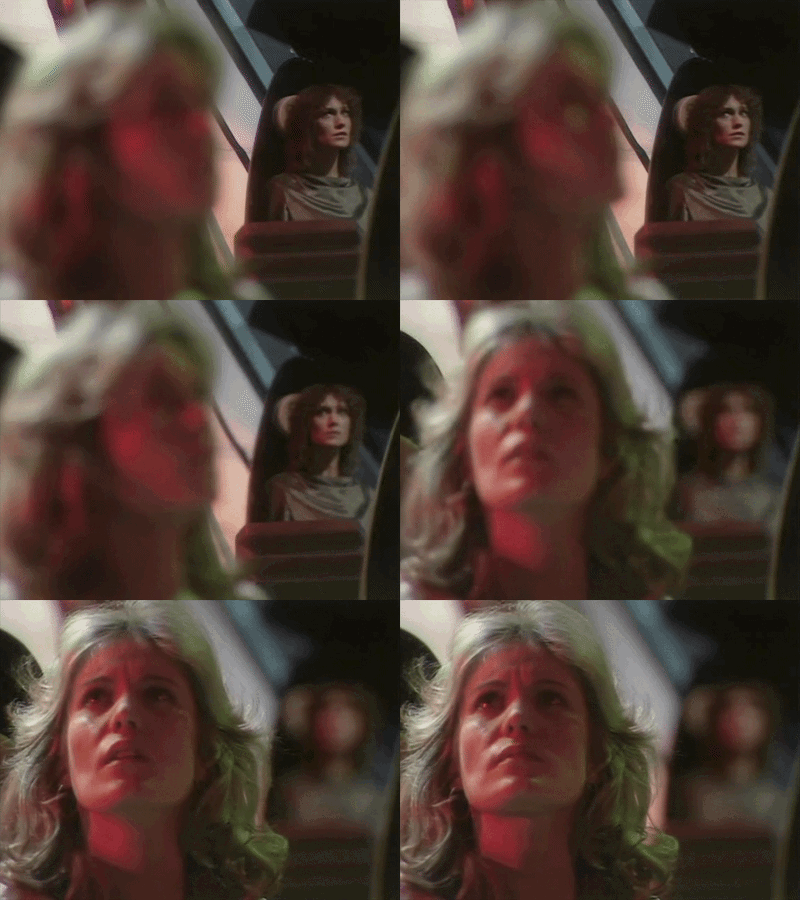
Connected to this is how depth of field is used cinematically, both on film and in the studio. The slow pull-focus shot from Cally to Jenna as Sinofar explains what is happening to them is a case in point. Their eyeline is searching for something they cannot actually see, but the gradual focusing suggests to the audience that we should listen as intently as the characters are.
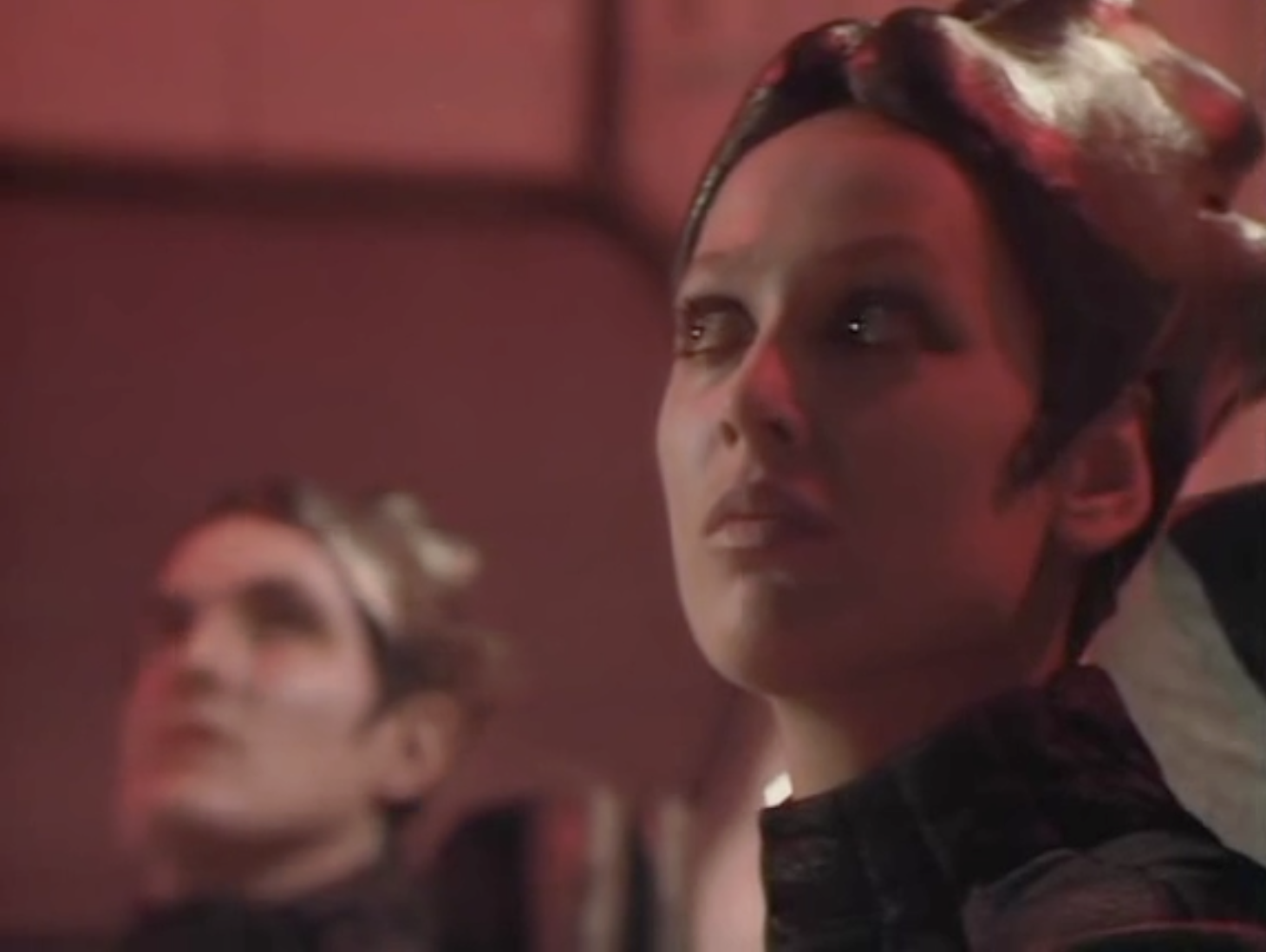
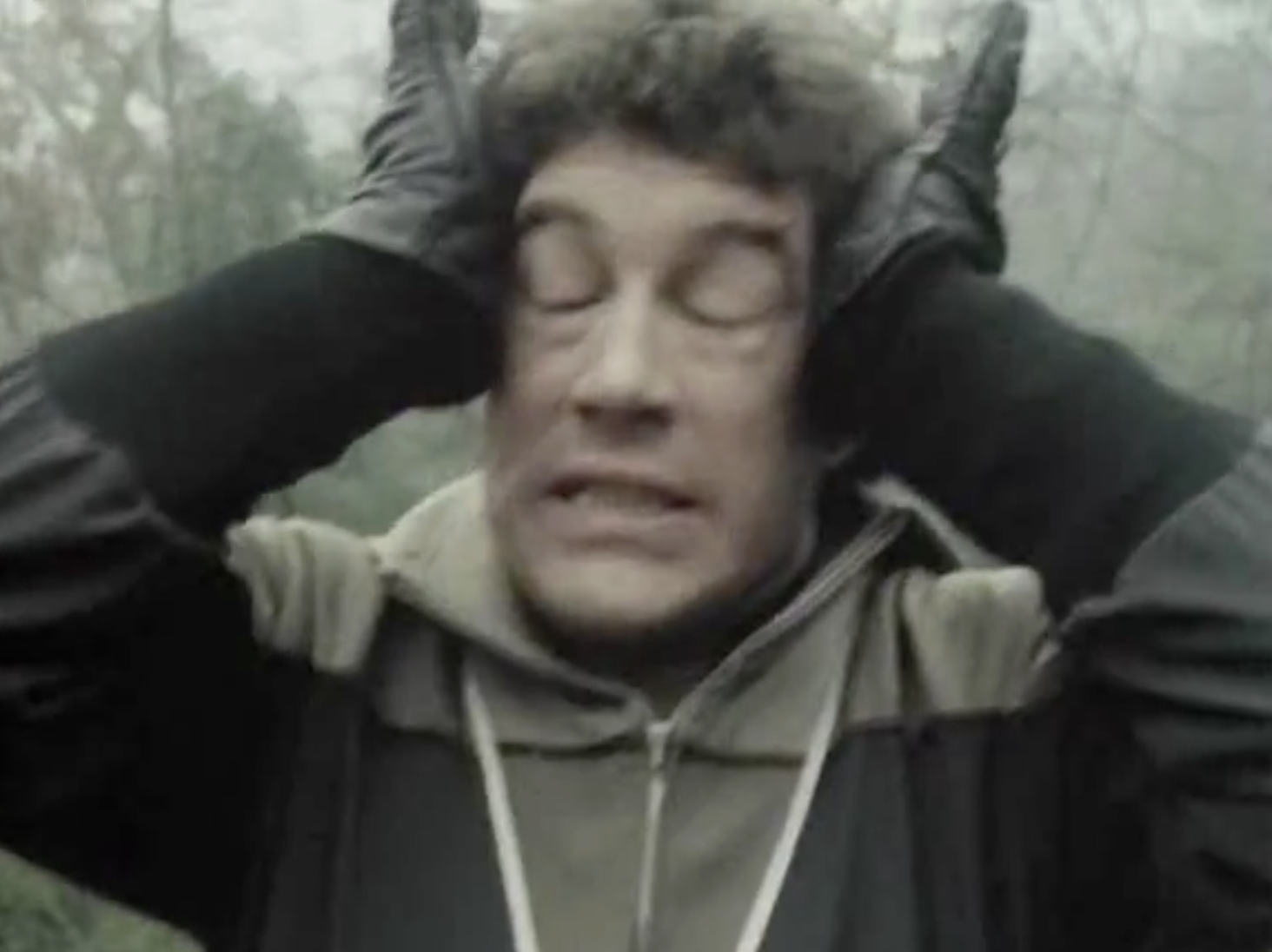
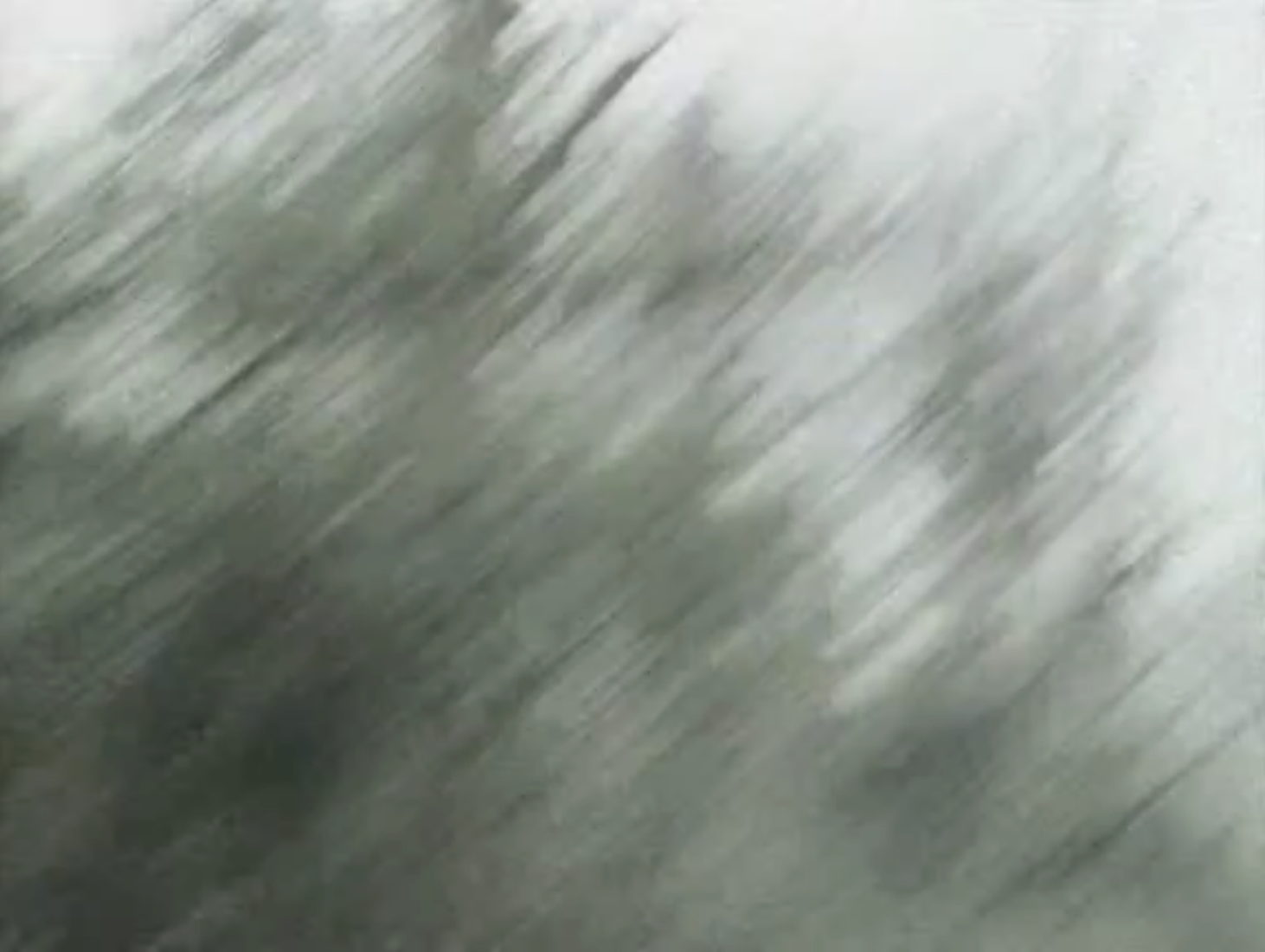
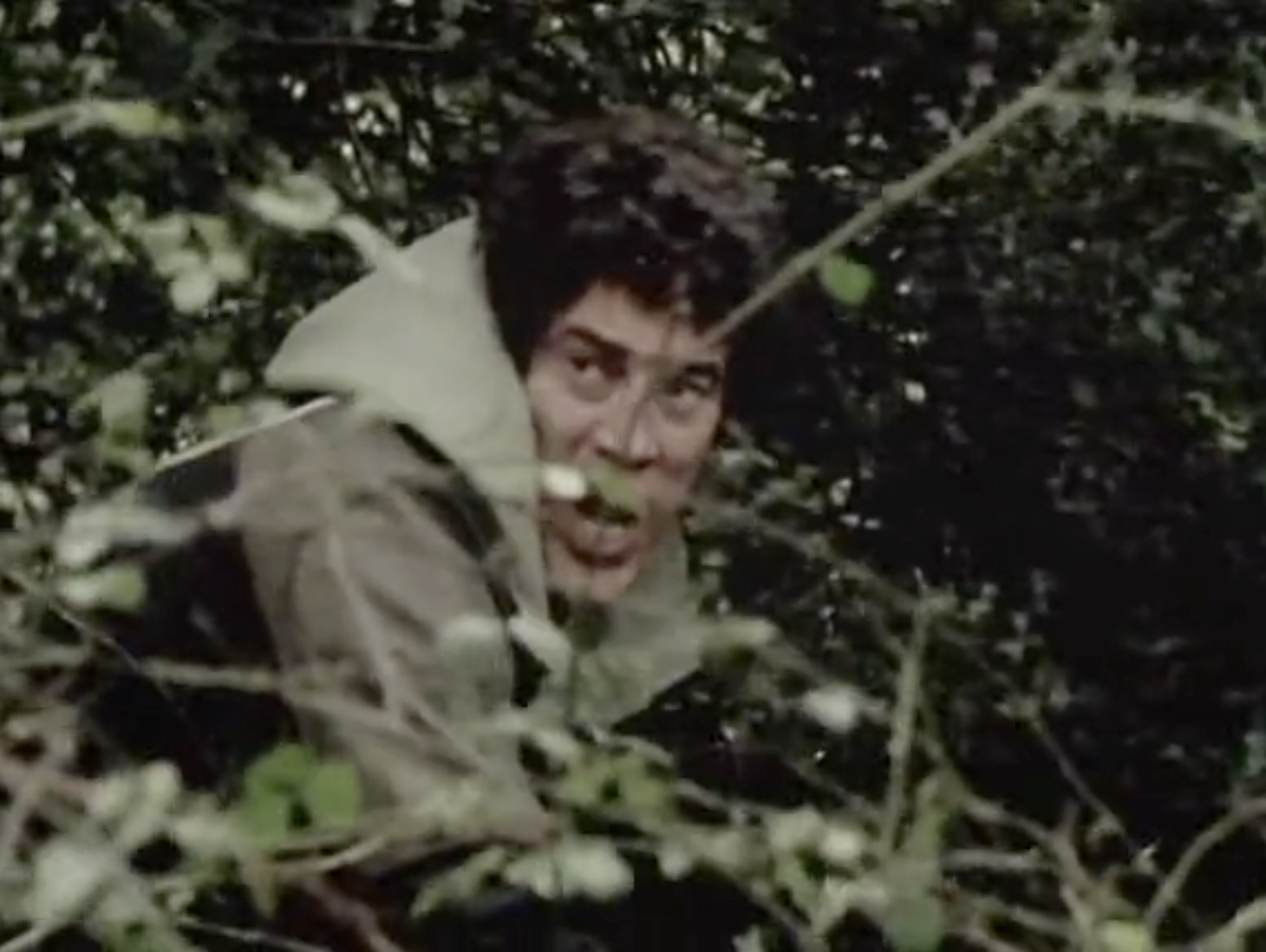
It’s noted that Camfield’s use of the camera is rarely as a means of capturing footage or as a third-party device to observe action, but more as an integral ingredient in the action itself. Examples include Giroc’s attack on Blake in the forest, which uses a mix of confrontational handheld shots with Gareth Thomas directly facing the camera, and accompanying first-person perspective shots of his disorientation.
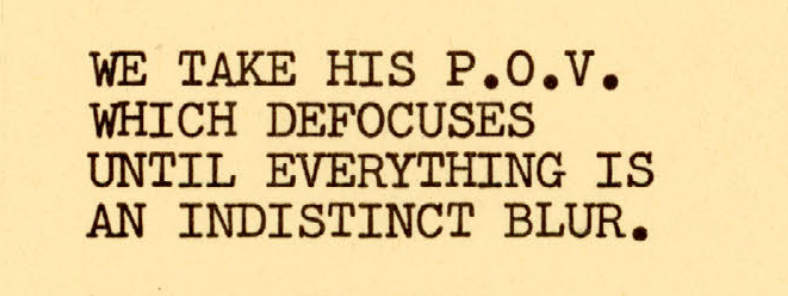
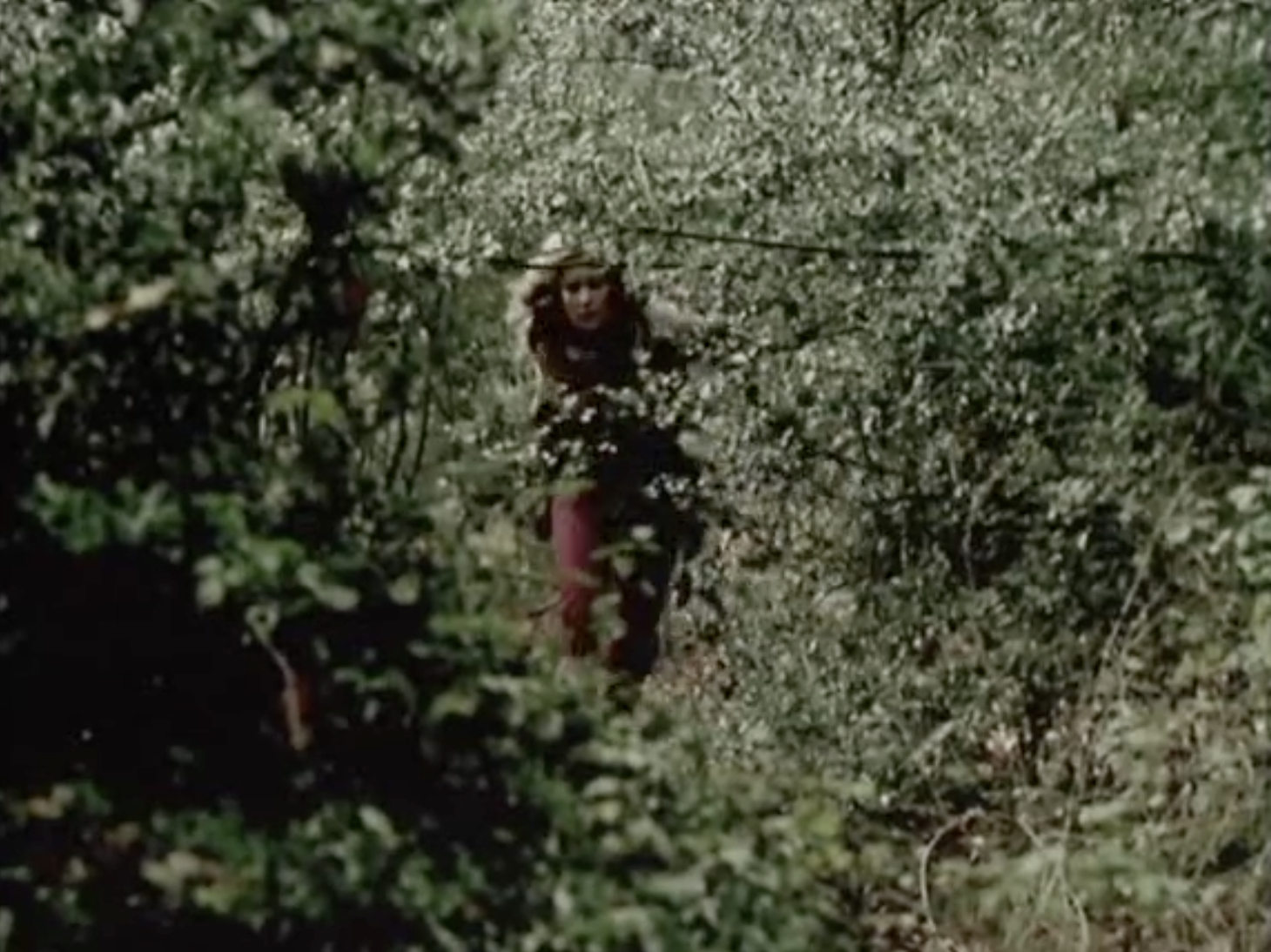
There’s the moment that Jenna appears in the woodland. The camera isn’t static; it’s low down, skulking and shifting in the undergrowth, just as Blake is.
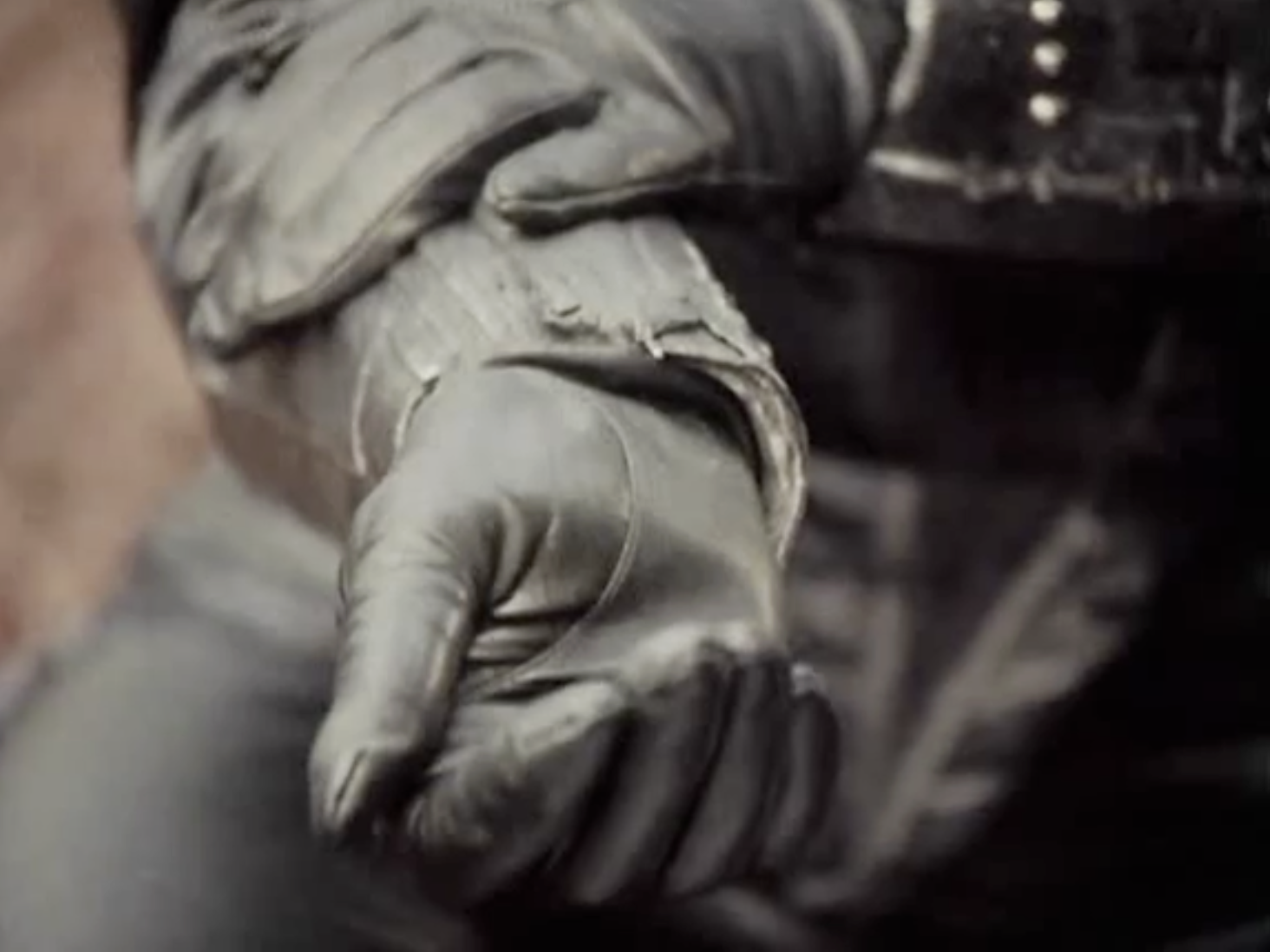
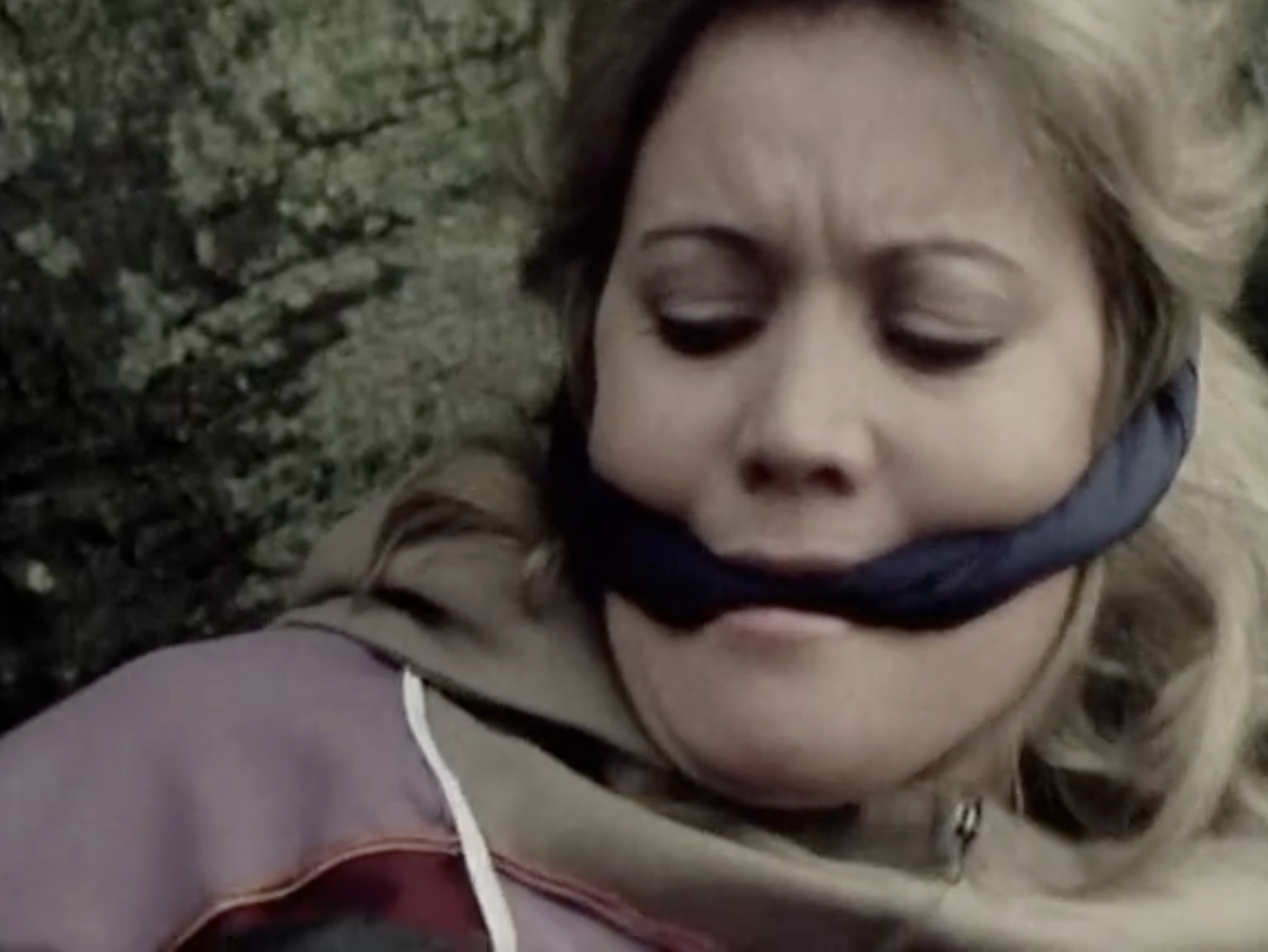
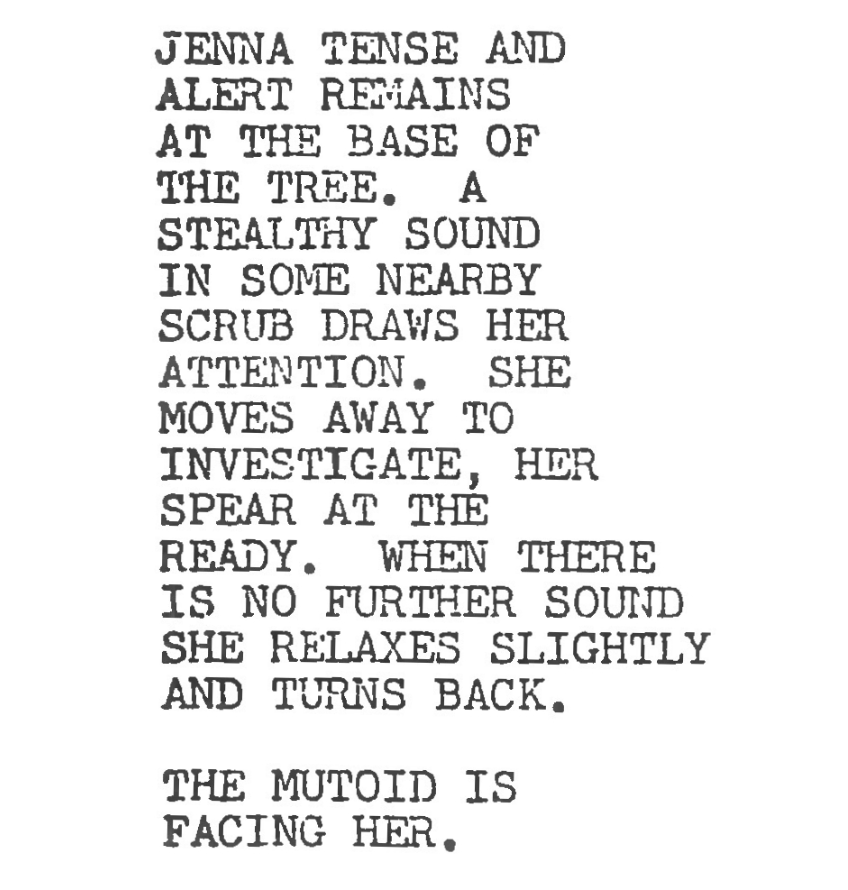
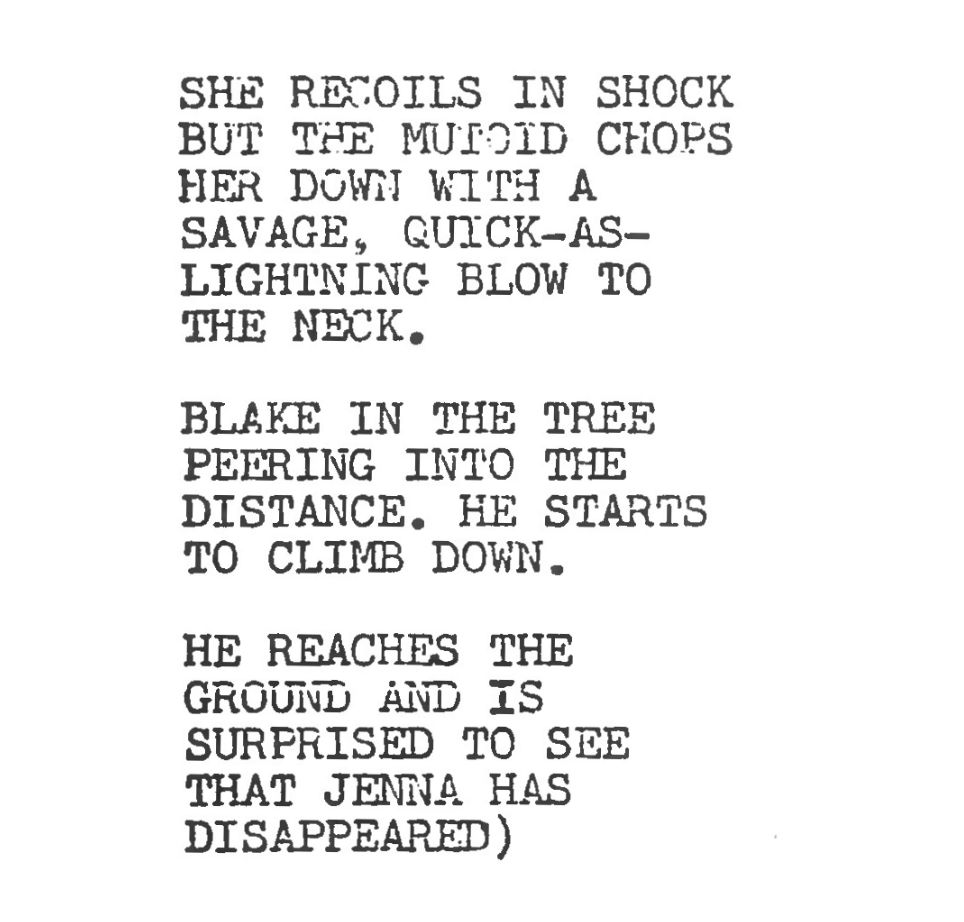
Or how the mutoid goes in for the kill, viewed from Jenna’s eyeline.
The relationship between foreground and background is not just aesthetically pleasing; it heightens the drama. When I see the low-angle shot of Blake and Jenna just about clearing Travis’ falling trap, I’m reminded of the moment where Michael finds the corpse during ‘The Nightmare Man’ (BBC, 1981) – both shots have added gravitas thanks to the foreground highlighting the urgency of Blake and Jenna, and the shock of Michael. The perspective is crucial – the low angle draws the audience right into the situation.
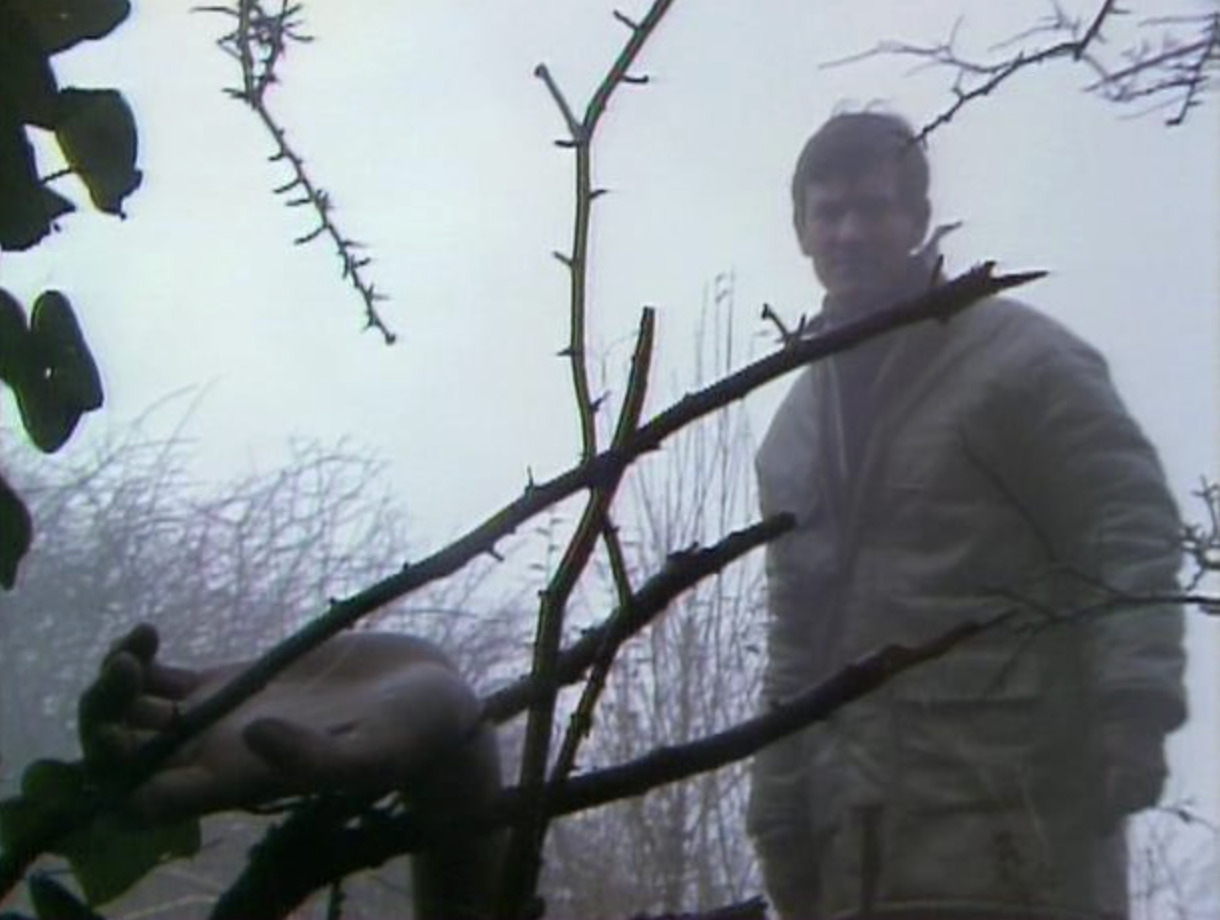
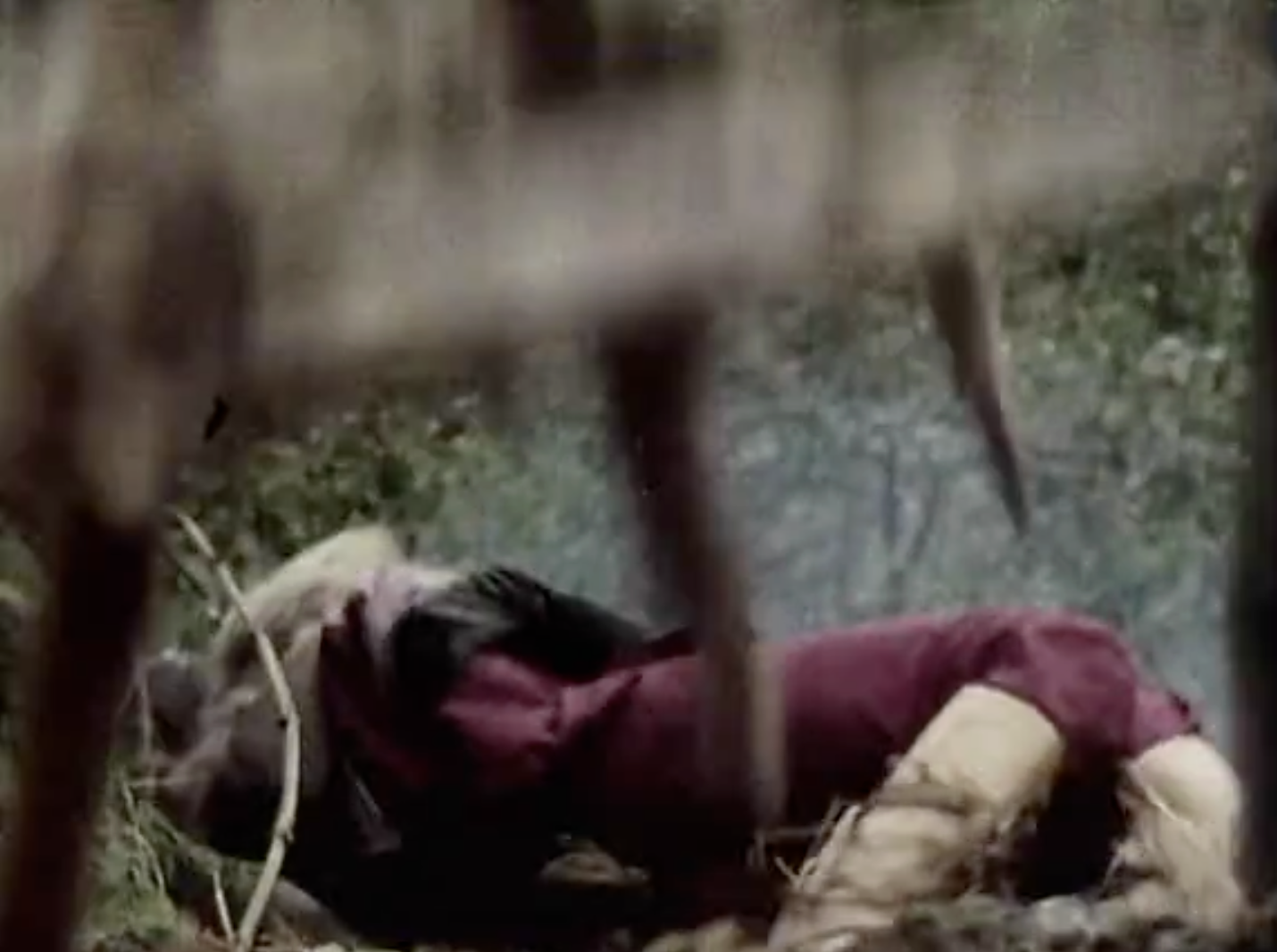
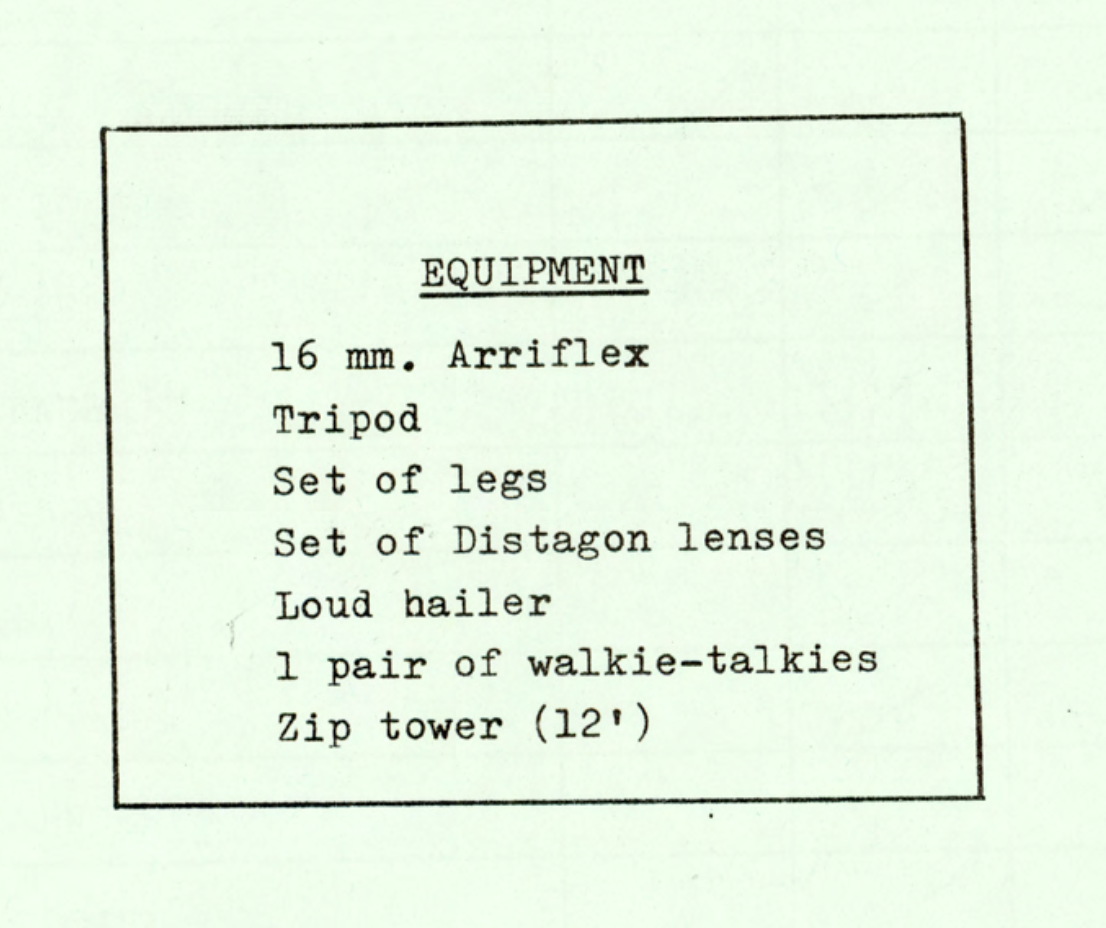
Depth of field is important to Camfield, and it is worth noting his cinematic approach to film work, through his request for a set of Distagon lenses to be included in the equipment list for the New Forest location work. This suggests a director who knew the possibilities of capturing depth.
The name ‘Distagon’ is derived from a combination of two concepts: the word ‘distance’ and the Greek term ‘gon,’ which means ‘angle.’ This name highlights the lens’s primary purpose: to serve as a wide-angle lens while maintaining a significant distance to the image. Ziess (2025) 15
Camfield is often noted for how he conveys action. Often, it is his film work that is cited as an example. However, his handling of the camera and lighting adds a degree of conviction to the studio scenes of the Liberator being ‘WALLOPED’ by the Federation cruisers.
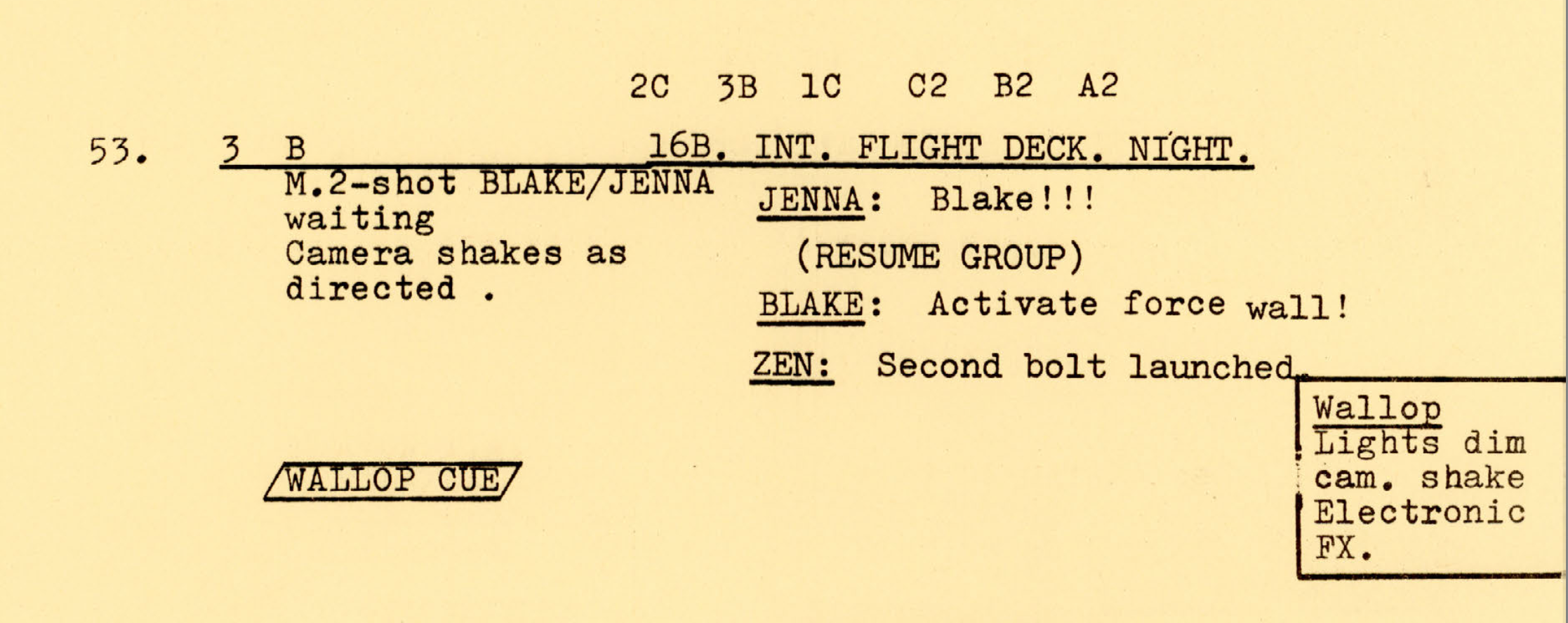
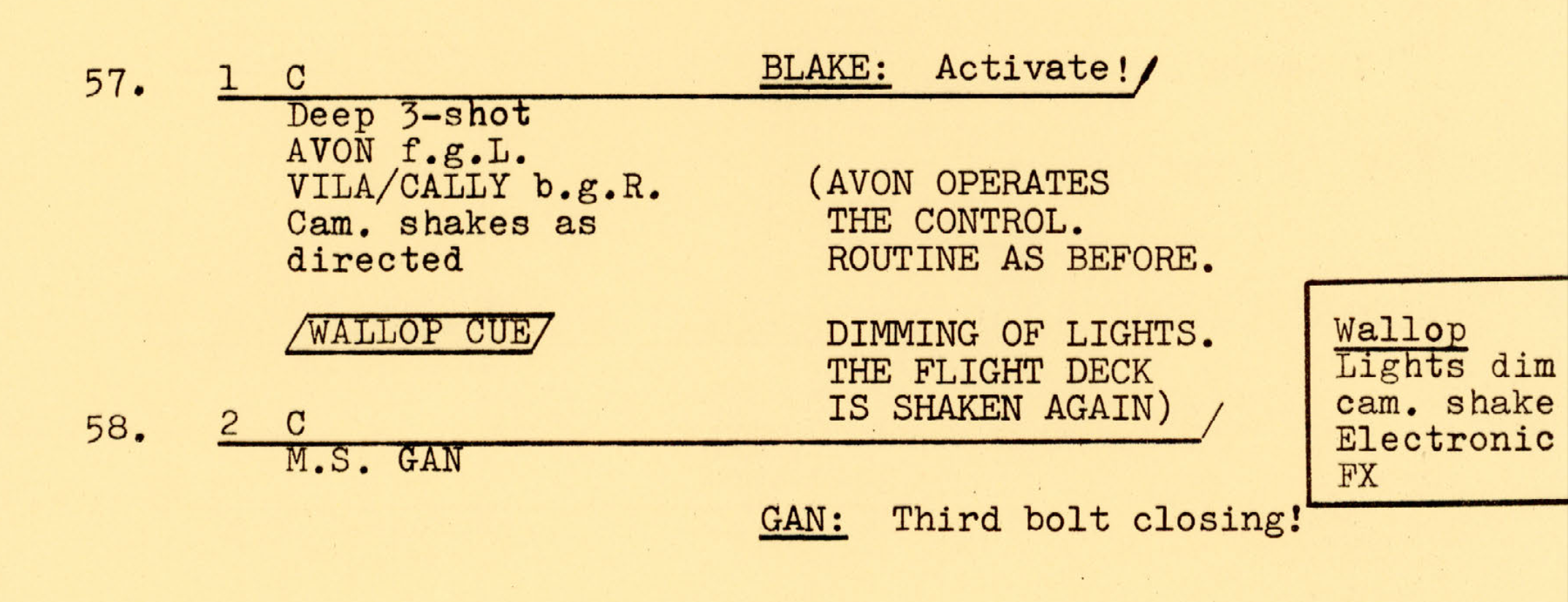
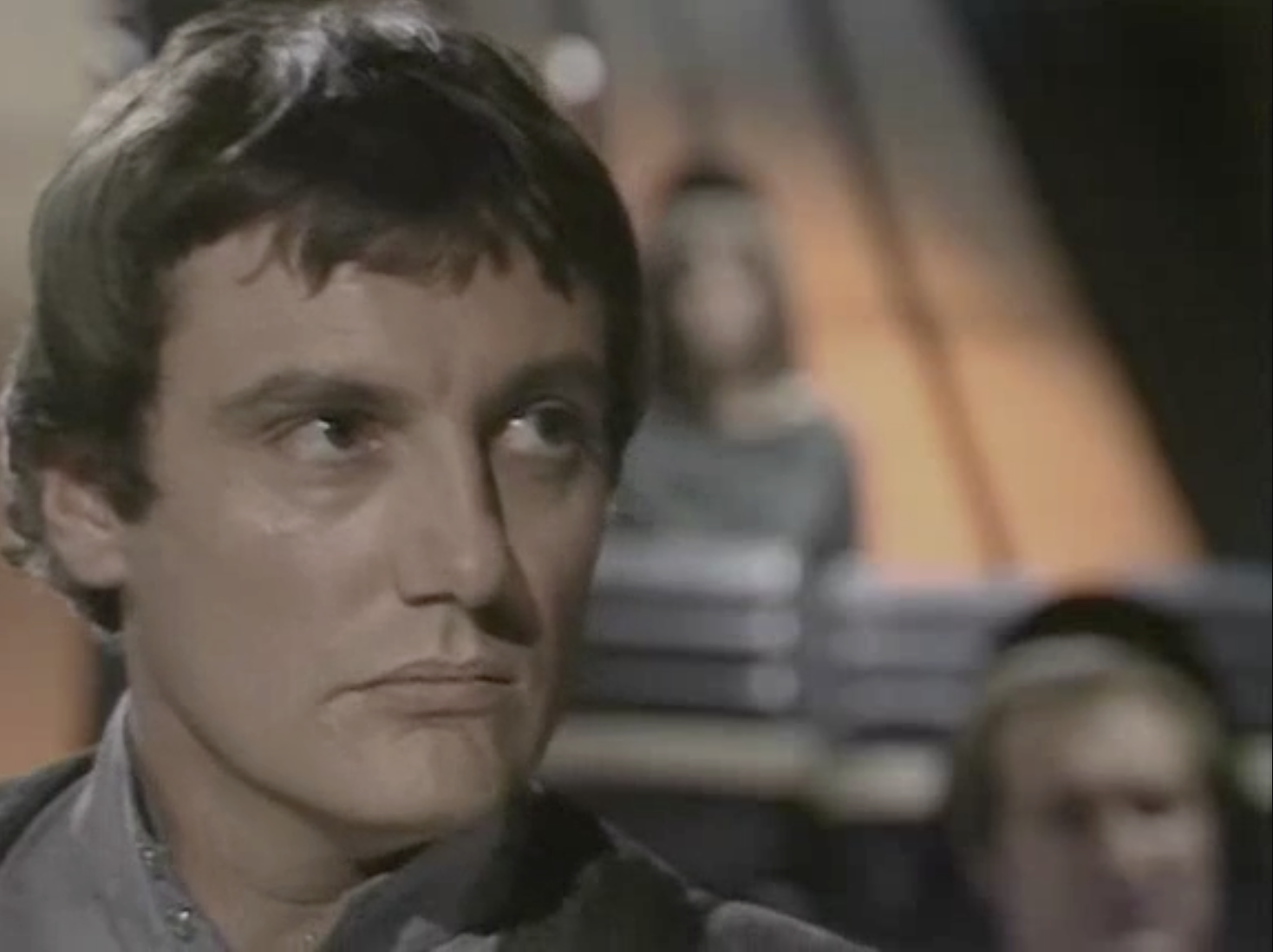
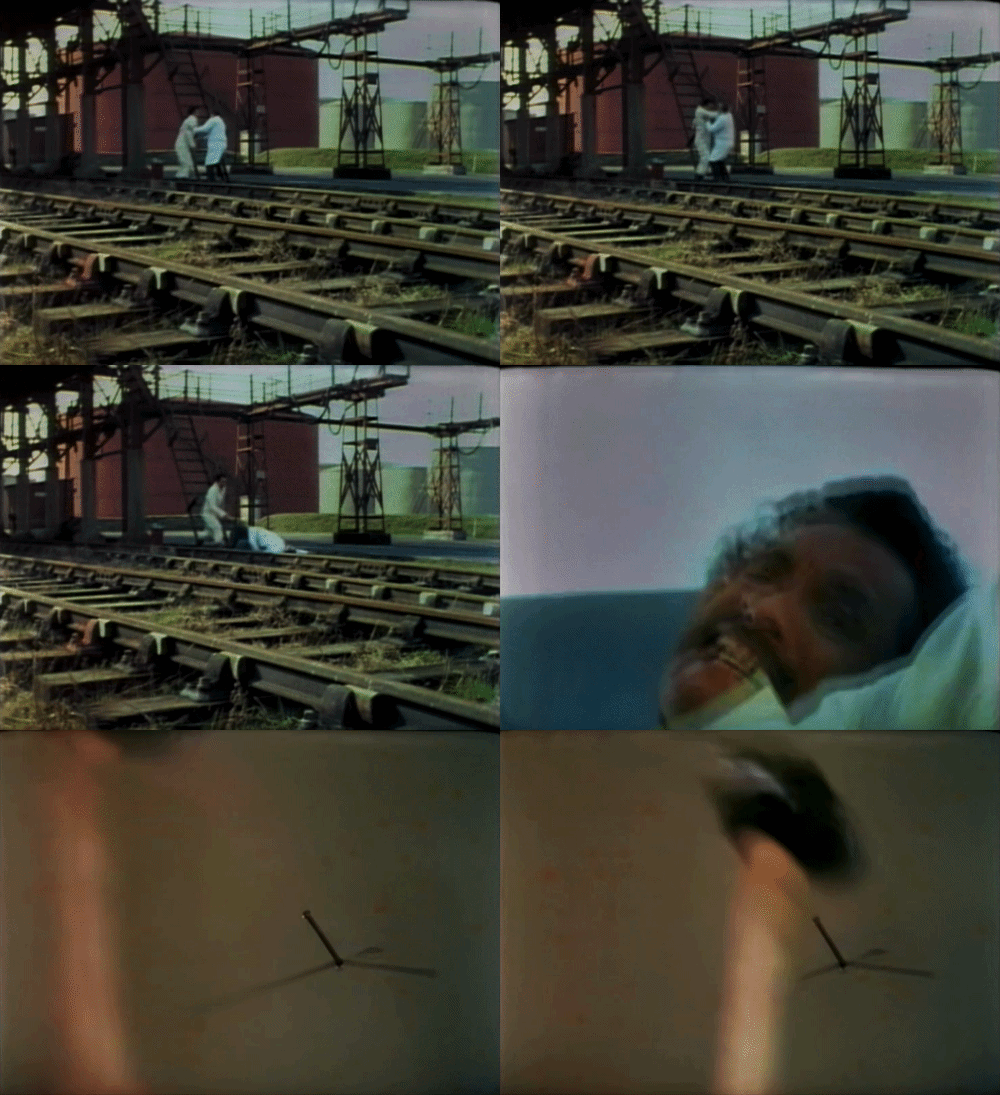
And then, there the editing – always so sharp. This includes the vision mixing (the on-the-fly editing between cameras in the electronic studio). However, it’s Camfield’s use of Eistensitenian collisions that is of interest. A celebrated example is from Doctor Who, ‘Inferno’, where he cuts from Scocum’s frenzied attack on the technician, to Benton hammering a nail. It’s a cut that suggests much about the tale that is about to unfold – full of aggression and an uncompromising tone.
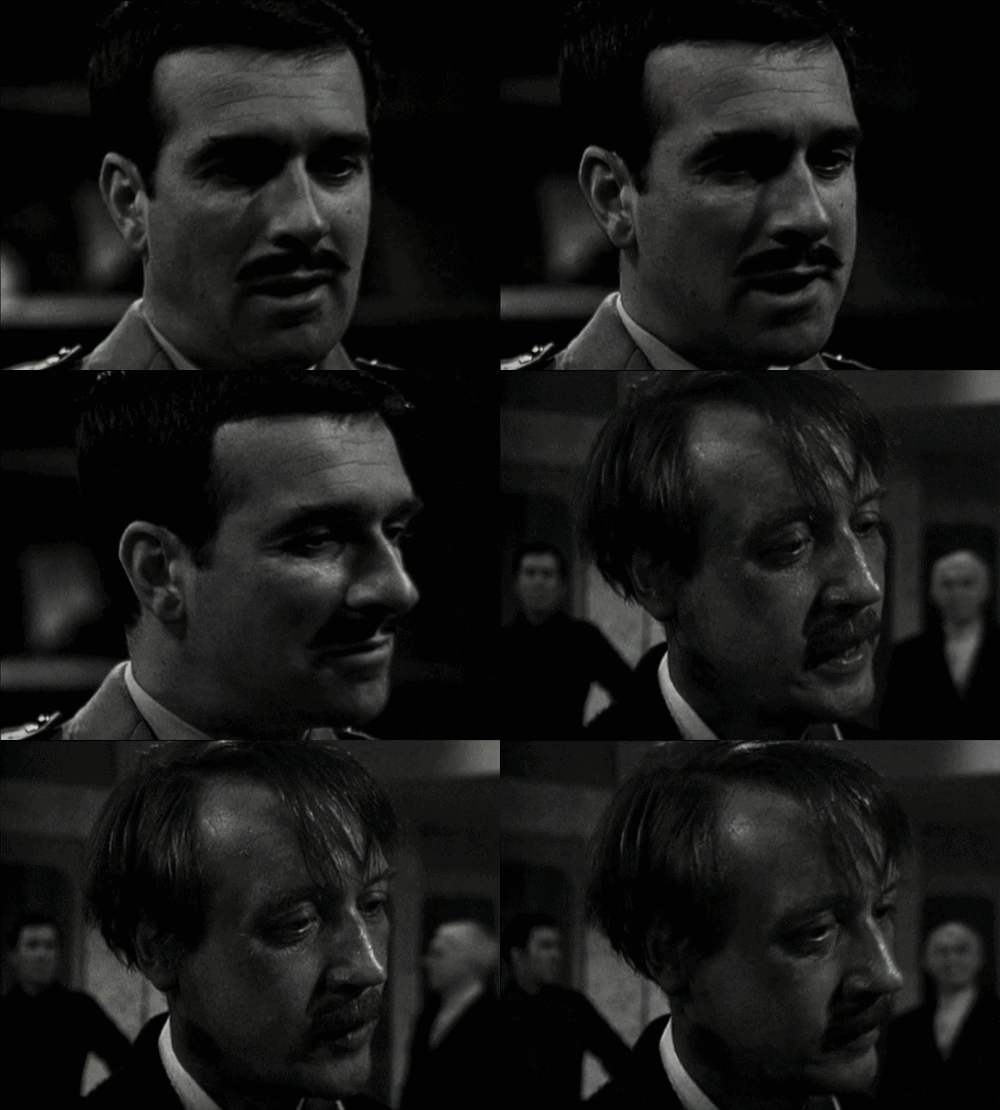
In the same vein, there is the cut in ‘The Invasion’ from the Brigadier wishing Captain Turner well, as he attempts to rescue Professor Vaughn from International Electromatics, to the dishevelled Gregory, who relays how the very same event unfolded. The fact that we don’t see the actual event occurring was due to the film unit running out of time on location. However, Camfield’s marrying up of the two shots – the same position, with one character full of optimism, and the other full of pessimism- is a novel way of highlighting the off-screen event, and positions us right in the middle of the before and after. The fact that this has been described as a confusing cut in some quarters (by both members of the cast and in fan reviews) suggests to me that this type of filmic language was at odds with the established sequencing and pacing of a multi-camera Doctor Who episode.
This leads me to ask the question of whether Camfield was too eloquent at times in his use of visual language when directing for the medium of multi-camera drama? I think the answer is largely no; in fact, for all his flair, his work is always accessible. However, I can think of only a few directors who are confident to push the boat out that far. No doubt we will explore these figures in due course.
Camfield’s editing skill is not only artistic, but highly technical too. The scene where Jenna is ambushed by the Mutoid is exceptional, not only because of his use of lens and the depth he achieves, but also because of how the timing of his edits is razor sharp. Look at how the Doctor/Bromley scene from ‘Inferno’ plays out, and then compare how characters confront the camera and how the editing is pinpoint.
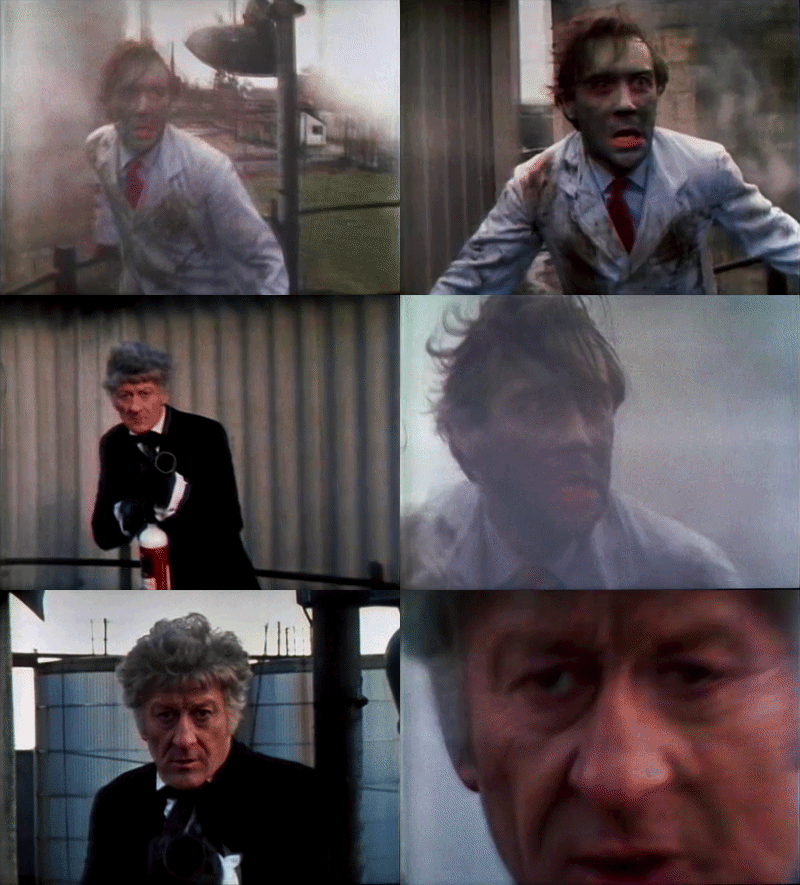
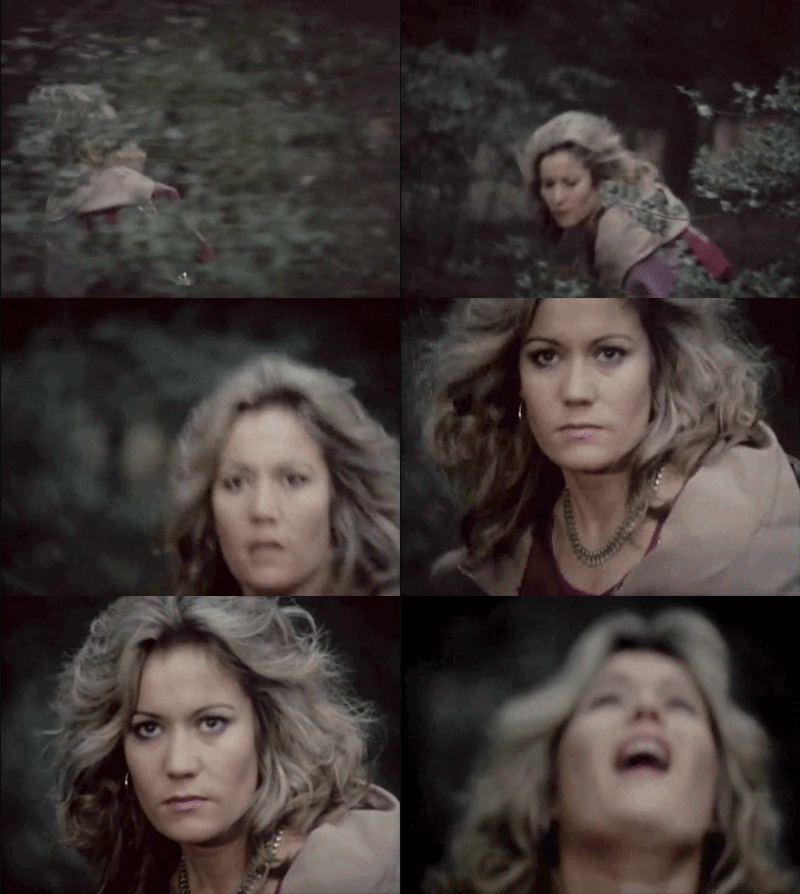
In Michael Seely’s biography of Camfield, it is noted that the director enlisted John S. Smith, an editor at Euston Films, who rarely worked with the BBC. It suggests that Camfield had a particular approach in mind, and was confident to break with protocol to enlist people who could bring this to life. 16
The camera is a part of the proceedings. It is both the viewer and the viewed. The perspective used by Camfield allows the audience to look into the action, and is the means of characters to point outwards of the frame. For me, it is the essential ingredient of capturing the ‘inner eye’ that Camfield noted in his Screen International article, and from this, the idea of a line of sight.
Conclusions
Returning to ‘Inferno’ briefly, Paul Cornell recognised how bloody-minded it is and that you wouldn’t want all Doctor Who to be like it. 17 I feel the same about ‘Duel’. It somehow sits outside the established Blake’s 7 style (whatever that might mean) and therefore expands the repertoire of this show. And it takes an auteur to achieve this.
The emphasis on the auteur is important when I’m reminded that ‘Duel’ is similar to the Star Trek episode ‘Arena’. Both episodes are largely well recieved, have very familiar plots, are noted for their direction (a first Star Trek credit for Joseph Pevney) and use location creatively (Vasquez Rocks).
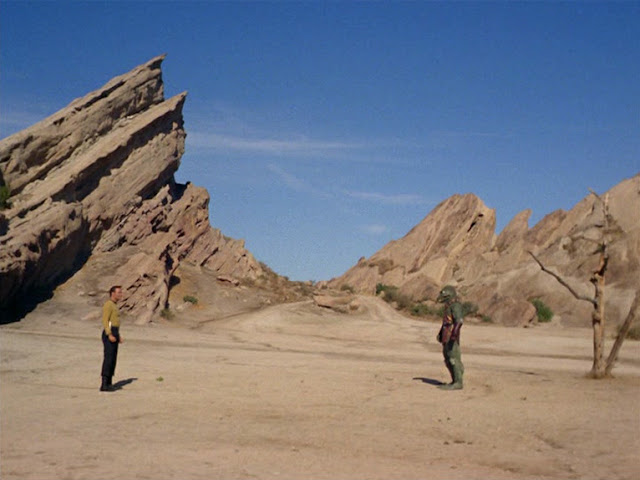
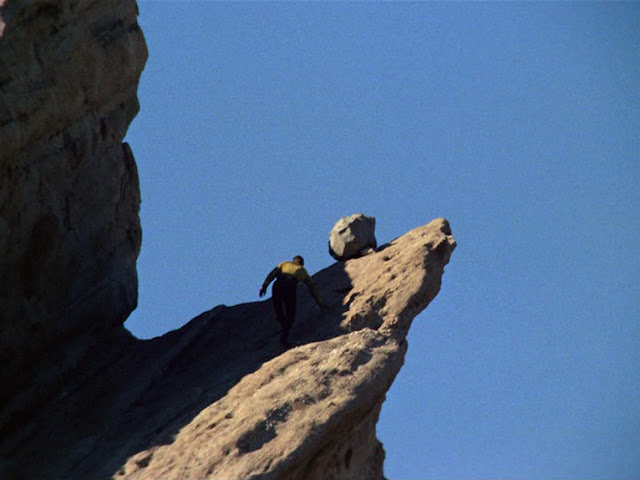
Both Camfield and Pevney are well-regarded. However, in terms of depicting action, I would nod towards Camfield for his variety of shots, the architecture of the frame and the impact of his editing. Because Camfield is an auteur, we see not only how different ‘Duel’ is to ‘Arena’, but simultaneously how different ‘Duel’ is to any other Blake’s 7 episode.
At the beginning of this essay, I stated that I wouldn’t wax lyrical about how marvellous a director Camfield was. Well, I lied, but it’s not just about his stylistic choices, it’s the statement that any Blake’s 7 episode can stand alone, even when its scripting influences are more obvious than ever.
What we can ascertain from ‘Duel’ and how Douglas Camfield realised it, is that his distinctiveness is not only through his use of the camera, but also how he utilises everything the electronic studio (and location film) can offer. And, using these tools to the max is essential, because, at the heart of it, his use of perspective and line of vision (both from the subject and of the observer) defines the idea of a line of sight. It is this that is the driver, or the instinct, behind Camfield’s ‘inner eye’ approach.
He wanted to be Michelangelo Antonioni or Jean-Luc Godard, but according to Terrance Dicks, he was seen as Don Siegel. 18 Nonetheless, the philosophies of the first two film directors are worth keeping in mind. (The images below are from ‘L’avventura’ and ‘Pierrot Le Fou’, respectively.) Goddard was influenced by André Malraux’s 1940 essay, “Esquisse d’une psychologie du cinéma“, 19 basically defined as cinema’s technical ability to manipulate reality through elements such as projection, image arrangement, editing, counterpoint and sound. This shapes and alters viewer perception, both personally and emotionally, rather than merely recording events.
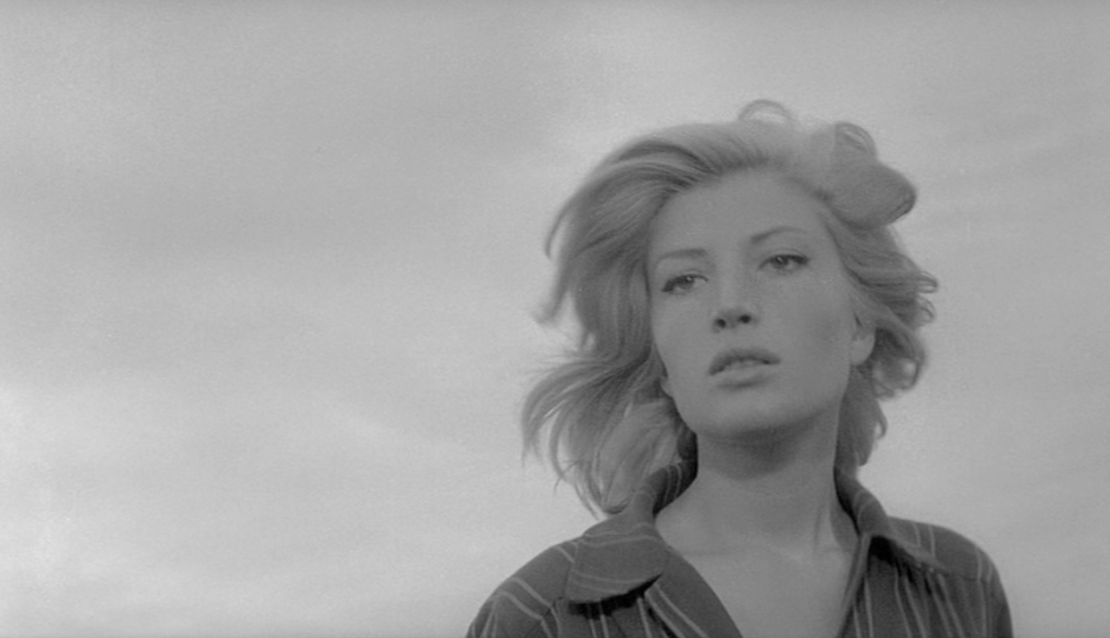
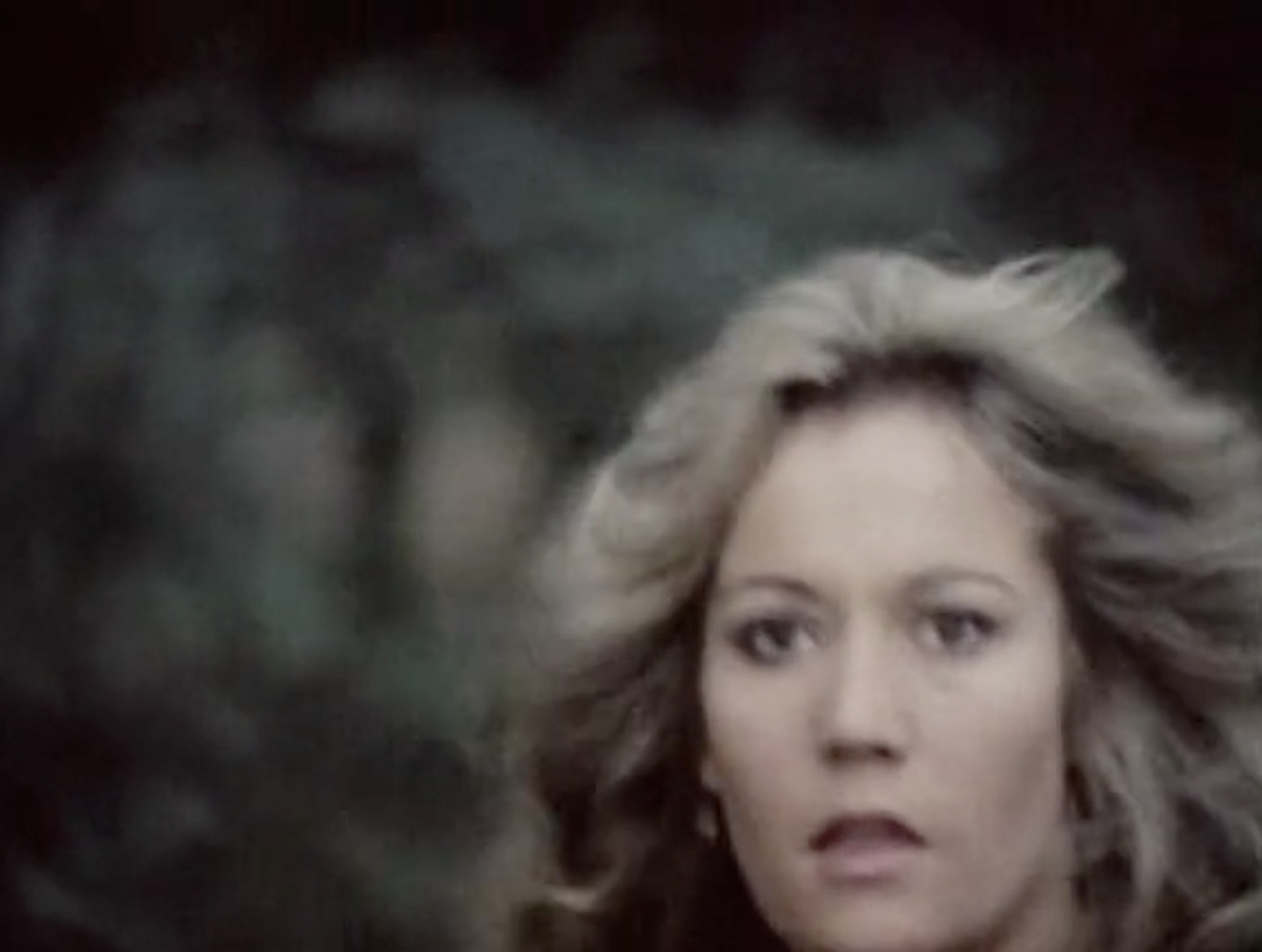
Camfield takes these freedoms and places them in the technical limitations of the multi-camera television drama – the (sometimes theatrical) intimacy of the ongoing drama filmed on a shoestring and on a tight turnaround. This becomes a means of confronting the viewer in unexpected ways, with sometimes cinematic ideas battling to be accommodated by the small screen.
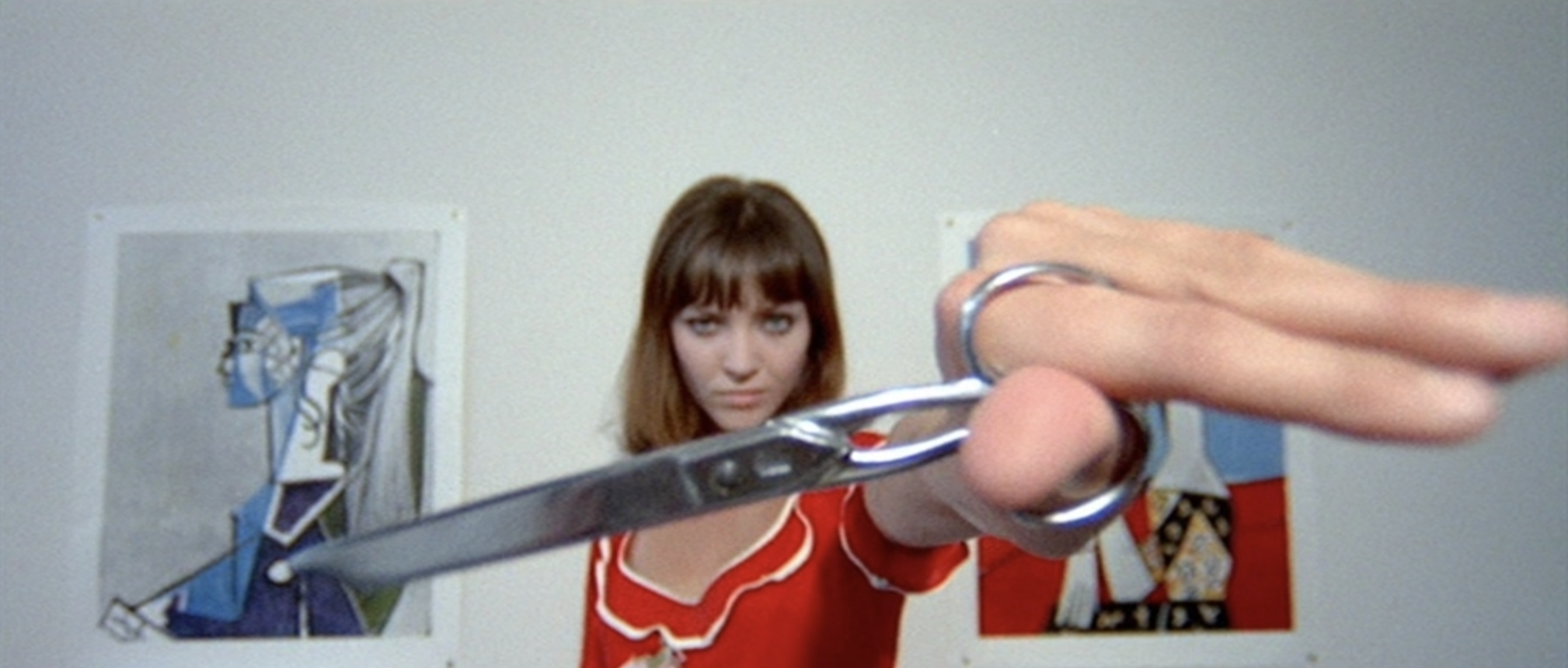
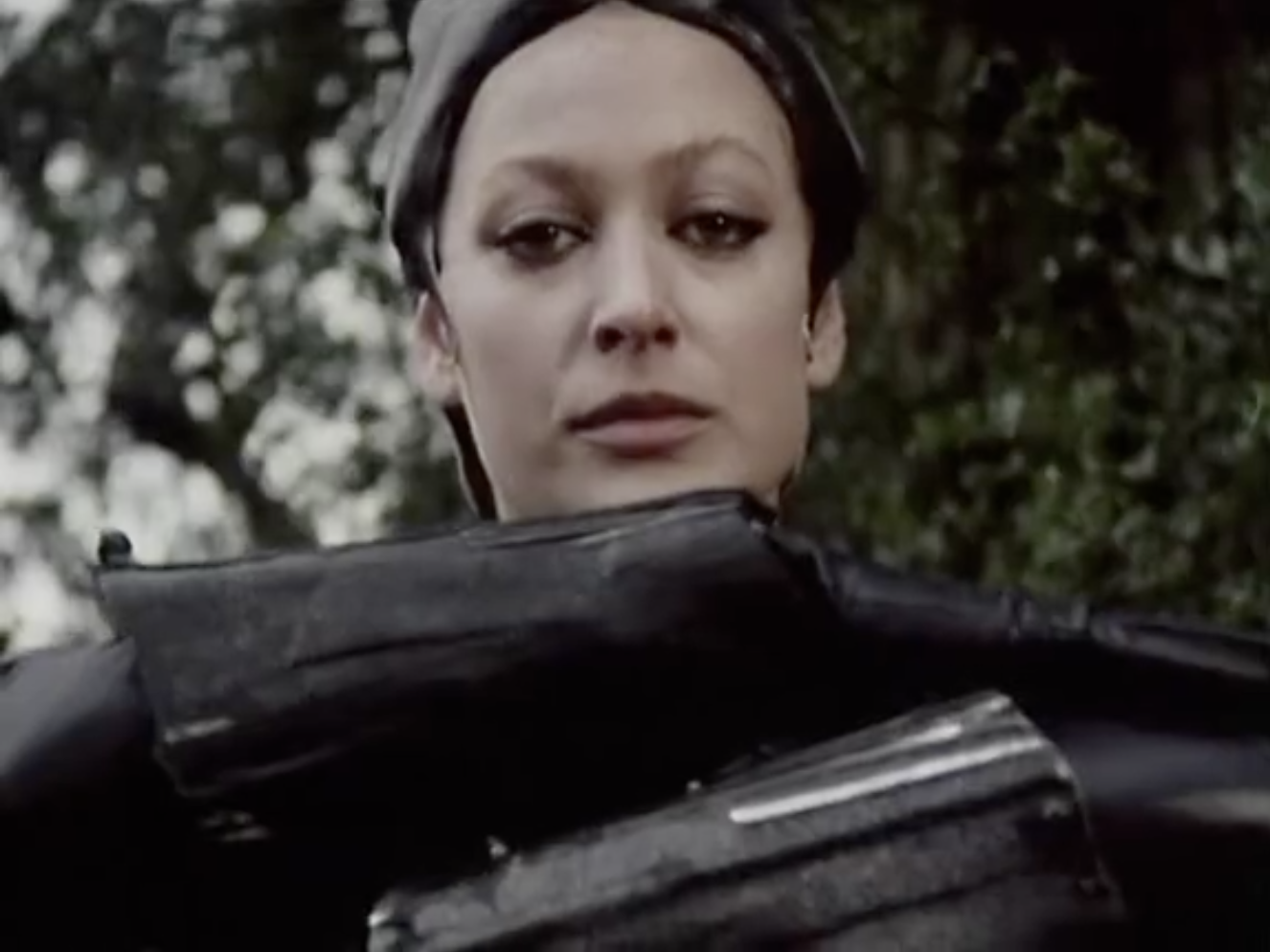
When commentators describe Camfield’s ability to move the camera around the BBC studios of the 1960s, we are reminded that the cameras were bulky and lumbering, and what we might have taken for granted only a couple of years later was a revelation in the hands of Camfield. When people note the quality of his editing and action during the 1970s, it is because he already had form in pushing the medium, drawing the viewer closer into the action. When people note the atmosphere of his work, from the nihilism of Project Inferno, to the contemplation of Missing from Home, or the tension of The Nightmare Man, it’s Camfield using not just the camera, but a combination of screen techniques to draw the audience in and establish a line of sight.
It’s not unremarkable to want to bring the audience in more closely; however, what is remarkable is how Camfield was able to do this within a televisual context. It’s a fascinating tension, where the ‘inner eye’ might sometimes be cinematic in nature, but will only be effective when the director doesn’t forget that the resulting images will be seen within a small box in the corner of a living room.
We finish with this comment from Screen.
Perhaps the best approach is that of a benevolent dictator, clear about his goals, willing to listen to a serious suggestion and use it if any good, applying the veto if it is not, and all the time remaining absolutely in control both artistically and technically. – Douglas Camfield.
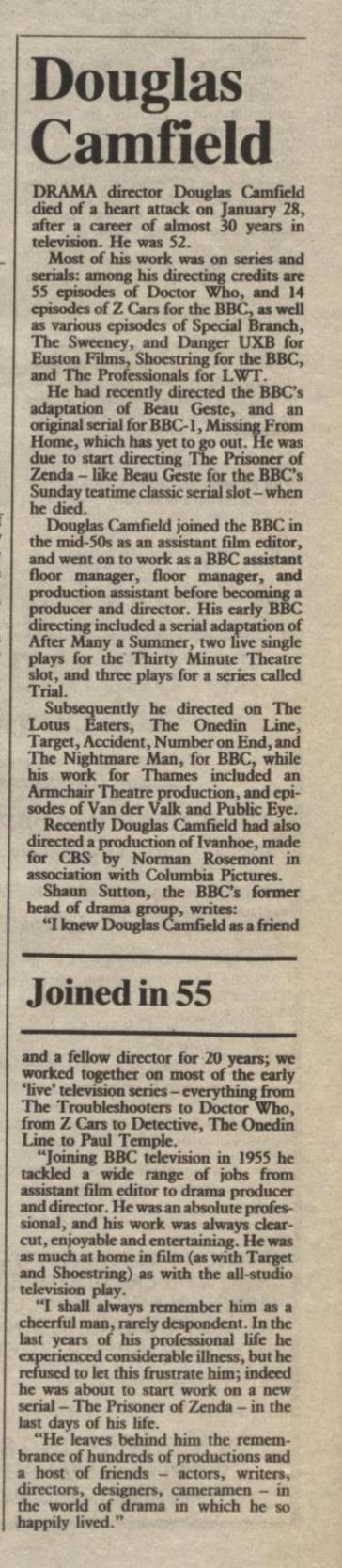
When you place this in the context of the blood-and-guts pressure of Series A of Blake’s 7, it’s a further reminder of the good fortune it was to have Camfield joining, even for one episode, the existing roster of excellent directors (Roberts, Briant, Lorrimer), and conversely, how this was possible thanks to the format of the series, which allowed for a range of multi-authored approaches to how each episode could be directed. No episode of Blake’s 7 ever feels the same as others, but within a singular ‘Duel’ we have something that is inevitably distinct – a marriage of sound and vision, editing and camera, performance and portrayal, which, as a 1984 tribute in The Stage recognised, was the world of drama in which Douglas Camfield so happily lived. 20
Thank you for reading.
I always put a lot of effort into these ramblings, and I am always keen to keep them accessible to everyone. If you enjoyed what you have read, and you feel like buying me a coffee, I’ll be very appreciative.
Americano, no milk or sugar. 🙂
And if that is not an option, I do hope you enjoy the piece regardless. https://buymeacoffee.com/thetimdickinson
Thank you to Tragical History Tour for some of the photos, and all those responsible for the images within. Also, kudos, as always, to Richard Bignell for digging deep into the BBC archives, the access to which remains under threat in our changing world.
- Sarris, A (1962) Notes on the Auteur Theory in 1962. available in https://alexwinter.com/media/pdfs/andrew_sarris_notes_on_the-auteur_theory_in_1962.pdf, accessed 24/3/26 ↩︎
- Stradling, E (2013). Remembering Douglas Camfield, BBC Studios ↩︎
- Gale, T (1970) Working in the Pressure Cooker – Douglas Camfield talks to Tom Gale about directing in television in Screen Vol. 11, No. 2 ↩︎
- Smart, B., (2017) Directed by Douglas Camfield: Z Cars 1967-69 (BBC1) in forgottentelevisiondrama.wordpress.com/2017/05/26/directed-by-douglas-camfield-z-cars-1967-69-bbc1/ ↩︎
- Newman, P (1990) Interview with Ian Fairbairn, in ‘Douglas Camfield – A Tribute’. Published by ‘The Frame’.
↩︎ - Hopkins, G (1985) ‘Directing Disaster’ in Doctor Who: An Adventure in Time and Space. Issue 65. Inferno. Ed: Walker S.J. Cyber Mark Services. ↩︎
- Wood, T (1990) You Can’t Do That On Stage Anymore…, in ‘Douglas Camfield – A Tribute’. Ed: Newman, P. Published by ‘The Frame’. ↩︎
- Sutcliffe, T (2000). Watching – ‘Beginnings’ Dir. Lee, J. BBC Television. ↩︎
- Interview with Ken Loach, in Sutchliffe, T (2000). Watching – ‘Beginnings’ Dir. Lee, J. BBC Television. ↩︎
- https://thedailyjaws.com/blog/the-secret-tribute-at-the-beginning-of-jaws-explained accessed 30/2/26 ↩︎
- Unknown. The ‘Trautonium’ Dr Freidrich Trautwein. Germany, 1930. 120 years of electronic music. https://120years.net/the-trautoniumdr-freidrich-trautweingermany1930/ accessed 20/3/26 ↩︎
- Hu, J (2019) Sequence Analysis of Cléo from 5 to 7: Walking under the Gaze, in Medium.
https://medium.com/@yukijiayuhu_33791/sequence-analysis-of-cl%C3%A9o-from-5-to-7-walking-under-the-gaze-b422d730d790 accessed 20/3/26 ↩︎ - Newman, P (1990) Interview with Ian Fairbairn, in ‘Douglas Camfield – A Tribute’. Published by ‘The Frame’. ↩︎
- Slatter, N (1997) in Nazzaro, J & Wells, S Blake’s 7: The Inside Story. Virgin Publishing. ↩︎
- Zeiss. https://lenspire.zeiss.com/photo/en/article/distagon-sonnar-tessar accessed 20/3/26 ↩︎
- Seely, M (2017) Directed by Douglas Camfield Miwk. Reigate. ↩︎
- Cornell, P (2003) Inferno. Doctor Who 1963-2003 Magazine – DWM Special Edition No. 6 – ‘We Love Doctor Who’ Ed. Hickman, C. ↩︎
- Terrance Dicks interview in Broster, S (2006) Can You Hear The Earth Scream? 2|Entertain. DVD ↩︎
- Malraux, A (1940). Sketch For A Psychology of The Moving Pictures, available in https://www.scribd.com/document/538375734/Andre-Malraux-s-Sketch-for-a-Psychology-of-the-Moving-Pictures ↩︎
- Author unknown (1984) Douglas Camfield. The Stage and Television Today. http://cuttingsarchive.org/images/c/c7/1984-02-09_Stage_and_Television_Today.jpg accessed 29/3/26 ↩︎
 Pink for your actual Pterodactyl
Leave a comment